

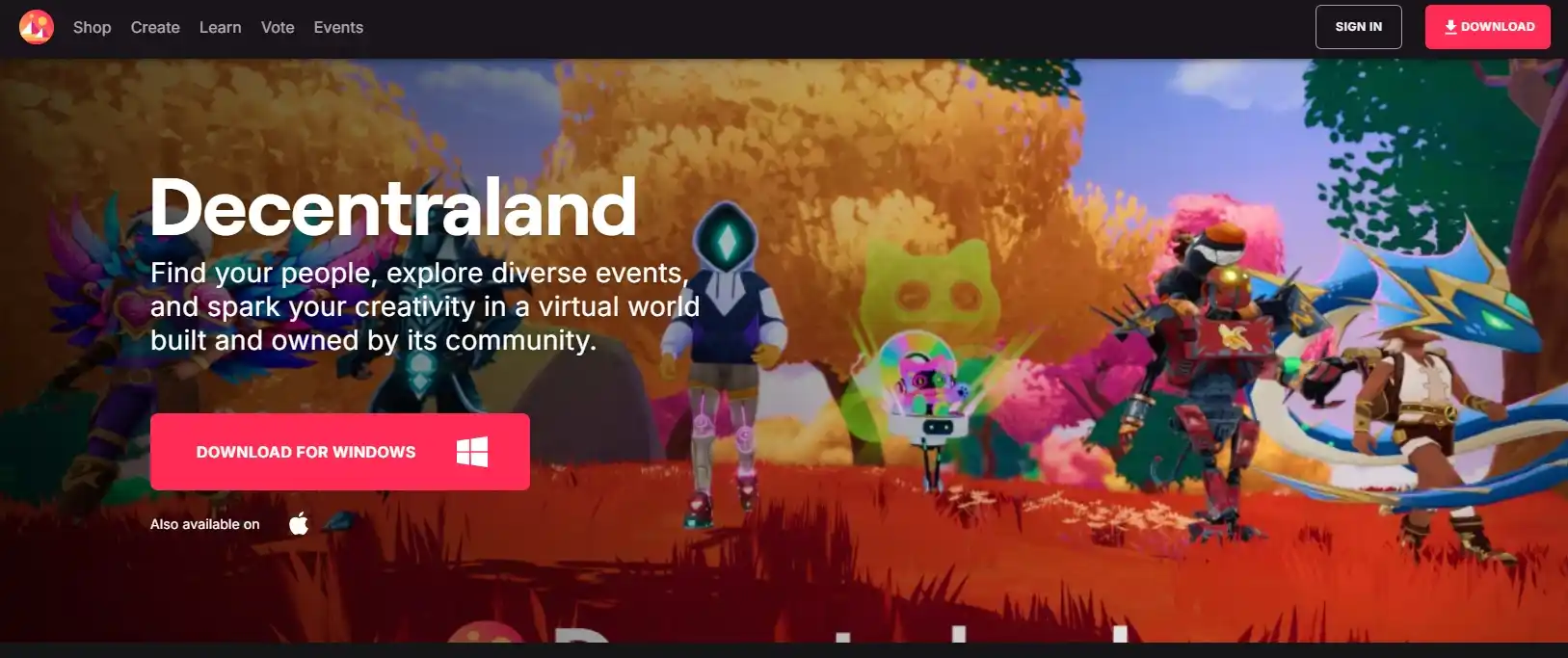
In recent years, the concept of metaverses has been gaining increasing popularity, offering users unique opportunities for interaction, creativity, and earning in virtual worlds. One bright example of such a platform is Decentraland (DCL)—a decentralized virtual reality built on the Ethereum blockchain.
Contents:
- The History of the Platform
- How to Start Playing Decentraland
- Economic Model and Tokens
- Ways to Earn in Decentraland
- Community and Development Prospects
- Conclusion
The History of the Platform
In 2017, Argentine blockchain enthusiasts Ari Meilich and Esteban Ordano founded Decentraland. Initially, the project was a 2D platform where users could purchase digital real estate. Over time, it transformed into a multifaceted 3D virtual world, opening up vast opportunities for creativity, communication, and interaction. In 2020, the platform was officially launched, becoming the first decentralized metaverse where users can create their own spaces, explore unique territories, and interact with others.
How to Start Playing Decentraland
To begin, you need to create an account on the official Decentraland website and set up a compatible cryptocurrency wallet, such as MetaMask. After setting up the wallet and funding it with MANA tokens, you can start exploring the virtual world. The platform is accessible via a web browser, making it easy for new users to join. It is recommended to review the guides and tutorials available on the official website to gain a comprehensive understanding of the platform’s features and begin creating your own content.
Economic Model and Tokens
Decentraland's economic model is based on the use of two key tokens, which ensure the platform's operation and provide users with opportunities for monetization and management. These tokens, MANA and LAND, play a crucial role in the project’s ecosystem. The main features of the tokens are presented in the table below:
| Token | Description |
|---|---|
| MANA | This is an ERC-20 token used as the platform’s internal currency. Users can purchase land, virtual goods, and services with it. Additionally, MANA is used to participate in platform governance through the DAO. |
| LAND | This is a non-fungible token (NFT) of the ERC-721 standard, representing a unique virtual land parcel of 16x16 meters. LAND owners have full property rights over their plots and can develop them at their discretion, creating various scenes, games, or other interactive objects. |
Thanks to these tokens, users can not only participate in the life of the platform but also implement their projects, earn, and manage resources by creating unique spaces in the Decentraland metaverse. This model promotes ecosystem development and ensures the integration of blockchain technologies into the virtual world.
Ways to Earn in Decentraland
Decentraland provides users with unique earning opportunities in the virtual space. Thanks to the decentralized economy and support for NFTs, users can monetize their projects and actively contribute to the development of the metaverse. Here are some ways to benefit from the platform:
- Trading Land: Buying and selling virtual land parcels (LAND) to profit from value changes.
- Creating and Selling Content: Developing unique digital objects, such as avatar clothing, emotes, and scenes, and selling them on the internal marketplace.
- Participating in Events: Hosting virtual events, concerts, exhibitions, and other activities with the option to charge participation fees.
- Advertising: Placing advertisements on your land parcels or within created applications.
- Renting Land: Leasing your land to other users or companies for their projects.
These opportunities make Decentraland an attractive tool for creative individuals and entrepreneurs interested in innovative ways to earn and interact in a virtual environment.
Community and Development Prospects
With community support and the adoption of modern technologies, the platform is actively evolving, offering users new opportunities for creativity and interaction. Regular updates expand functionality, enabling the creation and implementation of unique projects. Governance is carried out through a decentralized autonomous organization (DAO), where the community makes key decisions about development and resource allocation. Amid growing interest in metaverses and blockchain, the platform has significant potential to strengthen its position in this field.
Conclusion
Decentraland represents a unique example of how blockchain technology can transform interaction, creativity, and earning in the virtual space. Thanks to innovative solutions, community support, and a well-thought-out economic model, the platform continues to attract users from around the world. Tools for content creation, participation in governance through DAO, and various monetization opportunities make Decentraland an essential element of the metaverse ecosystem. With the growing interest in digital technologies, Decentraland has every chance to become a leader among decentralized virtual worlds.











