

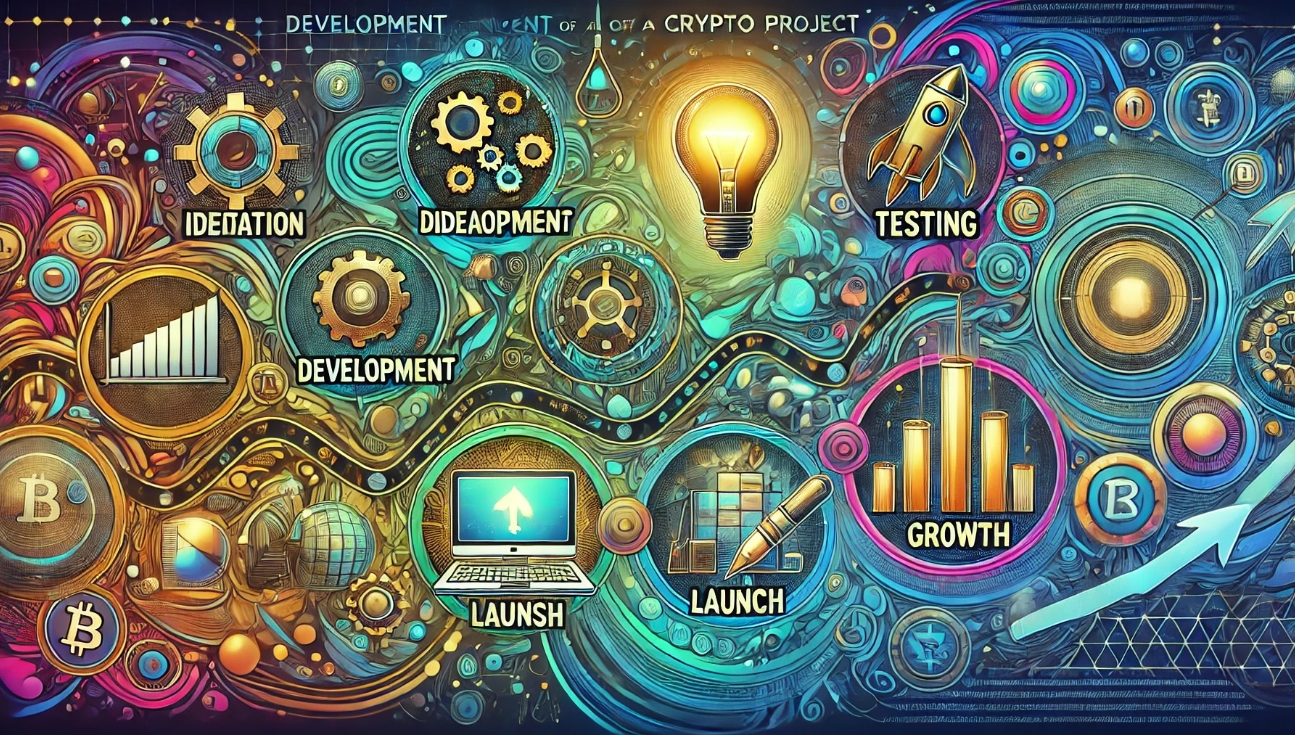
Cryptocurrency projects go through several key stages of development, each with its own unique tasks and challenges. Understanding these stages is crucial for the successful launch and sustainable growth of a cryptocurrency project.
Contents:
- Idea and Concept
- Development and Testing
- Marketing and Fundraising
- Launch and Promotion
- Support and Development
- Conclusion
Idea and Concept
The main stages of cryptocurrency project development include several key steps. Initially, it is necessary to develop a unique and appealing idea that can attract both users and investors. The next step is to conduct thorough market research cryptocurrencies to understand its current state and identify potential competitors. After that, it is important to define the target audience by identifying the main user groups who will be interested in the project and find it useful.
Development and Testing
Main Stages
- Prototype Creation: Developing an initial prototype of the project for testing key functions and obtaining feedback.
- Testing: Conducting internal and external tests to identify and fix errors.
- MVP Development: Creating a minimum viable product (MVP) that can be presented to a broader audience.
Marketing and Fundraising
Main Stages
- Marketing Strategy Development: Identifying key promotion channels and methods for attracting attention.
- ICO/IEO: Conducting Initial Coin Offerings (Initial Coin Offering) or Initial Exchange Offerings (Initial Exchange Offering) to attract investment.
- Social Media and PR: Actively engaging with potential users through social media and other platforms to raise awareness about the project.
Launch and Promotion
Main Stages:
| Stage | Description |
|---|---|
| Official Launch | Public release of the project and the start of its active use by users. |
| Exchange Listings | Listing the project's cryptocurrency on leading cryptocurrency exchanges to ensure liquidity and accessibility. |
| Advertising Campaigns | Conducting targeted advertising campaigns to attract new users and retain existing ones. |
Support and Development
Main Stages
- User Support: Providing high-quality support to users to resolve emerging issues and problems.
- Updates and Improvements: Regularly implementing new features and improvements based on user feedback and market analysis.
- Expanding the Ecosystem: Developing and integrating additional services and applications that will enhance the project's value.
Conclusion
The development of a crypto project is a complex and multi-stage process that requires careful preparation and planning at each stage. The success of the project depends on many factors, including the uniqueness of the idea, the quality of development, the effectiveness of marketing strategies, and the level of user support. By following the described stages and focusing on key aspects, you can significantly increase the chances of successful development and sustainable growth of the cryptocurrency project.











