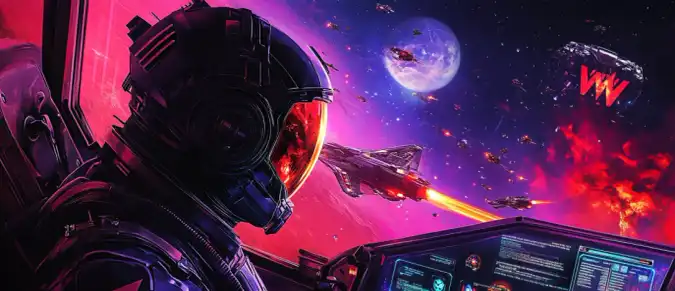

War of Nova is a mobile 4X strategy game with Web3 elements, developed by Revolving Games. The project combines classic global strategy mechanics with earning opportunities through in-game tokens and NFTs. Players take on the role of faction leaders fighting for control of the galaxy, where every move can shift the balance of power. Since its release in May 2025, War of Nova has attracted the attention of strategy fans and decentralized gaming supporters alike. Integration with the Arbitrum blockchain provides users with asset ownership and access to the project’s open economy.
- Overview of War of Nova: Story and Features
- Gameplay: Factions, Resources, and Battle System
- Game Economy and Blockchain: NFTs and In-Game Rewards
- Impressions and Prospects of War of Nova
- Conclusion

Overview of War of Nova: Story and Features
War of Nova takes place in a futuristic universe gripped by conflict between eight factions, each with its own goals. At the center of this struggle lies a mysterious artifact capable of reshaping the fate of the galaxy. The storyline revolves around political intrigue, military alliances, and resource battles, creating a rich and dynamic game world. Released on Android and iOS, the game received positive feedback for its deep lore and visual quality.
Key features of War of Nova include:
- Eight unique factions with distinct playstyles
- Interactive galactic map with hex zones and influence areas
- Alliance and coalition systems for joint operations
- PvE and PvP modes with global events
- NFT elements and tokenized in-game economy
- Season reset and ranking mechanics
Each faction comes with a unique backstory and gameplay advantages. For example, the science coalition excels in technology and reconnaissance, while mercenary clans focus on raw military strength and rapid strikes. This diversity adds strategic depth, encouraging players to explore effective tactics and synergies.
Gameplay: Factions, Resources, and Battle System
The gameplay of War of Nova revolves around a blend of economy, diplomacy, and warfare. Players begin by selecting one of the factions and gaining access to their starting zone on a vast galactic map. The map is divided into hundreds of hexes, each of which can be captured and exploited for resources or strategic positioning.
Key in-game resources include:
- Water
- Gas
- Minerals
- Titanium
These materials are essential for construction, research, fleet production, and army maintenance. The influence level of a tile determines its strategic value and resilience to capture. Securing high-value zones requires coordination with allies and careful planning. The alliance system plays a crucial role — players can form coalitions, share intel, and execute multi-directional strikes on enemy targets.
The combat system goes beyond direct clashes. Players build fleets, assign officers with unique skills, and engage in real-time tactical encounters. Combat outcomes depend on unit range, types, vulnerabilities, and synergy effects. Timing is also critical — players receive attack alerts and can respond even outside of active sessions.
Game Economy and Blockchain: NFTs and In-Game Rewards
War of Nova utilizes the Arbitrum blockchain to enable a decentralized economy and digital asset ownership. A key component is the $RCADE token, which is used in game operations and can be earned through victories, mission completions, and event participation. A total of 250 million tokens are allocated across players, partners, and developers.
In-game currencies and resources:
| Name | Type | Purpose |
|---|---|---|
| Water, Gas, Minerals | Resources | Construction, infrastructure support |
| Titanium | Rare resource | Flagship ship production |
| Requisition Orders | Premium currency | Purchase of boosters and NFT units |
| Creds | Base currency | General expenses, upgrades, officer recruitment |
| Gold | Epic currency | Exclusive purchases, accelerations, NFT exchange |
NFT items in the game include commanders, ships, decorative elements, and faction emblems. Some NFTs offer real gameplay advantages, such as reduced production time or increased resource output. All NFTs can be freely traded, sold, or potentially used in future cross-game functionality as promised by the developers.
Players can also take part in DAO initiatives—voting on the game’s development direction, gameplay balancing, and seasonal fund distribution. This makes participation in War of Nova not only a gaming activity, but also an economic contribution where each user's engagement is valued.
Impressions and Prospects of War of Nova
War of Nova comes across as a well-crafted strategy game that fosters real-time player interaction. The combination of visual detail, tactical flexibility, and blockchain integration makes the project appealing to a wide audience. Even at launch, the game offers substantial content: dozens of missions, varied factions, seasonal competitions, and a multilayered economy.
One of War of Nova’s key strengths is the balanced inclusion of both Web2 and Web3 elements. It does not require players to use tokens or NFTs, which lowers the entry barrier for newcomers. However, for those interested in the economic side, the game provides robust tools for earning and managing digital assets. This dual model benefits both casual gamers and crypto-focused investors.
The current development roadmap includes expanding the lore, introducing new factions, and implementing cross-game mechanics. Plans also involve building a PC version and integrating with third-party marketplaces. Combined with regular updates and community engagement, War of Nova is positioned to become a lasting part of the Web3 gaming ecosystem. Its success will depend on sustained player activity, responsiveness to user feedback, and the team’s ability to keep the experience evolving.
Conclusion
War of Nova is a compelling example of how classic genres can be reimagined through Web3 technologies. The game delivers rich strategic gameplay, detailed lore, and an interactive system that rewards tactical thinking and active involvement. Integration with the Arbitrum blockchain, support for NFTs, and the presence of the $RCADE token make the project attractive not only to gamers but also to digital economy enthusiasts.
Importantly, the developers avoid overloading the game with crypto mechanics, allowing each player to choose their level of engagement. With seasonal events, unique factions, and layered game systems, War of Nova already shows strong potential for sustainable growth and an active community. In the ever-evolving Web3 landscape, this strategy game stands a real chance of becoming a lasting flagship in the genre.











