

In the era of digital technology and the blockchain revolution, new forms of interaction with virtual assets are emerging. Grapenopoly offers a unique experience, combining elements of a classic board game with modern NFT technologies and the Play-to-Earn concept. Players can purchase, upgrade, and rent virtual real estate, earning real income in cryptocurrency.
Contents:
- What is Grapenopoly?
- Game mechanics and key features
- The role of the $GRAPE token in the ecosystem
- Earning strategies in the game
- Community and player feedback
- Conclusion
What is Grapenopoly?
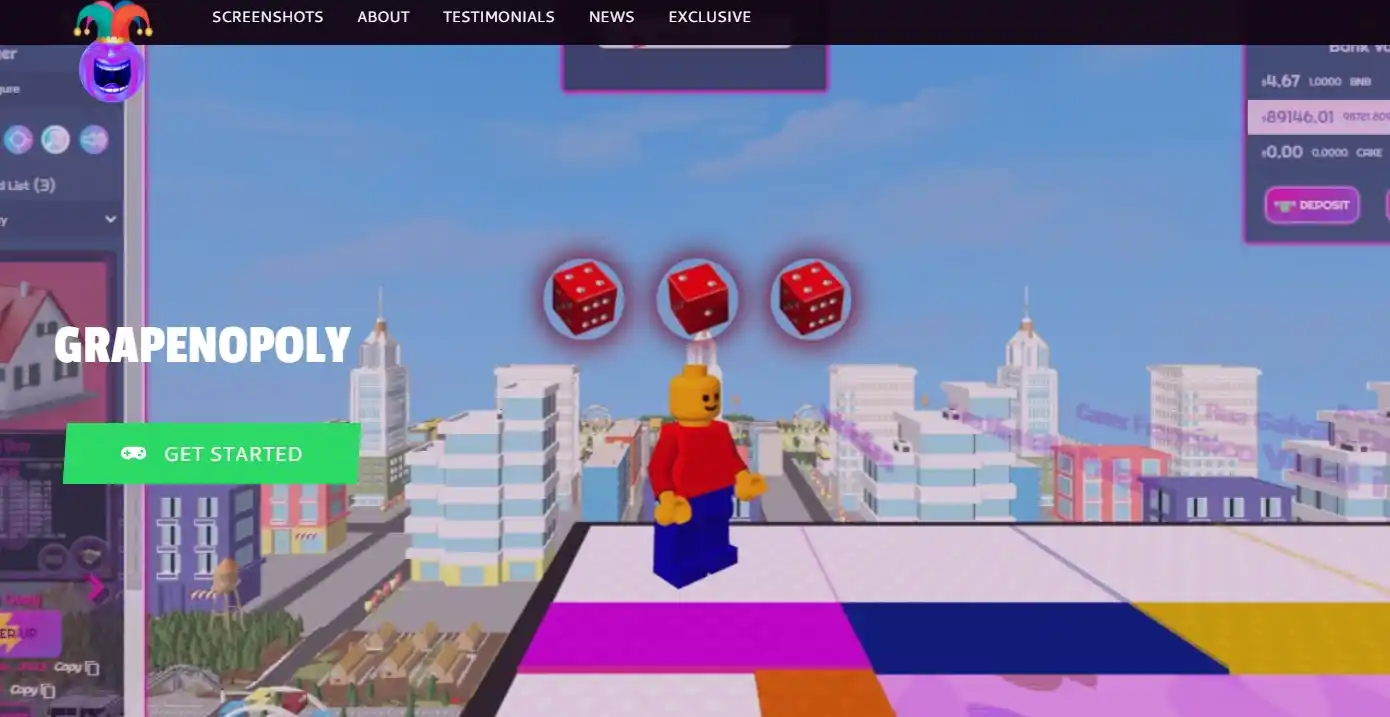
Grapenopoly is a decentralized application (dApp) operating on the Polygon blockchain, combining elements of the classic "Monopoly" game with modern NFT technologies and the Play-to-Earn concept. Players can buy, sell, and rent virtual real estate as NFTs, earning passive income. The game allows players to use various strategies to maximize profits, such as upgrading properties with houses and hotels or applying special boost cards.
Game mechanics and key features
In Grapenopoly, players move across a virtual game board, acquiring NFT properties that can be upgraded and rented to other participants. The main features of the game include:
- Buying and selling real estate: Players can acquire virtual properties, upgrade them, and sell them on the internal market or external NFT marketplaces.
- Renting: Renting out properties generates passive income in $GRAPE tokens.
- Upgrades and boosts: Using houses, hotels, and special boost cards increases the value and profitability of properties.
- Auctions: A feature allowing players to auction their properties through GrapeSwap is planned for future implementation.
These mechanics enable players to develop various strategies to increase their income and dominate the virtual real estate market. Upgrading properties with houses and hotels enhances their appeal to tenants, while special boost cards provide additional advantages in the game. The auction feature via GrapeSwap will add a competitive element, allowing players to compete for the most valuable properties and make profitable deals.
The role of the $GRAPE token in the ecosystem
The $GRAPE token plays a central role in the Grapenopoly ecosystem, providing the economic foundation for all game processes. It is the primary medium for transactions, including buying, selling, and renting virtual properties. Additionally, $GRAPE is used to purchase upgrades and special boosts that enhance property profitability. Game earnings are also paid out in $GRAPE, encouraging active player participation and maintaining the sustainability of the internal economy. Thus, $GRAPE ensures the functionality and development of the Grapenopoly ecosystem, connecting various aspects of gameplay and user interactions.
Earning strategies in the game
In Grapenopoly, players can use various strategies to earn income, each with its unique features and advantages.
| Strategy | Description |
|---|---|
| Rental income | Acquiring NFT properties and renting them out to other players ensures stable passive income in $GRAPE tokens. |
| Speculation | Buying undervalued properties, upgrading them with houses or hotels, and selling them at higher prices within the game or on external NFT marketplaces. |
| Auctions via GrapeSwap | A planned feature allowing players to auction their properties, set starting prices, and attract potential buyers. |
| Direct sales | The ability to sell NFT properties directly to other players without intermediaries, receiving the full deal value. |
By combining these strategies, players can optimize their earnings and adapt to the dynamics of the virtual real estate market in Grapenopoly.
Community and player feedback
Grapenopoly attracts both gamers and crypto enthusiasts by offering a unique experience in the world of blockchain games. Players note the engaging gameplay, which combines elements of the classic "Monopoly" game with modern NFT technologies and the Play-to-Earn concept. Owning and managing virtual real estate as NFTs allows players to earn passive income, making the game appealing to a broad audience. The Grapenopoly community actively shares experiences and strategies, contributing to the development and popularity of the project. Users emphasize that the game combines entertainment and learning, offering not only fun but also an introduction to managing digital assets. Thus, Grapenopoly becomes not just a game but a platform for interaction and learning in the field of the digital economy.
Conclusion
Grapenopoly is an innovative game that combines elements of the classic "Monopoly" with modern NFT technologies and the Play-to-Earn concept. Players can purchase, upgrade, and rent virtual real estate, earning passive income in $GRAPE tokens. The game offers various earning strategies, including renting, speculation, and participating in auctions through GrapeSwap. The active player community fosters experience and strategy sharing, making the gameplay more engaging and educational. Thus, Grapenopoly not only provides entertainment but also opens up opportunities to master digital asset management in the rapidly evolving world of blockchain games.











