
- Defining and Expanding DeFi
- Contrasting Party Perspectives
- Witnesses' Insights
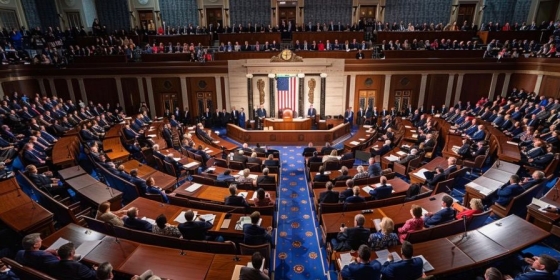
The US Congress recently conducted its first-ever hearing on Decentralized Finance (DeFi), examining potential benefits and hazards associated with this rapidly growing sector. The discussions revealed stark partisan differences: Republicans lauded DeFi for its innovation and economic freedom, while Democrats raised concerns about consumer protection, market integrity, and the risks of an unregulated financial landscape.
Defining and Expanding DeFi
DeFi, although lacking a universally accepted definition, generally involves peer-to-peer digital asset transactions facilitated by smart contracts on permissionless blockchain networks. The hearing presented statistics showcasing DeFi’s swift expansion, with a current market value of $67 billion and a total locked value (TVL) of $89 billion.
Contrasting Party Perspectives
Republican representatives portrayed DeFi as a cutting-edge sector capable of streamlining transactions by removing profit-driven intermediaries. Warren Davidson from Ohio emphasized DeFi’s significance for a dynamic financial industry in the US. Conversely, Democrats underscored the necessity of consumer safeguards, with Brad Sherman from California pointing out DeFi’s susceptibility to fraud and its complexity compared to traditional finance.
Witnesses’ Insights
A majority in Congress, Republicans invited four witnesses to share their perspectives, while Democrats had only one. Brian Avello from Universal DeFi Holding Company argued against applying existing financial regulations to DeFi. Rebecca Rettig of Polygon Labs proposed redefining DeFi as critical infrastructure, potentially regulated by the Cybersecurity and Infrastructure Security Agency (CISA). Amanda Tuminelli from the DeFi Education Fund stressed the need for distinct regulations, and Peter Van Valkenburgh from Coin Center advocated for punishing fraud and breaches of contract. Mark Allen Hays, a senior policy analyst from Americans for Financial Reform, insisted on applying existing financial regulations to DeFi. He criticized the sector’s aversion to regulation and highlighted the importance of maintaining market integrity and protecting investors, noting the prevalence of fraud within DeFi protocols.
The hearing was initially framed as a learning opportunity for Congress to understand DeFi’s operations. However, the session was heavily influenced by political ideologies rather than objective analysis. Republicans championed DeFi’s innovative capabilities, while Democrats expressed significant concerns over the risks posed by the lack of regulation. With DeFi’s rapid growth, further regulatory discussions are inevitable, urging users to weigh both the freedoms and risks it entails.











