LayerZero implements controversial "Proof-of-Donation" system: ZRO price drops by 30%

LayerZero implements controversial "Proof-of-Donation" system: ZRO price drops by 30%

user avatar

by Eve Adams

2 years ago


On June 20, LayerZero launched the long-awaited ZRO token and began distributing it, requiring donations from users.

ZRO Price Movement

Amidst debates over the new Proof-of-Donation mechanism, ZRO prices dropped by nearly 30%. The token was listed on major exchanges like Binance, OKX, Upbit, Kraken, KuCoin, Coinbase, Bitfinex, and Crypto.com. According to CoinGecko, the coin started at $4.45 with a market cap of over $1 billion.

ZRO's peak price was $4.79, but it then dropped 33.5% to $3.16. The token's market value fell to $796 million.
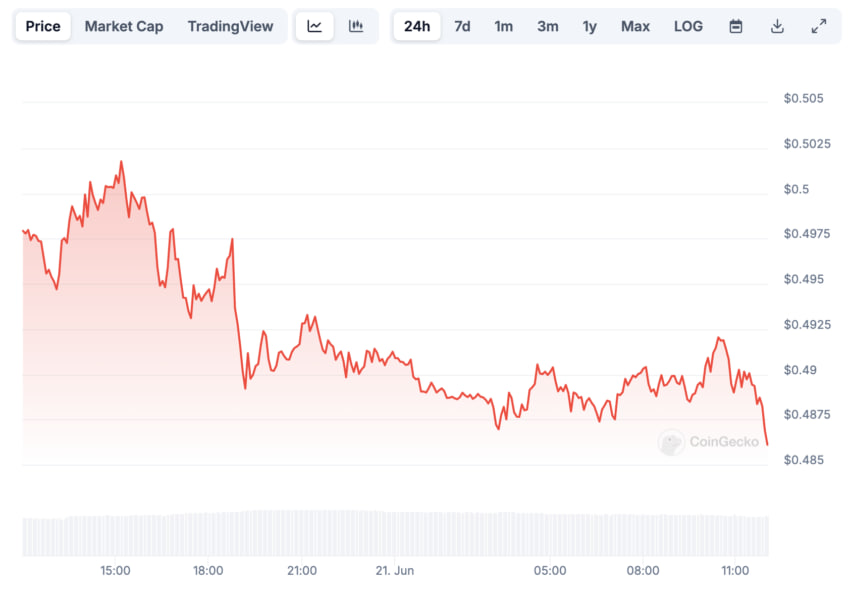
ZRO Price Chart

A price drop after a launch and airdrop is common, but in LayerZero's case, it sparked active discussions in the crypto community.

Proof-of-Donation Mechanism

To receive ZRO, users must donate $0.10 in USDC, USDT, or ETH per token. All funds will go to the Protocol Guild to support Ethereum developers. Expected funds amount to $18.5 million, plus $10 million from LayerZero.

The LayerZero initiative received negative reactions, with users comparing donations to taxes and ICOs. Yearn.Finance developer banteg expressed dissatisfaction, suggesting support for less funded initiatives.

ZRO Distribution is Not an Airdrop

LayerZero insists that ZRO distribution is not a classic airdrop. In a Medium post, the team explained that airdrops no longer achieve fair distribution and project strengthening.

Over the past year, the culture of airdrops has faced significant problems, particularly with sybils creating multiple addresses to receive more tokens, resulting in minimal long-term interest in the project's success. Additionally, airdrop farming in DeFi has led to hired capital moving from one newly tokenized project to the next, which has no tokens yet, commented LayerZero representatives.

LayerZero co-founder Bryan Pellegrino defended the ZRO launch and distribution, noting that users are not obligated to claim tokens if they oppose donations.

Some see Proof-of-Donation as a step in the right direction for future airdrops. Crypto expert Adam Cochran supported LayerZero, writing:

People complaining about LayerZero's donation mechanism are just dumb.

Criticism of airdrops in the crypto community is growing. Recently, EigenLayer faced mixed reactions due to the distribution of the EIGEN token to early users.

Tier I

Sector: #18291

Sealed Hiding Place Room

Resource Cache

Resource Cache

Tier I

Requires 25% Tier Progress to Claim
Meme Cache

Meme Cache

Tier I

Requires 50% Tier Progress to Claim
Equipment Cache

Equipment Cache

Tier I

Requires 75% Tier Progress to Claim

After collecting, hiding places will be stored in your inventory and can be opened with Keys.

Other news

Circle Releases Technical Guidance for ERC20 Transfers Using CCTP

Circle has published a developer guide detailing how issuers can utilize its CrossChain Transfer Protocol (CCTP) for ERC20 assets beyond USDC.

user avatarAyman Ben Youssef

Curve Finance Launches StableSwap on Stellar Mainnet

Curve Finance has launched its StableSwap system on the Stellar mainnet, marking its first native deployment outside the Ethereum ecosystem.

user avatarTando Nkube

Ondo Finance Introduces Tokenized Investment Portfolios on Solana

Ondo Finance has launched seven investment portfolio tokens on the Solana blockchain for eligible investors outside the US, providing managed exposure to tokenized equities and ETFs.

user avatarKofi Adjeman

Market Implications of Aave's Tokenized Equity Lending Explored

A case study on the market implications of borrowing against tokenized equities following the launch of Aave's V4s Equities Hub, highlighting market liquidity and associated risks.

user avatarNguyen Van Long

Aave Launches V4s Equities Hub for Non-US Investors

Aave has launched its V4s Equities Hub, allowing eligible non-US investors to borrow USDC against selected tokenized US equities.

user avatarSatoshi Nakamura

Polygon Labs Launches New Payment Controls for AI-Agent Transactions

Polygon Labs has launched new payment controls for AI-agent transactions, allowing automated agents to make purchases within defined parameters while managing associated risks.

user avatarRajesh Kumar

Important disclaimer: The information presented on the Dapp.Expert portal is intended solely for informational purposes and does not constitute an investment recommendation or a guide to action in the field of cryptocurrencies. The Dapp.Expert team is not responsible for any potential losses or missed profits associated with the use of materials published on the site. Before making investment decisions in cryptocurrencies, we recommend consulting a qualified financial advisor.




