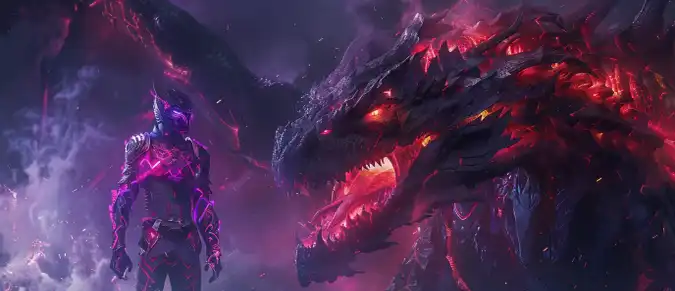

DragonMaster is a multi-layered blockchain game that blends strategy mechanics, NFT collection, and Play-to-Earn into one ecosystem. The project unfolds in the world of Lemuria, where players raise dragons, engage in tactical battles, earn tokens, and build their influence. Thanks to its combination of RTS elements, a well-designed economy, and an active community, the game has become one of the most notable Web3 platforms focused on long-term development. Below is an in-depth guide to DragonMaster’s structure, gameplay mechanics, economy, and future potential.
Contents
- The DragonMaster Universe and Core Concept
- Gameplay and Battle Mechanics
- Economy, NFT Dragons, and Token Logic
- Community, Seasons, and Metaverse Development
- Advantages, Limitations, and Future Outlook
- Conclusion
1. The DragonMaster Universe and Core Concept
DragonMaster transports the player into Lemuria — an archipelago where dragons are the foundation of culture, power, and magic. According to the official whitepaper, dragons are not ordinary creatures but embodiments of energy that ancient inhabitants learned to harness for battles, rituals, and territorial protection. At the center of the story lies DragonStone Island — a place with a unique concentration of magical flows, making it a battlefield for competing clans.
Conceptually, DragonMaster stands apart from typical NFT games due to its multi-component structure: RTS battles, MOBA-inspired strategy layers, economic decision-making, breeding mechanics, and full digital asset ownership coexist within one system. The developers aim to build an ecosystem where each player can pick a role — fighter, collector, breeder, NFT trader, or strategist who manages lands and resources.
The game is designed for long-term evolution. New mechanics are added progressively, and the world expands toward a full-fledged metaverse with controllable territories, DAO governance elements, and a blockchain-driven digital economy based on tokens and NFTs.
2. Gameplay and Battle Mechanics
The core gameplay of DragonMaster revolves around tactical lane-based combat, where players position their dragons across five tracks. Weight, speed, size, and skill determine how dragons behave during collisions. The system makes battles unpredictable — even a small dragon can defeat a larger opponent when placed strategically or used with proper timing.
Every dragon belongs to one of four size classes — S, M, L, or XL. Larger dragons hit harder and endure more damage but move slower, while smaller ones rely on mobility over power. This structure encourages strategy and careful team composition instead of brute force.
Beyond regular fights, the game features progression systems: stat upgrades, seasonal tournaments, and breeding, which enables the creation of new dragons with unique traits. The table below illustrates the fundamental differences between dragon classes.
| Dragon Class | Strengths | Weaknesses |
|---|---|---|
| S (Small) | Speed, mobility | Low attack power |
| M (Medium) | Balanced parameters | No standout advantages |
| L (Large) | High endurance and power | Slow reactions |
| XL (Extra Large) | Maximum strength and stability | Very low speed |
With these variables, players experiment constantly: some prefer fast strike setups, others rely on heavy dragons, and some mix classes to control multiple lanes. Understanding dragon behavior and forming cohesive strategies becomes the key to victory.
3. Economy, NFT Dragons, and Token Logic
The DragonMaster economy revolves around the DMT and TOTEM tokens, as well as NFT dragons. Each dragon is a unique blockchain-verified asset that can be upgraded, sold on the marketplace, used in battles, or applied in breeding processes.
Players earn tokens through victories, seasonal rewards, quests, and special events. DMT typically functions as an in-game token, while TOTEM is used for breeding and higher-tier upgrades. Dragon value is influenced not only by rarity but also by attributes, size class combinations, and the potential to generate rare offspring.
Key economic elements include:
- Arena battles: token rewards for wins and leaderboard performance.
- Breeding: generating new dragons with unique statistical combinations.
- Marketplace trading: buying and selling dragons, items, and resources.
- DMT & TOTEM tokens: form the financial backbone and maintain value circulation.
- Seasonal rewards: incentives for competitive play and consistent activity.
The economy maintains a balance between gameplay and real value. Players can build various earning models — breeding, trading, tournament play, or long-term strategic development.

4. Community, Seasons, and Metaverse Development
The DragonMaster community is an active force shaping the ecosystem. Players participate in discussions, votes, seasonal events, and tournaments, sharing strategies and expanding the depth of gameplay. Regular updates maintain interest by refining balance, adding events, and improving systems.
Seasonal structure is central to progression. Each season introduces rankings with token and NFT rewards for top players, fostering competitive spirit and long-term engagement. This model supports a continuously evolving player environment.
Future development aims at expanding the metaverse: land ownership, building systems, customization layers, and new social interactions are planned. Once implemented, DragonMaster could evolve from a PvP-centered title into a broad social-economic platform with long-term strategic depth.
5. Advantages, Limitations, and Future Outlook
DragonMaster offers several strengths: strategic depth in battles, a solid NFT structure, a dynamic token economy, and opportunities for competitive earnings. Unlike basic Play-to-Earn games, the outcome in DragonMaster depends on planning, positioning, and understanding attributes — not simply on token accumulation.
However, the game also carries risks: token value fluctuations, dependency on player activity, breeding costs, and the inherent volatility of NFT markets. As with any Web3 ecosystem, the economy relies on community engagement.
The future of DragonMaster appears promising. If land mechanics, DAO governance, extended PvP modes, and social systems are added, the game may become one of the more advanced Web3 metaverses. This would allow players not only to fight but to build entire digital environments, shaping a self-sustaining economy.
6. Conclusion
DragonMaster is a rich Web3 experience that merges tactics, economics, and digital ownership. It provides a journey from beginner tamer to the leader of a formidable dragon army, where every decision influences the broader metaverse. With consistent updates and deep gameplay systems, the project builds a long-term ecosystem with earning opportunities, strategic layers, and creative participation.
Its blend of combat mechanics, digital asset ownership, and community-driven evolution distinguishes DragonMaster from typical blockchain games. With continued expansion, the project holds the potential to become a leading Web3 metaverse.











