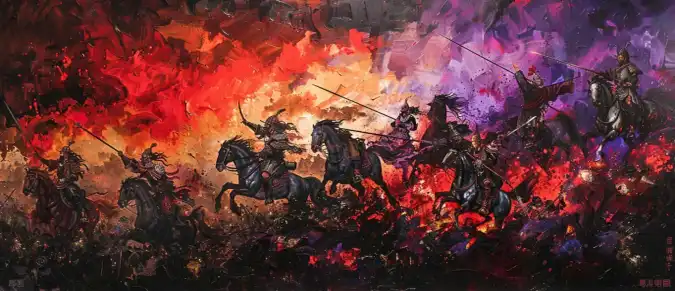

KAI Battle of Three Kingdoms is a modern reinterpretation of SEGA’s classic arcade game "Sangokushi Taisen," developed by double jump.tokyo. The game combines the strategic depth of card battles with the innovative capabilities of blockchain technologies, offering players a unique experience set in the era of the Three Kingdoms.
Contents:
- Gameplay and Mechanics of KAI Battle of Three Kingdoms
- NFT Cards and Their Role in the Game
- Economy and Tokenomics: SGC and In-Game Currency
- Events, Tournaments, and Updates
- Future Development and Project Roadmap
- Conclusion

Gameplay and Mechanics of KAI Battle of Three Kingdoms
KAI Battle of Three Kingdoms offers strategic card-based combat rooted in the historical events of the Three Kingdoms period. Players build decks from various commanders, each with unique abilities and stats.
Battles play out automatically, with success depending on pre-battle strategy, card selection, and positioning on the battlefield. The game progresses through three phases: opening, midgame, and final — each requiring tactical adjustments.
A notable feature is the "Recruitment" system, allowing players to summon new commanders mid-battle, adding unpredictability and requiring flexible tactics.
NFT Cards and Their Role in the Game
In KAI Battle of Three Kingdoms, NFT cards play a key role, with each one representing a unique warlord. These cards are not only gameplay elements but also fully-fledged digital assets verified on the blockchain. The NFT format ensures that each card has a single owner and cannot be duplicated. The game features two main types of cards, which differ both visually and functionally.
Table: Comparison of Card Types
| Card Type | Characteristics | Availability |
|---|---|---|
| Regular | Standard abilities and attributes | Earned during gameplay |
| Awakened | Enhanced abilities, unique design | Acquired through NFT packs |
Economy and Tokenomics: SGC and In-Game Currency
The game’s economy revolves around the $SGC token, which operates on the Oasys blockchain. Players can earn $SGC by competing in tournaments, completing tasks, and ranking high on leaderboards.
The $SGC token is used for purchasing card packs, joining special events, and for staking to earn additional rewards. This system encourages active participation and supports a sustainable in-game economy.
Additionally, prior to the game's launch, an airdrop event called "The Rise of Bravery" allowed players to earn Bravery Points, later convertible to $SGC.
Events, Tournaments, and Updates
KAI Battle of Three Kingdoms keeps players engaged through regular events, tournaments, and updates. Since its launch in April 2025, developers have organized multiple activities aimed at growing the community and sustaining game dynamics. These initiatives foster an active player base and offer more engagement opportunities and rewards.
Key Events and Tournaments:
- Season ZERO Tournament: The first official tournament, sponsored by Rakuten Wallet, with a prize of ¥100,000 for the winner.
- "The Rise of Bravery" Campaign: A pre-launch event where players earned Bravery Points, later exchangeable for $SGC tokens.
- Special Livestreams: A two-day YouTube event celebrating the game's launch, featuring developers and community figures.
- Social Media Campaign: Amazon gift card giveaways for followers and those participating in the repost campaign for the launch.
These events not only enrich gameplay but also strengthen the bond between developers and the community, laying a strong foundation for the game’s future. New tournaments, features, and social interaction tools are planned to further expand the experience.
Future Development and Project Roadmap
double jump.tokyo aims to enhance KAI Battle of Three Kingdoms by introducing new features and updates. Planned improvements include user-generated tournaments, expanded staking options, and the addition of social features.
Cross-platform functionality and integration with other projects on the Oasys blockchain are also under consideration. This would help build a broader ecosystem and attract a wider audience.
The developers emphasize their “Gamer First” philosophy, aiming to provide a fair and enjoyable experience for all players.
Conclusion
KAI Battle of Three Kingdoms is more than just a strategy game — it's a full-fledged Web3 project that merges traditional card game mechanics with cutting-edge blockchain solutions. With NFT integration, a token-based economy using SGC, active tournaments, and strong community involvement, the game appeals to a broad audience. The developers' dedicated approach and ambitious vision suggest the project is poised to become a leader in the blockchain gaming space.











