
A confident conclusion can be easy to read and difficult to check. The missing piece is often the route from the evidence to the conclusion: what was observed, how it was interpreted, and what remains uncertain.
In the previous article, I traced claims back to their sources. The next editorial task is to make that work visible to the reader. A useful article should give people enough information to inspect its reasoning without forcing them to repeat the entire investigation.
Show the source beside the claim
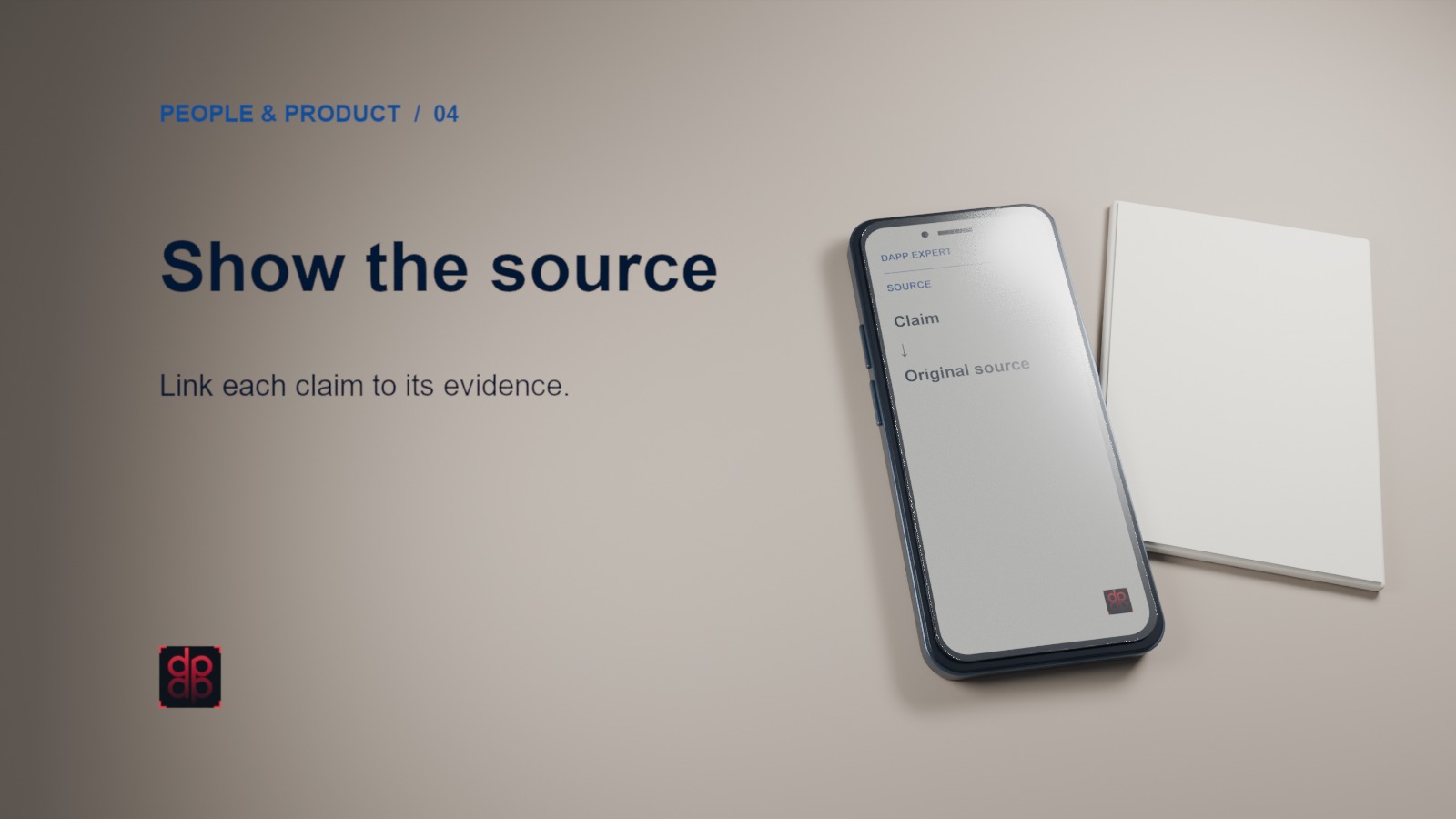
A list of links at the bottom is useful, but it does not always tell a reader which document supports which sentence. Put the relevant reference close to the assertion. Explain whether it is a company statement, an independent measurement, a research result or an interpretation.
The Trust Project treats references and methods as separate indicators. Readers need both the evidence behind a story and an explanation of how the reporting was done. These are transparency standards, not a guarantee that any particular conclusion is correct.
Describe the step between evidence and conclusion
Consider a fictional product comparison. A reviewer runs the same task on two tools and observes that one finishes faster. The observation is the recorded completion time. Calling the tool better is a broader judgment that may also depend on output quality, price and reliability.
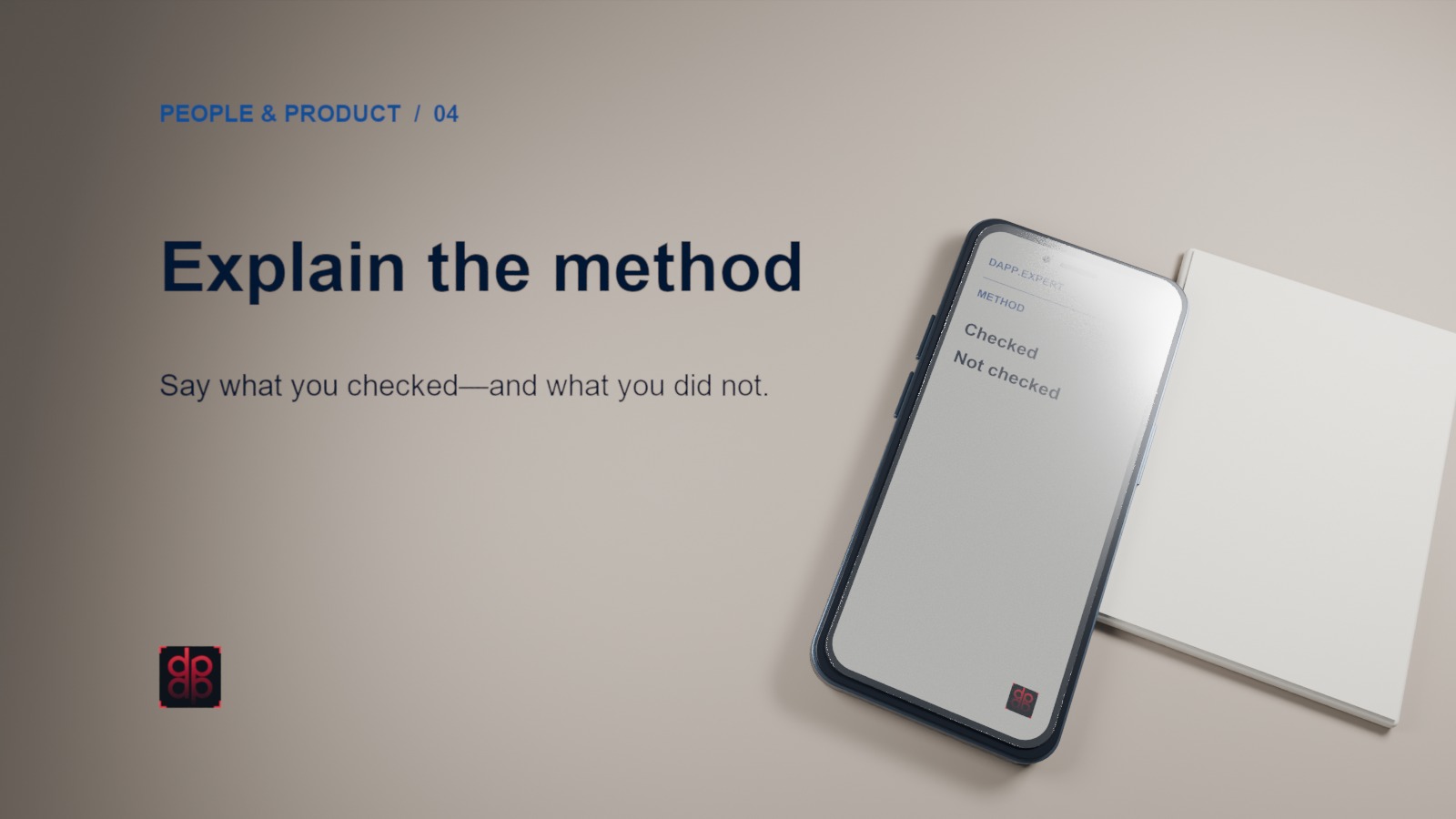
An inspectable account would say which versions were used, what the task required, how timing began and ended, and whether the result was repeated. If those details are missing, the reader cannot tell what the comparison actually establishes.
My working rule is to name the operation: compared the documentation, measured the response, reproduced the example, or inferred a likely explanation. Those verbs describe different kinds of work. They should not be interchangeable.
Put the limits where readers can see them
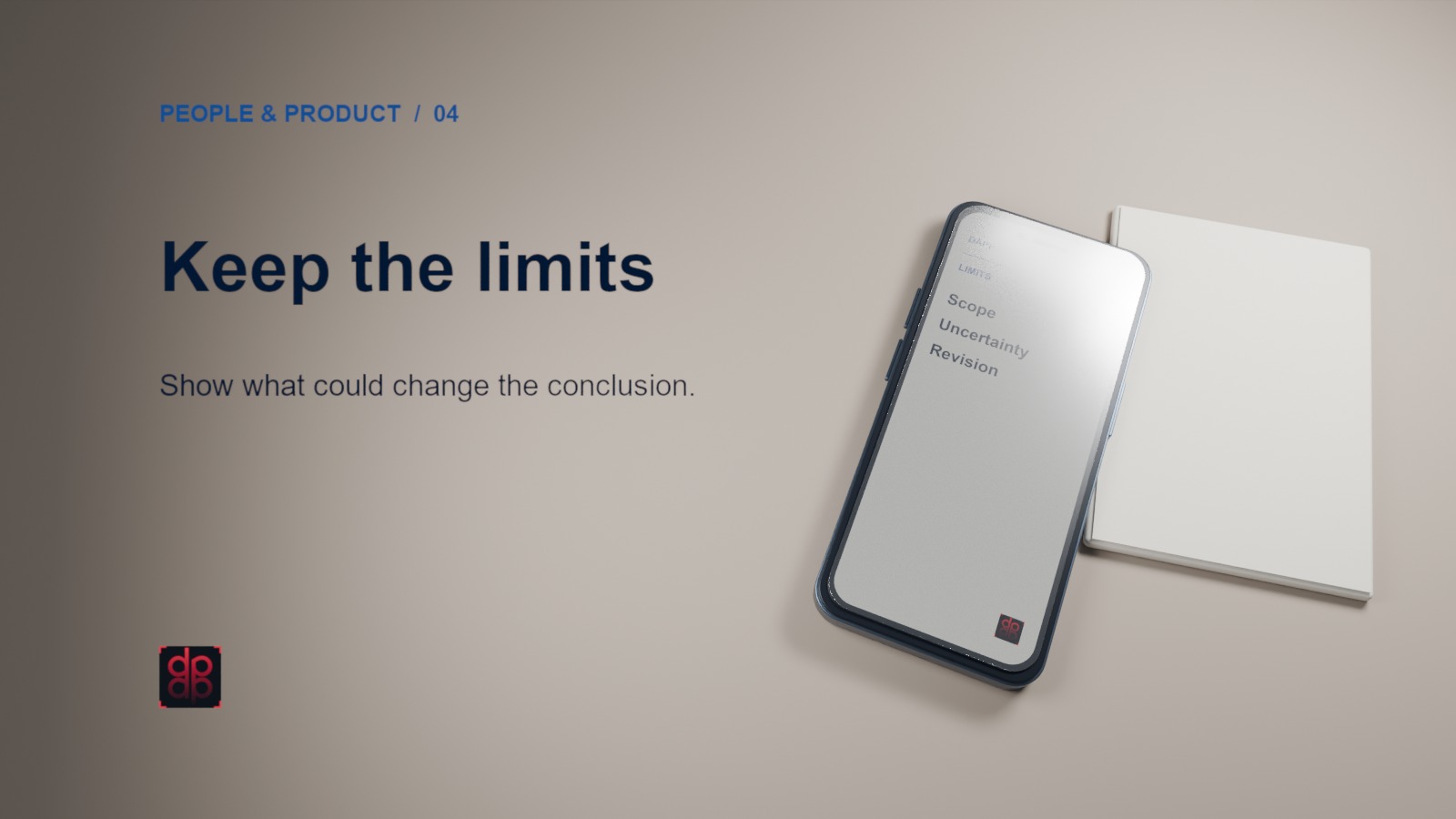
A qualification belongs beside the claim it changes. If a result covers one configuration, say so before the reader interprets it as universal. If the underlying source cannot be accessed, describe the gap. If an illustration is fictional, label it.
There is a useful difference between uncertainty and vagueness. I do not know tells the reader little on its own. I checked the public documentation but did not run the product identifies a concrete boundary. Another person can then decide whether that boundary matters to their question.
Transparency helps inspection; trust still has to be earned
A 2019 Center for Media Engagement report tested boxes explaining why and how stories were reported. In an experiment using a mock news site, the box improved one of twelve measured perceptions. In a second experiment using articles from USA TODAY and the Tennessean, it improved eleven of twelve.
The difference matters. This research supports testing a clear explanation of the reporting process; it does not establish that any transparency box will produce trust, or that its effect transfers unchanged to every audience. Readers also need the explanation to describe work that was actually done.
A compact note readers can use
For an analytical article, I would start with four short entries:
Evidence: the document, observation or measurement behind the central claim.
Method: what was checked and how the conclusion was reached.
Limits: what was not checked, and where the conclusion may not apply.
Revision: what new evidence would change the conclusion.
This is a proposed editorial checklist, not a validated scoring system. Its purpose is practical: make disagreement more specific. A reader should be able to challenge the source, the method or the interpretation, rather than having to accept or reject the author's confidence as a whole.
The standard I want to work toward is an article whose reasoning remains useful even to someone who disagrees with its conclusion.











