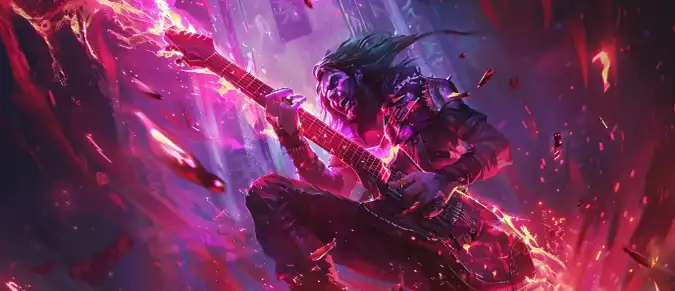

Rising Star is a blockchain game built on the Hive ecosystem, where players progress from street performers to fully fledged virtual music stars. The project blends elements of a simulator, collectible NFT cards, and Web3-driven economics, offering true ownership of digital assets and an easy entry point into Play-to-Earn. With zero transaction fees and simple mechanics, Rising Star remains one of the most accessible Web3 games, combining musical themes with collectible gameplay to create a unique and engaging experience.
Contents
- Concept of Rising Star and Web3 Approach
- Gameplay Logic and Character Progression
- Rising Star Economy: Tokens, NFT, and Internal Mechanics
- Community, Music Ecosystem, and Player Interaction
- Benefits, Limitations, and Future Potential of Rising Star
- Conclusion

1. Concept of Rising Star and Web3 Approach
Rising Star is an accessible blockchain game on Hive focused not on token farming but on steadily building a music career. The player begins as a newcomer and develops their character through missions, collecting NFT cards, and engaging in various activities, with all digital assets fully owned by the user. The Web3 foundation ensures transparency and security since all NFT-related actions are stored on the blockchain.
This structure creates a stable and evolving musical ecosystem with significant long-term potential. Additional features are continuously introduced, keeping players engaged over time. The project grows alongside its community and gradually expands its virtual music universe. Designed for long-term play, new mechanics are added to complement the existing system, making the environment organic and consistently evolving.
2. Gameplay Logic and Character Progression
The core gameplay of Rising Star revolves around missions—activities that require energy, skill, and fan count. While the mechanics appear simple, they provide strategic depth: players must balance resources, restore energy on time, and select tasks that best advance their career. Each mission has unique requirements and duration, encouraging thoughtful planning. Over time, players learn to analyze their stats and choose more efficient development routes.
Below is a table of the main attributes influencing progression:
| Attribute | Role |
|---|---|
| Energy | Determines how often missions can be completed |
| Fans | Provide access to more advanced missions |
| Skill | Reduces penalties from "drunk fans" and stabilizes income |
| Luck | Increases chances of receiving bonus NFT drops |
As the character levels up, players unlock new areas, more challenging missions, musical events, and rare cards. Completing tasks earns STARBITS, experience, and a chance for bonus rewards, giving users freedom to choose their development path—from collecting rare cards to forming a stronger band or focusing on economic mechanics.
The gradual expansion of opportunities keeps gameplay fresh and encourages daily engagement. Players must also manage resources effectively, using energy, boosters, and upgrades at the right time. This creates a stable progression model, while new locations and mechanics further enhance the character’s influence and accelerate career growth.
3. Rising Star Economy: Tokens, NFT, and Internal Mechanics
The game’s financial system revolves around two tokens: STARBITS and STARPRO. STARBITS serves as the primary currency earned from missions and spent on music cards and boosters. STARPRO is a rarer token used in advanced features and festival-related activities. This dual-token model builds a layered economy where each resource maintains its own value, supporting balance between gameplay and crypto utility.
Every card is an NFT owned by the player and stored on the Hive blockchain. These cards can be traded on external marketplaces or used within the game to boost performance, form bands, unlock events, and increase earnings. Cards vary in rarity, with some minted in limited quantities—adding collectible and strategic depth.
The economy includes several interconnected systems that allow players to shape their own development strategy. Below is a list of the core financial mechanics:
- Missions: the main source of STARBITS and experience.
- NFT Cards: instruments, musicians, vehicles, and studio equipment.
- Boosters: items that restore energy and speed up progress.
- Marketplace: player-to-player NFT trading.
- Events & Festivals: opportunities to earn rare cards and STARPRO.
- Token Withdrawal: transferring STARBITS to Hive Engine as a real crypto asset.
All systems interact seamlessly, forming a sustainable and player-driven economy. Even small actions contribute to long-term progression, creating a stable growth cycle and deep engagement.
4. Community, Music Ecosystem, and Player Interaction
One of Rising Star’s strongest aspects is its integration with the Hive music community. Many cards represent real independent artists who collaborate with developers, and an in-game radio broadcasts their tracks. This transforms the game into a supportive platform for musicians, giving them a space to showcase their work. Some players even contribute original music that later becomes part of the game’s expanding catalog.
The community uses Hive’s social tools for blogging, contests, fan projects, and music challenges. Newcomers receive guidance from experienced players, reducing the learning curve. Updates and ideas are frequently discussed in Discord, where player feedback helps shape new features—creating a collaborative development environment.
As a result, Rising Star functions as a creative hub combining gaming, social interaction, and artistic expression. The active community keeps the ecosystem vibrant, while the music focus attracts diverse audiences. Constant interaction and user-driven additions keep the project evolving naturally.
5. Benefits, Limitations, and Future Potential of Rising Star
Rising Star offers several advantages: no required investment to start, accessible collectible NFTs, transparent blockchain mechanics, a friendly community, and regular updates. These factors make the game appealing to casual gamers, Web3 enthusiasts, and music fans alike. The unique musical theme distinguishes it from typical crypto games and provides long-term engagement potential.
The game does have limitations, such as reliance on energy restoration, lack of PvP mechanics, and certain processes stored on private servers. However, this hybrid structure ensures stability and helps maintain balanced gameplay. For some users, the predictable environment is even a benefit, offering a smoother and more controlled progression experience.
Rising Star’s future lies in expanding its music metaverse, introducing new NFT collections, engaging more artists, and deepening Web3 integrations. With an active community and the reliability of Hive, the game is well-positioned to grow even in a competitive Play-to-Earn landscape. Over time, it may develop into a full-scale music ecosystem merging creativity, collecting, and decentralized gaming.
6. Conclusion
Rising Star is far more than just a blockchain game — it is a musical ecosystem that brings together players, artists, and collectors. It allows users to build a virtual music career, own digital assets, and interact with Web3 features without barriers or technical complexity.
The project continues to evolve, attracting gamers and digital economy enthusiasts, while its distinctive concept sets it apart from other Web3 projects. Altogether, Rising Star stands as a dynamic, sustainable, and promising platform with significant room for future expansion.











