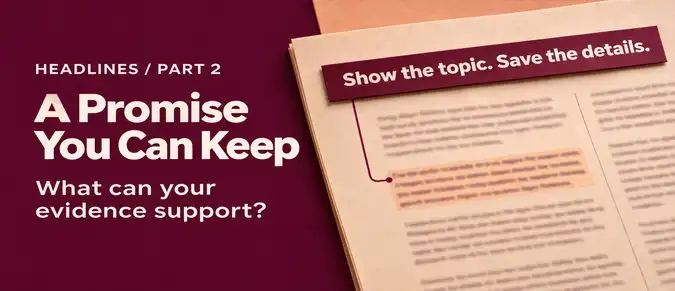

Read your headline as if you have never seen the article. What exactly would you expect to find after clicking? That expectation is the promise your draft has to keep.
Find the promise hidden in the wording
A headline can promise a result, an explanation or a decision. “Which image format makes a site faster?” promises a comparison of formats and evidence about speed. It also implies an answer that a reader can apply to a site.
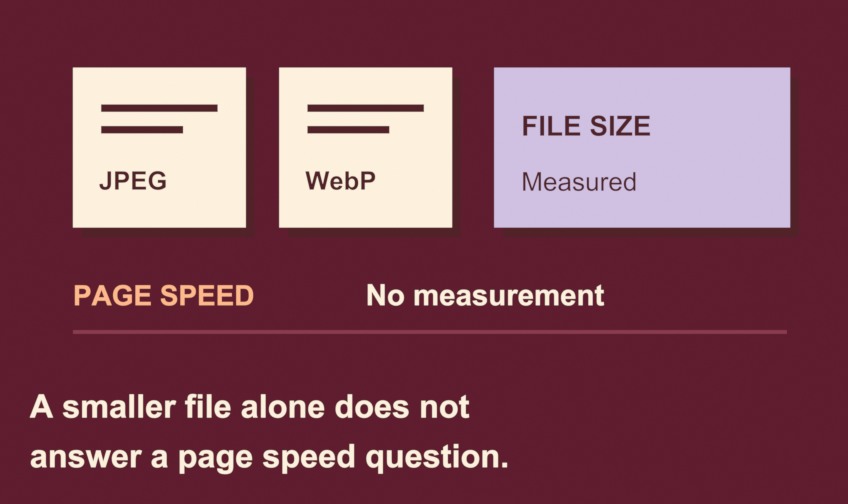
Suppose your draft compares file sizes for one set of photographs. A smaller download may be useful, but your test did not measure page speed. An accurate headline would be “JPEG vs. WebP: Which files were smaller in our photo test?” It identifies the comparison, the measurement and the scope. This is an illustrative example, not a benchmark result.
Put the answer where readers can find it
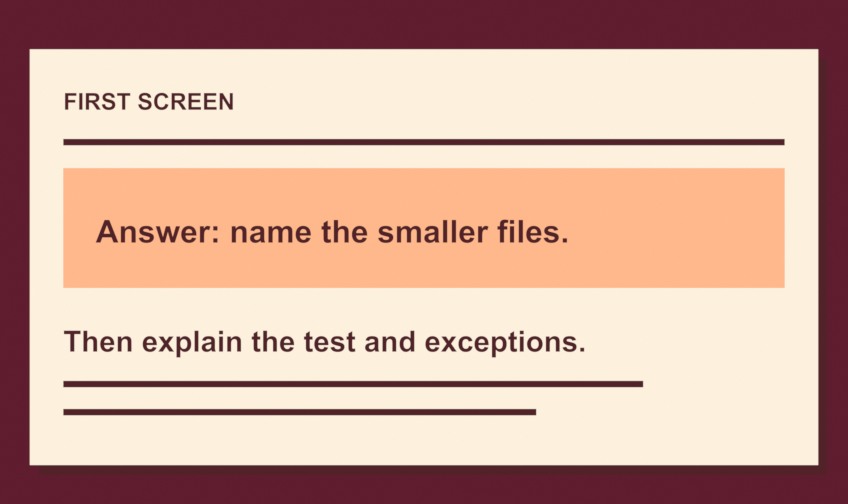
Underline the words that make the promise, then find the sentence or section that delivers it. In the example, a reader needs the comparison and its result. Put that answer near the top, with enough context to understand it. Explain the test setup and exceptions below.
If you cannot point to an answer, you have two options: collect the missing evidence or narrow the headline to the result you have. Do the same for a promise to explain a cause. A before-and-after observation may support a description of what changed, but it may not tell you why it changed.
Check what the preview implies
Google's Discover guidance recommends headlines that capture the essence of the content. It advises against misleading or exaggerated details in titles, snippets and images, or withholding information a reader needs to understand the topic. That guidance is for Discover; the following editing check is a practical way to apply the same principle to an article preview.
Finish the sentence “After clicking, I expect to learn…” using only what the headline and cover say.
Point to the passage, comparison or evidence that delivers that expectation.
Read the first screen again. Can a reader find the answer or see where it is coming?
Specificity helps when it tells readers what they will actually get. The headline, cover and opening should make the same promise, and the article should show how it earns it.











