

In the world of cryptocurrencies and blockchain technology, innovative solutions constantly emerge, aimed at expanding the capabilities of decentralized applications and improving existing systems. One such breakthrough project is Zulu Network — the first platform focused on DePIN (Decentralized Physical Infrastructure Networks), operating on Bitcoin's second layer. Zulu Network seeks to combine Bitcoin's security and stability with the advanced functionality provided by compatibility with the Ethereum Virtual Machine (EVM), opening new horizons for decentralized applications and services.
Contents:
- What is Zulu Network?
- Unique Architecture of Zulu Network
- Tokenization of Computing Power
- EVM Compatibility and Developer Opportunities
- Decentralization of Hashrate and Its Importance
- Contribution to BitVM Development and BitVM-Based Bridges
- Zulu Network's Plans and Future Prospects
- Conclusion
What is Zulu Network?
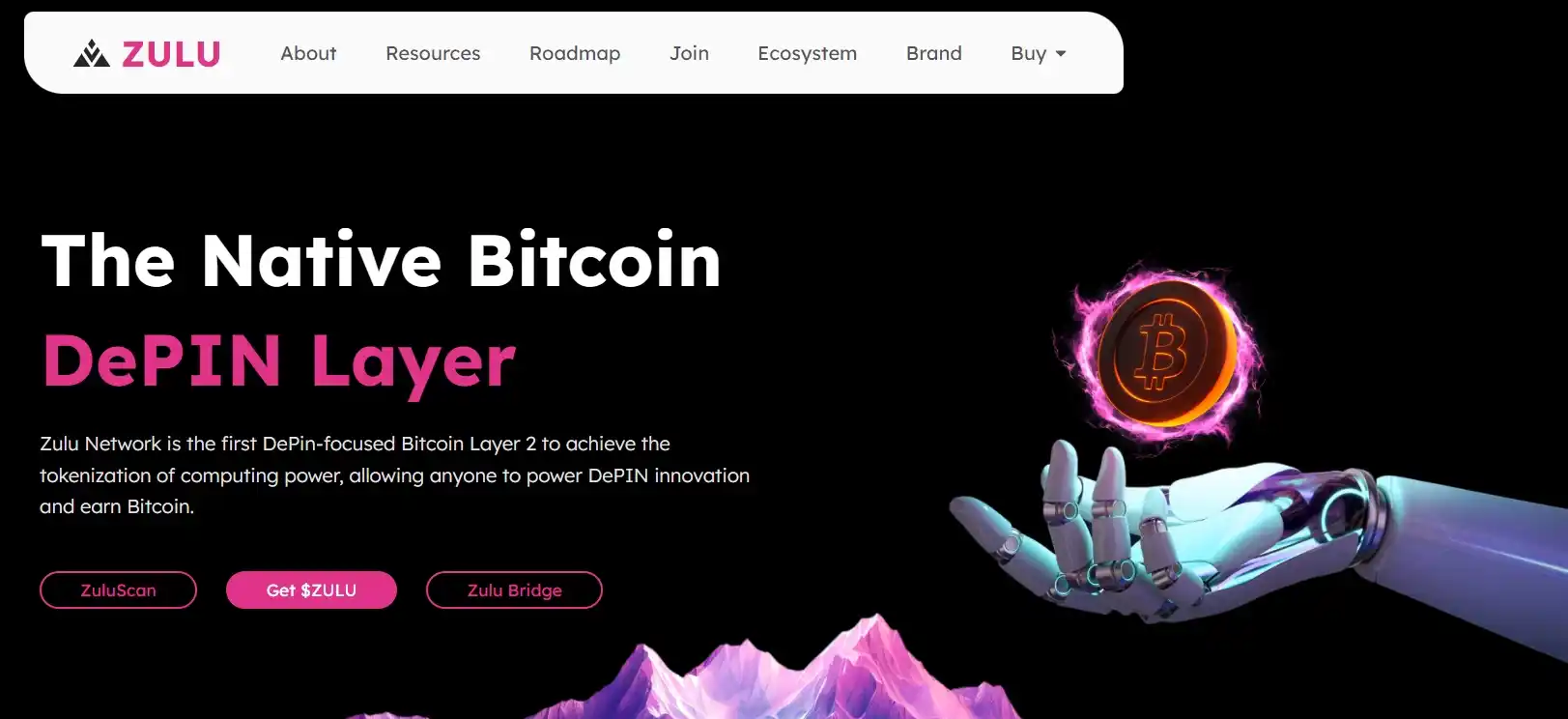
Zulu Network is an innovative second-layer (Layer 2) platform built on Bitcoin, focusing on DePIN. Its main goal is to enable the tokenization of computing power, allowing users to implement decentralized innovations and earn bitcoins. The platform combines Bitcoin's security and decentralization with the advanced functionality provided by EVM compatibility, unlocking new opportunities for developers and users of decentralized applications.
Unique Architecture of Zulu Network
The architecture of Zulu Network includes several key components:
- DePIN Innovation Layer: This layer is optimized for decentralized physical infrastructure networks, enabling the use of Bitcoin in new, previously unavailable scenarios.
- EVM Layer: Provides compatibility with the Ethereum Virtual Machine, allowing smart contracts and decentralized applications developed for Ethereum to run directly on the Zulu Network platform.
Such a structure allows Zulu Network to enhance transaction speed, reduce costs, and maintain Bitcoin’s high level of security while providing expanded opportunities for developers.
Tokenization of Computing Power
Zulu Network offers an innovative opportunity for tokenizing computing power, enabling users to provide their resources to support decentralized applications and services. This is achieved through a second-layer architecture based on Bitcoin, optimized for DePIN and artificial intelligence. Users can tokenize their computing resources, contributing to decentralization and efficient use of physical resources in the digital space. Thus, Zulu Network opens new opportunities for monetization and participation in decentralized networks, rewarding users in bitcoins for their contributions to the ecosystem.
EVM Compatibility and Developer Opportunities
Thanks to Ethereum Virtual Machine (EVM) compatibility, developers can create and deploy decentralized applications (dApps) on Bitcoin, using familiar tools and programming languages such as Solidity. This is achieved through the implementation of Zulu EVM, functioning as a second-layer (Layer 2) solution on Bitcoin, enabling the use of smart contracts and tools common in the Ethereum ecosystem. This architecture ensures faster transaction speeds, reduces costs, and maintains the security of the Bitcoin network, opening new horizons for developers to create complex financial applications and services.
Decentralization of Hashrate and Its Importance
The decentralization of hashrate plays a key role in ensuring the security and resilience of blockchain networks. Currently, a significant portion of computing power is concentrated among major hardware manufacturers such as AMD, NVIDIA, IMC, and Qualcomm. This creates risks of centralization and network vulnerability. Zulu Network aims to change this by providing opportunities for hashrate decentralization and returning control over computing power to the community. This contributes to increasing network security and reducing risks associated with centralized mining.
Contribution to BitVM Development and BitVM-Based Bridges
The contribution to BitVM development and the creation of bridges based on it are significant for expanding Bitcoin’s functionality. BitVM, functioning as a Turing-complete virtual machine, allows complex computations and state verification directly within the Bitcoin network. This opens opportunities for developing trust-minimized bridges, ensuring secure and efficient asset transfers between Bitcoin and other blockchains. Zulu Network actively participates in advancing this technology, aiming to introduce innovative solutions to enhance compatibility and expand decentralized application possibilities.
Zulu Network's Plans and Future Prospects
Zulu Network is actively developing to expand functionality and strengthen its position in the Bitcoin ecosystem. Plans include launching the mainnet with EVM support, introducing staking for decentralized physical infrastructure networks (DePIN), and integrating decentralized AI agents and applications. These steps aim to democratize access to staking and participation in decentralized networks, enabling users to earn bitcoins and contribute to blockchain technology development.
Zulu Network represents a significant step forward in advancing decentralized technologies on Bitcoin. By combining Bitcoin's security and decentralization with the enhanced functionality provided by EVM compatibility, the platform opens new opportunities for developers and users. Tokenization of computing power, decentralization of hashrate, and innovation in DePIN and artificial intelligence make Zulu Network a promising project with great potential for the future development of decentralized applications and services.
Conclusion
Zulu Network is an innovative second-layer platform built on Bitcoin, focusing on decentralized physical infrastructure networks (DePIN). It combines Bitcoin's security and decentralization with the enhanced functionality provided by Ethereum Virtual Machine (EVM) compatibility. The platform enables tokenization of computing power, decentralization of hashrate, and the integration of innovations in artificial intelligence, opening new opportunities for developers and users of decentralized applications and services.











