



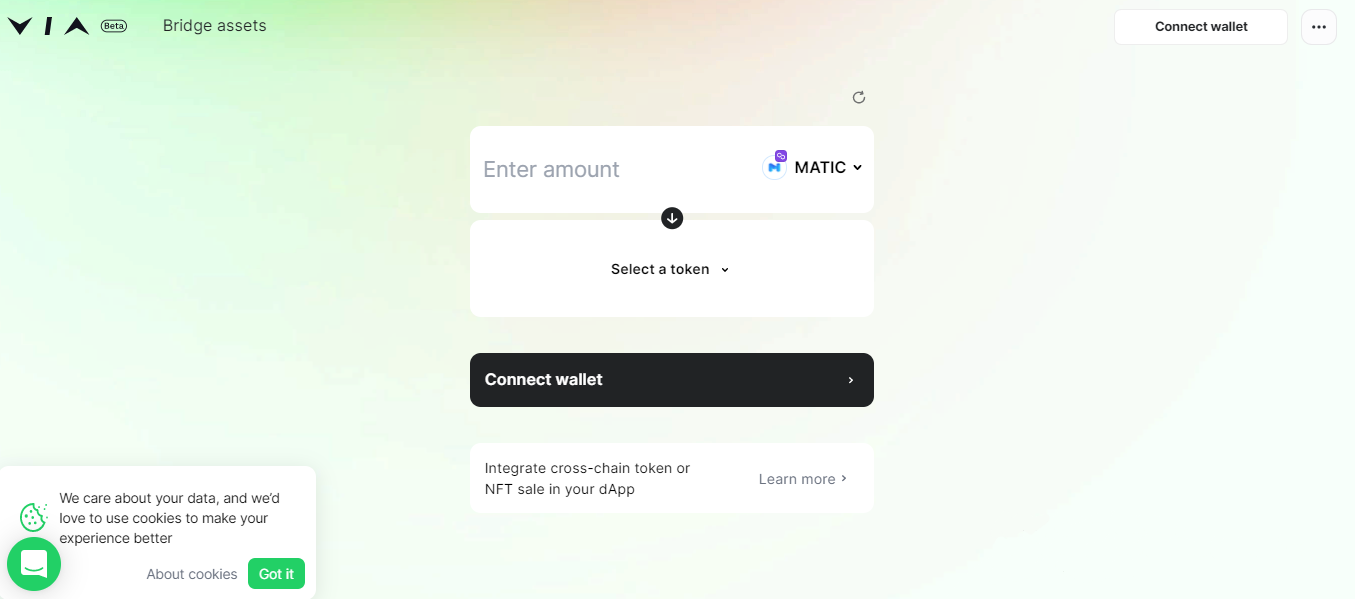
The developers of Via Protocol BSC are trying to solve one of the most critical problems in Web3 - a bad cross-chain experience. It's too hard to be part of two or more ecosystems like Ethereum, Solana and Near. New users don't have to deal with DEXs and bridging! This is why the cross-chain liquidity aggregator and NFT sell function for GameFi.3 have been developed.
About Via Protocol BSC
The protocol charges a 1% commission for cross-network sales. Direct selling is free. The team provides a checkout page with multiple supported wallets and free customization.
A robust API can be useful in several types of projects:
| 1 | NFT games and collections can enhance the checkout experience with a customizable user interface - no more detailed guides on how to connect tokens to your network. |
| 2 | NFT marketplaces can accept payments in any token and transfer the NFT to a buyer on the NFT chain. |
| 3 | DeFi applications can provide better cross-chain exchange not only with stablecoins, but also with other tokens. |
The core functionality of the cross-chain aggregator helps to create a cross-chain verification system that is superior to NFT marketplaces and blockchain games.
By directly integrating a cross-chain liquidity aggregator into their project, blockchain marketplaces and games can allow their users to buy NFTs with any major token and receive NFTs on the target chain within 20 seconds. Essentially, VIA can be thought of as an NFT payment solution.
Examples of using defi app
Example 1: you have LP tokens (only work with large pools) on UNI V2 USDC/WETH and you want to transfer your LP to the application on Polygon, you need to withdraw your position manually from the pool, bridge the assets and recreate the position on the new chain.
With VIA: all your LP tokens can be transferred from Ethereum to Polygon without any stress or time investment. We prefer the second option.
Example 2: the user needs funds in chain #1, but there are no funds at all, so he is forced to move from chain #2 to chain #1 and borrow.
With VIA: if you have funds on chain #3, they are already secured on #1 and #2. What it looks like - on chain #1, you have newly taken funds in chain #2 and repayment of the loan on chain #3.
Example 3: Yield aggregators implement strategies for their vaults on one chain and cap your holdings from listening to a higher APR on other chains. With VIA, the contract can find the best choice with the highest annual interest rate on the networks, sending your assets to the best yield protocol and earning you the highest possible yield.