



HOP Protocol — a scalable universal token bridge from pool to pool. This allows users to send tokens from one rollup or sidechain to another almost immediately without waiting for a network request period.
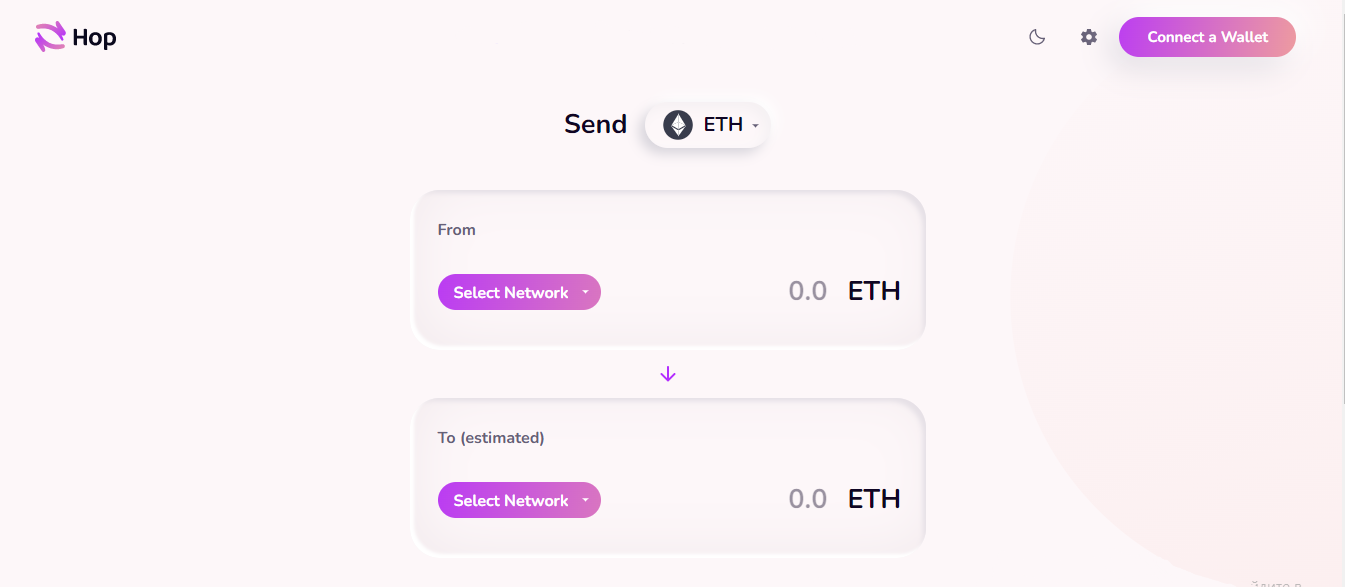
The HOP Protocol works by bringing in market makers (called Bonders) who provide liquidity to the destination network in exchange for a small fee. This credit is extended by the bonder in the form of hToken, which are exchanged for their own token equivalent in AMM. The end result allows users to transfer tokens seamlessly from one network to another.
It is an intermediate bridge token that allows unreliable swaps. The end user does not need to deal with the "h" tokens directly, they only deal with the canonical token.
The Hop protocol provides a scalable token bridge for the Ethereum layer 2 ecosystem, using a two-way approach:
- Create a special intermediate resource, called hToken (e.g. hETH, hDAI, etc.), that can be moved quickly and economically from one network to another.
- Use automated market makers (AMM) to exchange between hTokens and their respective assets on each Layer 2 network.
The end result allows users to seamlessly transfer tokens from one network to another.
The current version of Hop allows users to transfer tokens between EVM-compatible scaling solutions. Future areas of research will include enabling cross-chain contract calls, improving system capital efficiency and gas recovery, and adding support for non-evm-compatible storage packages.