



Plasma Finance — a decentralized financial services and infrastructure for the global digital economy.
Contents:
Plasma Finance project description
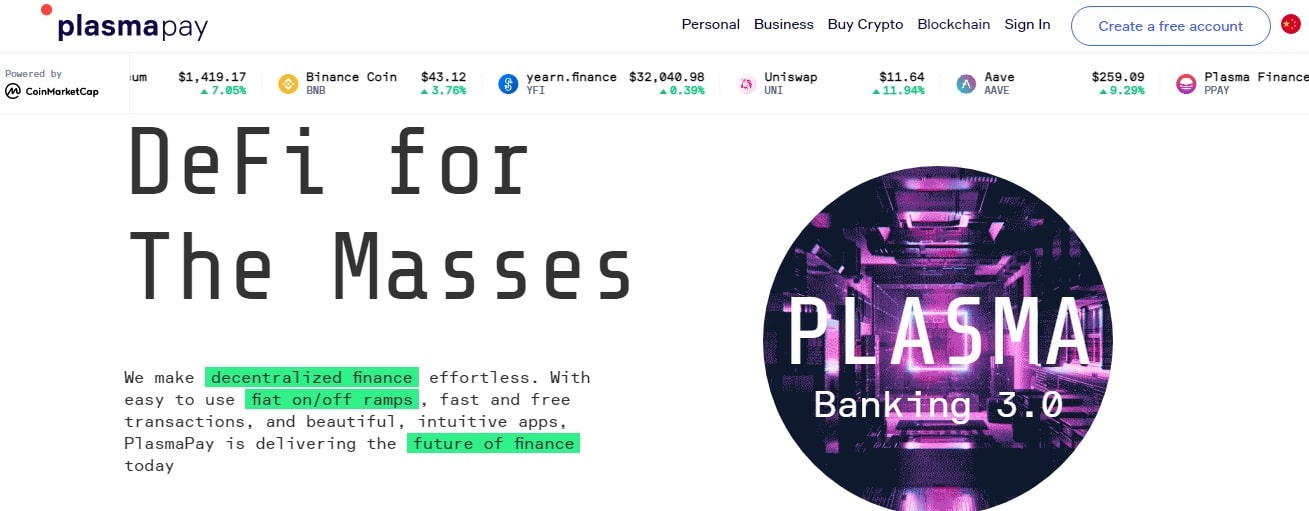
It is a blockchain and application infrastructure with a mission to decentralize the centralized financial services (CeFi) industry. Plasma technology enables developers to create robust financial instruments that allow people to control their assets. Developers will be able to use Plasma building blocks like fiat on and off-ramp gateways to develop new DeFi and dApp protocols.
Benefits include processing payments, sending and receiving payments regardless of card provider or bank, international transactions with zero fees and instant liquidity.
Project components:
|
Top layer: DApps |
A new internet layer of distributed applications (games, services, platforms, social networks), based on the Plasma blockchain. |
|
Medium: financial assets |
Tokenized financial assets (fiat money, stocks, commodities, etc.) For trading and storage in digital wallets, as well as for processing in the Plasma Blockchain. |
|
OAuth Connector for Dapps Web 3.0 |
New protocol standard and authorization level for decentralized applications in Plasma Blockchain without the need for external applications or extensions. |
PPAY (ERC20) — PlasmaPay and PlasmaFinance utility token. PPAY allows for swaps, rewards, liquidity mining, borrowing / lending and betting. The PPAY token will be used as a bridge between Ethereum, Polkadot, BSC and the in-house developed Plasma blockchain with zero fees.
PlasmaPay wallet supports:
- BTC, ETH, non-custody wallets
- 3000+ ERC-20 tokens
- Plasma DLT stablecoins
- cryptocurrency exchange for cryptocurrency
Place PPAY bets and earn PPAY with flexible and timely blocked betting methods. The PPAY rate allows the community to vote for delegates, control the development fund, vote on defi projects and on protocol changes / updates (1 PPAY = 1 vote).
Additional information
You can find a detailed description of the project on the main page of the site. There are not only main features of the project, but also its distinctive features. Also, the developers provide a white paper and a roadmap. Social networks are actively pursued: twitter, telegram, facebook. The smart contract doesn’t have an audit.