



Scalable Dollar Protocol (SDP) — an algorithmic stablecoin, created as the reserve currency of decentralized finance. The protocol is based on the ERC-20 token: SDP. This token acts as a stabilized dollar and as a governance token for the protocol.
Contents:
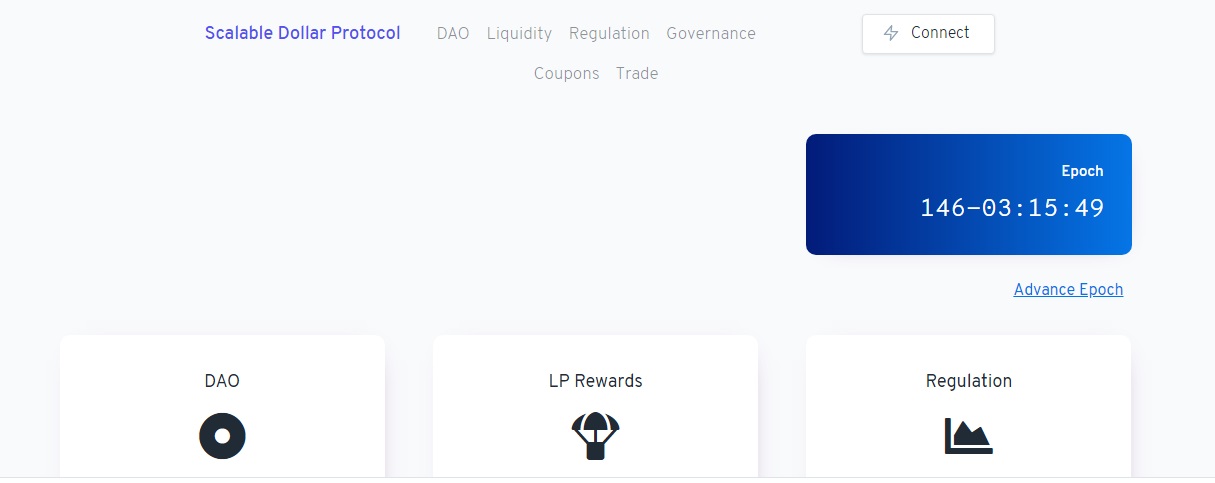
Description of the Scalable Dollar Protocol
For self-stabilization, the protocol uses a voluntary expansion and contraction of supply around a Weighted Average Price (TWAP) oracle from a stimulated trading pool on Uniswap. SDP has combined several different mechanisms from different projects into a single protocol.
This combination gives it unique features:
| Decentralized | The ability to update only through the management of tokens in the chain. |
| Self-stabilizing | Uses the price oracle in the chain. |
| Composite | The token is a simple ERC-20 token that acts as both a stablecoin and a governance token. |
| Consent to amend the proposal | All extensions and reductions in the supply are incentive and voluntary. |
The SDP uses an algorithmic approach to maintain price stability around the USD 1 target. This approach relies on a tuned incentive mechanism to reward participants that contribute to stability in the protocol. This ensures a smooth operation within a decentralized financial infrastructure and reduces the likelihood of unexpected errors in integrated protocols.
The Scalable DollarProtocol was developed by taking elements from many pre-existing protocols to create a balanced protocol that avoids the pitfalls of other protocol designs. The resulting protocol avoids the risks of centralization of USDC, USDT and TUSD, tries to avoid the AMPL and BASED death spirals, sUSD and DAI over-collateralization requirements, and, most importantly, it integrates seamlessly with existing DeFi protocols.
Additional information
Since launch, Scalable DollarProtocol is chained-driven. This means that any changes or protocol updates must be approved by the token holder community before being accepted. The site does not have a WhitePaper document, but a separate section is available with a description of all features of the project and answers to questions.
From social networks, the community leads:
- discord;
- twitter;
- blog.
Subscribe to stay up to date with all updates.