



Synthetix Exchange — a decentralized synthetic asset issuance protocol, built on Ethereum. These synthetic assets are backed by the Synthetix network token (SNX), which, when locked in a contract, allows the issuance of synthetic assets (Synths). This pooled collateral model allows users to convert between Synths directly, using a smart contract, avoiding the need for counterparties.
Contents:
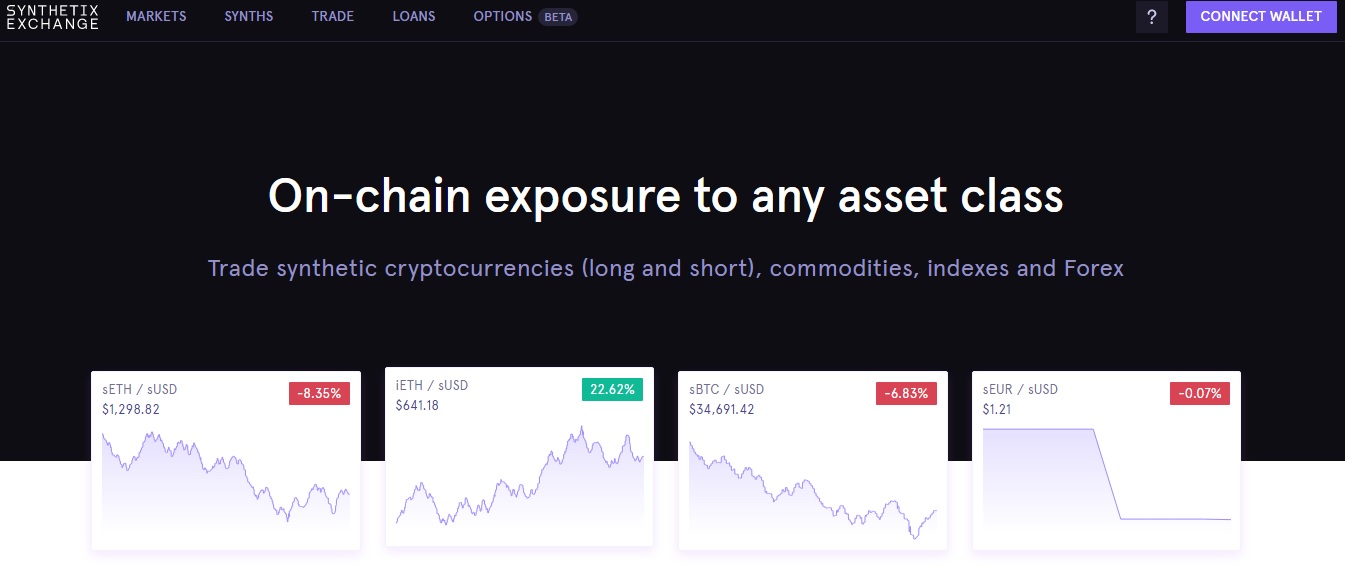
Description of the Synthetix Exchange
Synthetix Exchange addresses the liquidity and slippage issues, faced by DEX. Synthetix supports synthetic fiat currencies, cryptocurrencies and commodities. SNX holders are fond of placing bets with their tokens, as they get a proportional share of the commissions, generated from activities on Synthetix.Exchange, depending on their contribution to the network.
Synths appear when SNX holders stake their SNX as collateral, using Mintr, a decentralized application for interacting with Synthetix contracts.
There are three methods for maintaining a Synth binding:
| Arbitration | SNX stakers have created debt by minting Synths, so if the peg falls, they can profit by buying sUSD below par and burning it to reduce their debt, as the Synthetix system always values sUSD 1 per US $1. |
| SETH liquidity pool on Uniswap | Each week, a portion of SNX, added to the total supply through inflationary monetary policy, is distributed as a reward to people, providing sETH / ETH liquidity on Uniswap. |
| SNX Auction | Synthetix is currently testing a new mechanism with the dFusion protocol (from Gnosis), where discounted SNX is auctioned for ETH, which is used to buy Synth at a below-peg price. |
Synths are currently backed by a 750% provision rate, although this may be upgraded or downgraded in the future through community governance mechanisms.
SNX as collateral
Synthetix is also currently testing ETH as an alternative form of provision. This means that traders can borrow synthesizers for their ETH and start trading immediately, instead of selling their ETH. Stacking ETH requires a collateral ratio of 150% and creates ETH denominated debt, so ETH members mint sETH rather than sUSD and do not participate in the pooled debt aspect of the system. In this model, ETH members receive no commissions or rewards as they do not carry any risk to the debt pool.
Additional information
The developers provide a separate document that describes all features of the project. There is also a blog that publishes articles, related to the development of the project. From social networks, the community leads:
The smart contract doesn’t have an audit.