



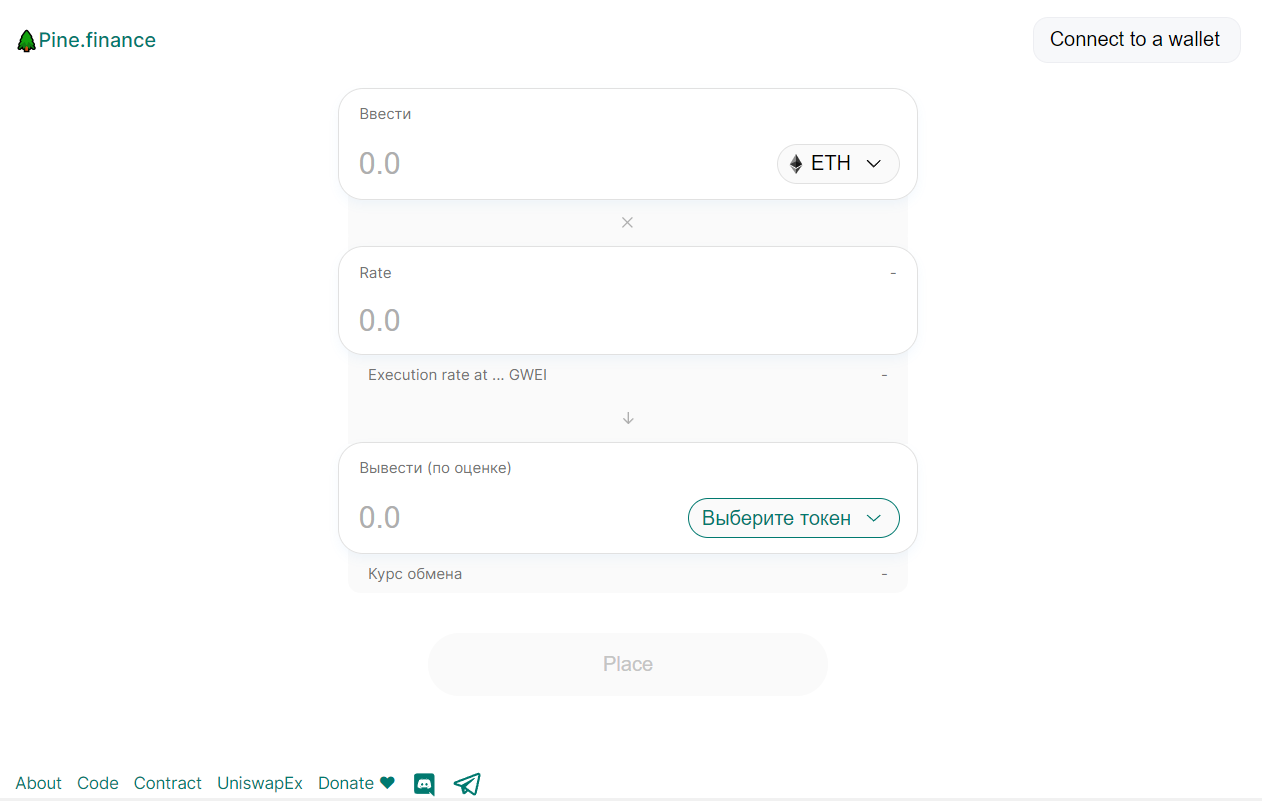
UniswapEx - the decentralized cryptocurrency exchange. You can create limited orders for the purchase or sale of coins here. While placing orders, you can set the price that is acceptable in your opinion. Also, it’s possible to use the relayer in a case of exchanges on the platform.
Contents:
- Introducing the UniswapEx Platform
- How to use the exchange dapp service?
- Exchange execution and security on UniswapEX
- What is a relayer?
Introducing the UniswapEx Platform
UniswapEx - a protocol for automatic exchange of orders. The platform doesn’t have a token, but the creators directed their efforts to create favorable exchange conditions. All exchanges take place on the Ethereum network. Users have an ability to create limited orders. It gives a full control over the speed of exchanges and allows them to be carried out at a certain rate. This is the basis for free and independent exchanges. Any combination of tokens is available. There are also no restrictions on the purchase, sale or exchange of cryptocurrencies. Of course, it should be an Ethereum-based token. An audit of the smart contracts isn’t carried out on the platform. In this case, the exchange is considered completed only after the customer receives the funds.
Such system is credible because it’s independent of the main object. However, the creators advise caution when a third party is involved in the exchange. The resource doesn’t have a WhitePaper, but the exchanger functionality is understandable to everyone. If you have questions about its work, you can find information in the “About” section. If you want to keep abreast of the latest project news, you can subscribe to the telegram channel. At the moment, 79 participants have already joined it.
How to use the exchange dapp service?
Using UniswapEx is very easy, thanks to the Uniswap FE interface. There are two participants in the exchange: the seller and the relayer. In order to create an exchange, you just need to send the currency to the specified address. You can also use the depositETH contract method. Relayers will periodically check whether the exchange can be made in the system. And, thus, they will execute the transaction, when it’s possible. The explanations of the exchange components:
| From token | Token used to buy. For ETH it is the E-address. |
| To token | Token to be bought. For ETH it is the E-address. |
| Min return | Mininum amount of “to Token” to buy. |
| Fee | Amount in ETH (WEI) to pay for the relayer to execute the order. |
| Owner | Owner of the order. |
| Witness | Ephemeral address as salt used to avoid relayer-front-runner execution. |
There is no referral program or bonus system on the resource, but the platform provides the most loyal exchange rates. Each order has a transaction fee, and it should be higher than the cost of the exchange itself. This commission is paid to the order search program. Currently, the transaction is charged 0.006 ETH. At the same time, it’s expected that the commission can be set, filling out an application for exchange, in the future.
Exchange execution and security on UniswapEX
One of the biggest problems, working with ERC20 tokens, - working with the Approve and TransferFrom templates. User inconvenience:
- Firstly, it makes exchange more expensive;
- Secondly, it’s often used with the transfer of "unlimited" powers. It forces users to trust the contract, despite a possible hack.
The team came up with a solution that will correct these inconveniences. This is TransferFrom, which works with almost all ERC20 tokens.
The next topical issue - data availability. You don’t need to add personal data in this resource, unlike other exchanges.
What is a relayer?
Relayer - a third party that transfers some data from one user to another. Services collect orders, that people send to them. And then they are passed on to the parties, who ask these orders to be completed. If you want to make a currency exchange, standard difficulties await you. You will need to look for someone with the exact request. The task of relayers is to track the network and look for new orders. They don’t need to store any tokens, since orders are not valid until they are signed by the owner. When applications are found, you need to wait for their execution. This happens only if the trading conditions are the same. Thanks to the data encoding, the program searches for all transfers of ERC20 tokens. They use data with a special transaction encoding UniswapEX.