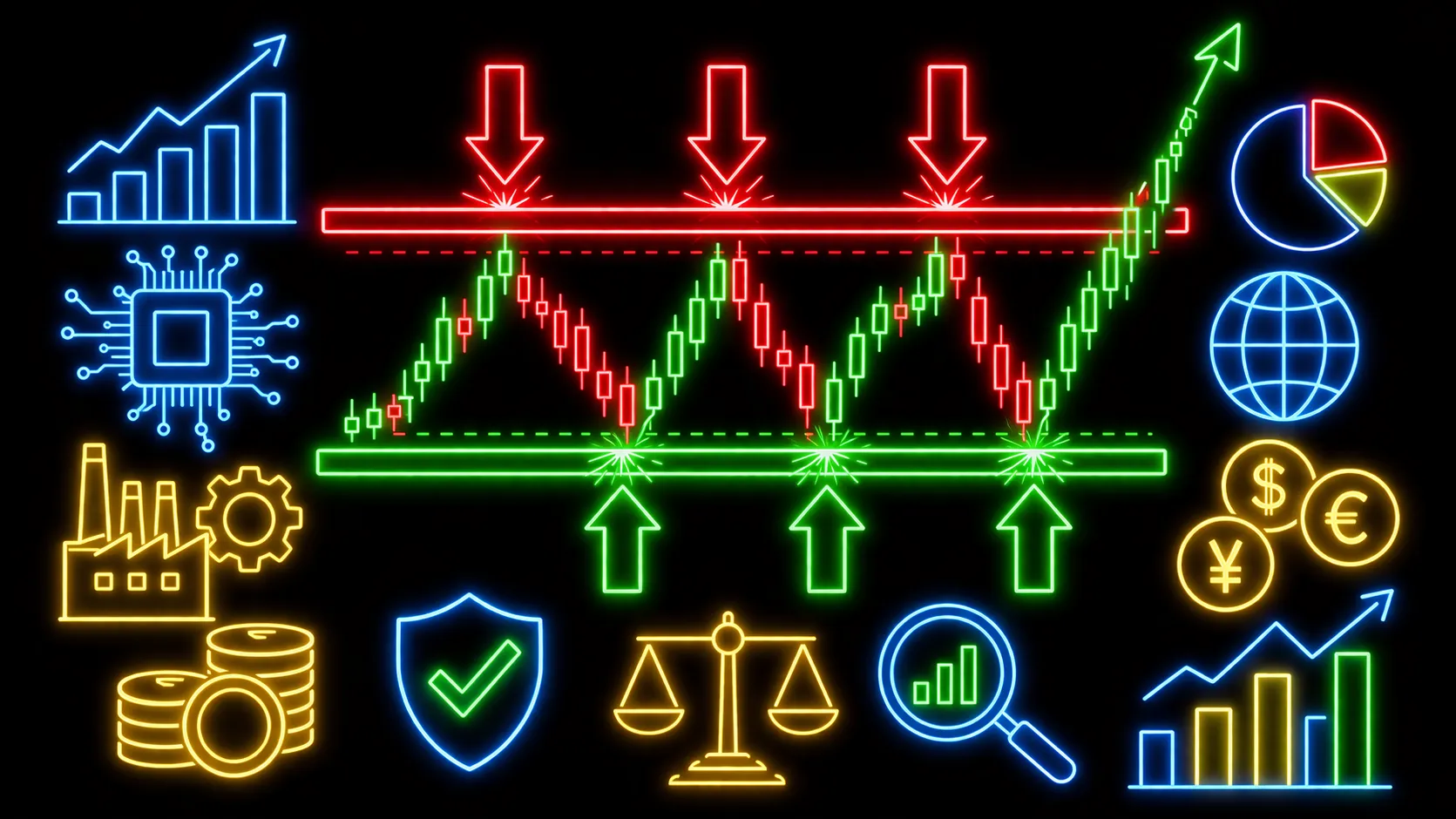

Support and resistance levels play a pivotal role in the world of trading, serving as essential indicators for market participants. Understanding these concepts can significantly enhance a trader's ability to navigate the complexities of market movements. The source notes that these levels can help traders make informed decisions about entry and exit points in their trades.
Understanding Support and Resistance Levels
Support levels are defined as price points where buying interest is strong enough to overcome selling pressure, often leading to price rebounds. Conversely, resistance levels are where selling interest prevails, causing prices to stall or reverse. These levels are not static; they can shift based on market sentiment and external factors, making it crucial for traders to continuously monitor them.
Utilizing Support and Resistance in Trading Strategies
Traders often use these levels to inform their strategies, setting entry and exit points based on anticipated price movements. By identifying key support and resistance zones, traders can better manage risk and optimize their trading performance. As market dynamics evolve, the ability to recognize and adapt to these levels can be the difference between profit and loss.
A recent report highlights the importance of execution strategies and psychological readiness in trading, contrasting with the focus on support and resistance levels discussed earlier. For more insights, read more.