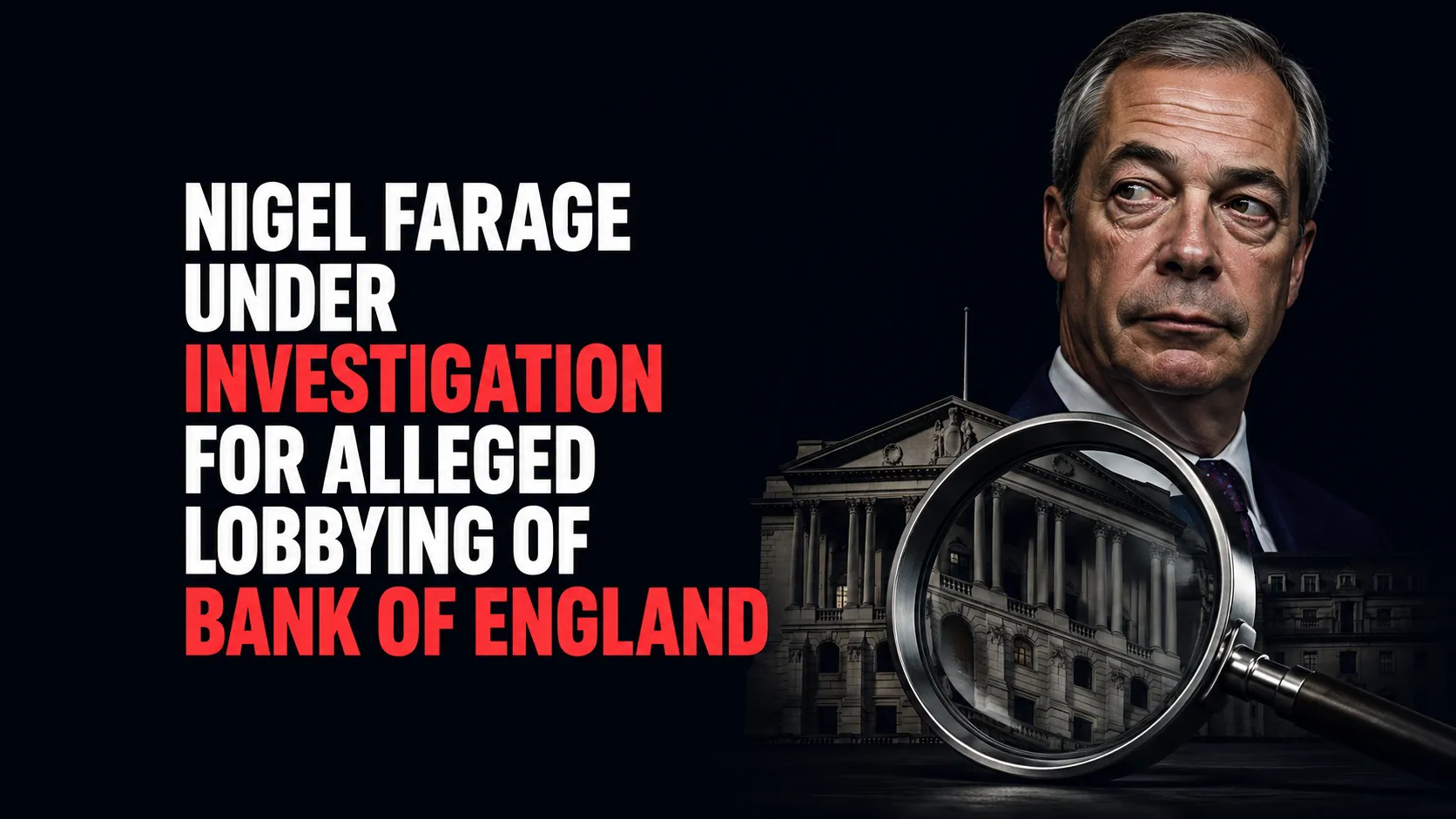

Allegations of misconduct have emerged against Nigel Farage, the leader of Reform UK, as he faces scrutiny over his interactions with the Bank of England regarding cryptocurrency policy. The claims, made by Labour MP Phil Brickell, suggest that Farage may have lobbied on behalf of his largest donor, raising questions about the integrity of his actions as a Member of Parliament. According to the results published in the material, these allegations could have significant implications for his political career.
Complaint Submitted to Parliament's Standards Watchdog
The complaint has been formally submitted to Parliament's standards watchdog, which is tasked with investigating potential breaches of parliamentary rules. Brickell's request highlights a specific rule that prohibits MPs from lobbying officials on behalf of financial supporters for a period of 12 months following any payment received.
Allegations from Private Meeting
The allegations stem from a private meeting held last September, during which Farage reportedly urged Bank of England Governor Andrew Bailey to reconsider plans for a central bank digital currency. This meeting, if proven to be in violation of parliamentary standards, could have serious repercussions for Farage's political career and his financial ties.
Implications for Farage and Lobbying Practices
As the investigation unfolds, it will be crucial to monitor how these developments impact Farage's standing within the political landscape and the broader implications for lobbying practices in the UK.
In a recent development, Senators Elizabeth Warren and Jack Reed have called for an investigation into World Liberty Financial's compliance practices, raising concerns similar to those surrounding Nigel Farage's alleged lobbying activities. For more details, see read more.