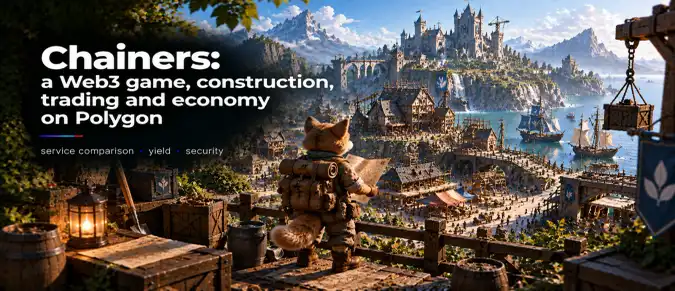

Chainers is a browser-based Web3 game and multi-genre MMO universe that combines building, farming, crafting, trading, character progression, and competitive activities. The project was developed by 51.games and uses Polygon and Immutable blockchain infrastructure for digital assets and its game economy. Unlike models where Web3 features are involved in nearly every action, Chainers combines familiar Web2 gameplay with selective blockchain integration. Players can develop their own spaces, produce resources and items, participate in trading, and interact with the project’s broader economy.
Contents
- Chainers: Web3 MMO and Game World
- Farming, Crafting and Territory Development
- Chainers Economy: Trading, CFB and CHU Token
- NFTs, Polygon and Immutable Blockchains in the Game
- Chainers Development and Web3 Economy Model
1. Chainers: Web3 MMO and Game World
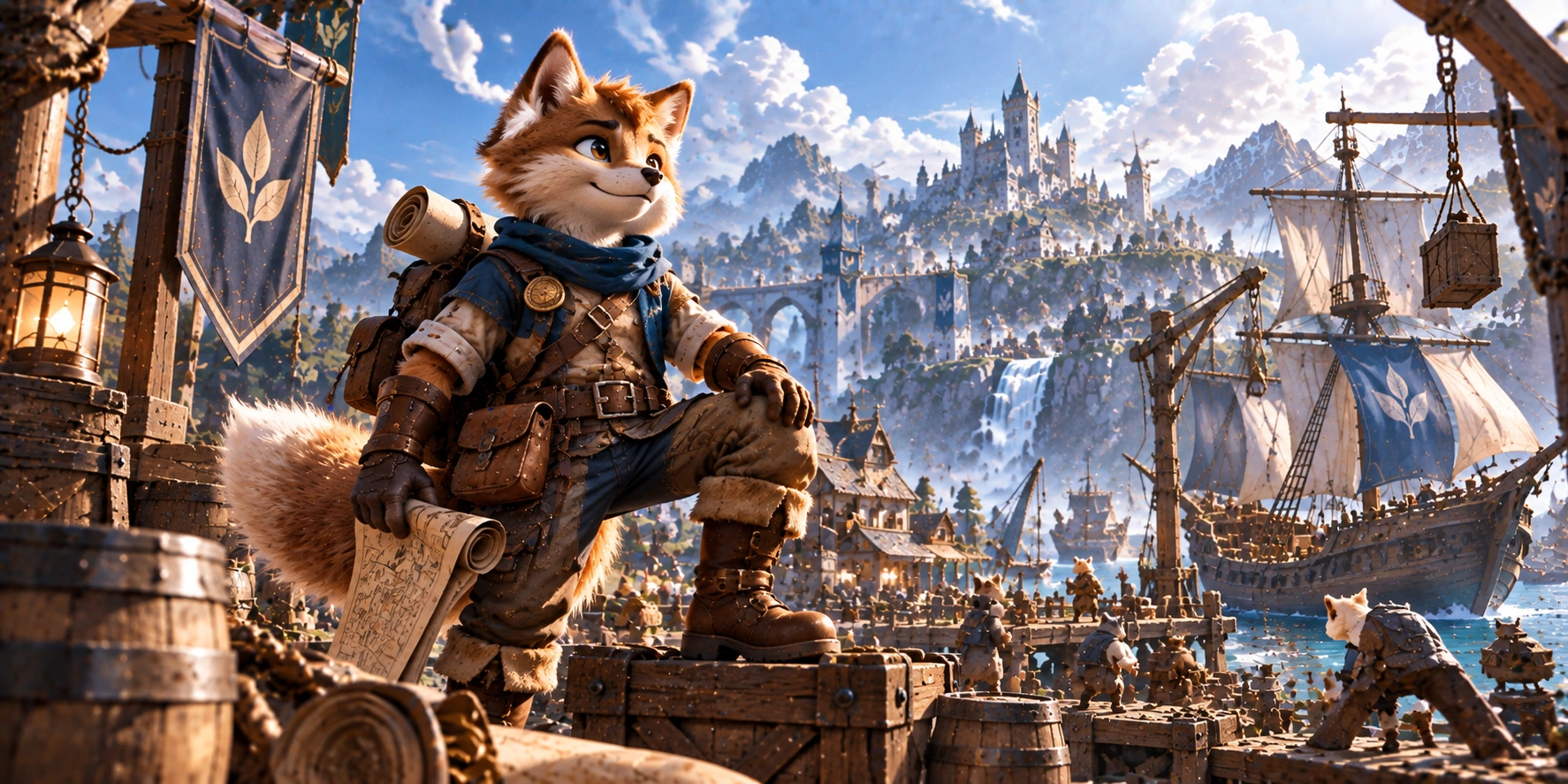
Chainers is being developed as a free-to-play MMO set within the shared Chainersverse game universe. At its center is the Chainer character, which players receive when they start the game and can gradually customize with clothing, equipment, and other items. Immutable Play classifies the project under the Simulation and MMO categories, reflecting its combination of simulation mechanics and a persistent virtual world.
The game runs directly in a browser and does not require a separate client installation. This format lowers the technical barrier to entry: users can start with a regular account, while interaction with digital assets becomes an additional layer of the gameplay experience. As characters progress, new missions, resources, and opportunities to participate in the economy become available.
Rather than focusing on a single gameplay mechanic, Chainers combines several activities. Players can farm, collect resources, craft items, develop their own territory, participate in mini-games, and engage in other activities. These systems are connected through a shared character, inventory, and economy.
Building serves as a long-term progression system. Game spaces can be developed alongside the player’s character, while resources and crafted items are used in subsequent gameplay cycles. As a result, Chainers is closer to a multi-genre sandbox environment than a standalone NFT collection or a simple play-to-earn game.
2. Farming, Crafting and Territory Development
Web3 Farm has become one of the more developed parts of Chainers. Players receive a plot of land, grow plants using seeds and garden beds, and then harvest their crops. Farming is connected to reward systems and other elements of the economy, meaning collected resources can have utility beyond a single farming cycle.
Farm Boosters are used to develop farming operations. These packages contain items required for farming, including seeds and garden beds. They are added to the game inventory and help expand production capabilities. Alongside crops, the broader project structure also includes animals, buildings, items, and resource-combination mechanics.
Main Chainers gameplay mechanics include:
- growing plants and harvesting crops;
- collecting and using game resources;
- crafting items and equipment;
- building and developing personal spaces;
- customizing and progressing a Chainer character;
- trading game assets;
- completing missions, quests, and achievements;
- participating in mini-games and competitive activities.
Crafting connects resource gathering with the trading system. Instead of serving only as quest rewards, materials can become components for other items. This creates a production chain in which the value of a resource depends on its use in character progression, territory development, or the broader economy.
The model becomes more complex as players progress. Farming, animals, buildings, and other systems begin to interact, turning territory development into a separate strategic activity. At the same time, Chainers maintains a relatively accessible entry point and does not require new players to understand blockchain technology before they begin playing.
3. Chainers Economy: Trading, CFB and CHU Token
The Chainers economy is built around resources, game items, digital assets, and exchange between participants. Official materials describe a player-owned economy in which equipment, resources, and land can be used across different parts of the Chainersverse. Certain assets can also support buying, selling, and rental operations.
CFB occupies a separate role as a purchasing unit within the ecosystem. Its uses include purchases in the in-game store, access to specific game activities, character and item progression, and the development of personal and community spaces. Chainers materials also reference Chainers Fidelity Bonds, which are connected to the project’s transitional economic model.
| Element | Type | Use |
|---|---|---|
| CFB | Game economy asset | Purchases, progression, and access to game features |
| CHU | Ecosystem token | Economy, governance, staking, and ecosystem operations |
| Resources | Game items | Farming, production, and development |
| Equipment | Digital game assets | Character customization and progression |
| Land and spaces | Game assets | Building and developing virtual territory |
Project materials present CHU as a central token for the expanding Chainers ecosystem. Its proposed utility includes governance, staking, marketplace transactions, and premium content. When analyzing the tokenomics, however, it is important to distinguish between gameplay mechanics that are already operational and features being introduced gradually as the infrastructure develops.
Farming is also connected to reward pools. Harvested crops can be used to access the distribution of various rewards, with project materials mentioning BNB, in-game POL, and CFB among them. The size and composition of these rewards depend on current rules and therefore should not be considered permanent or guaranteed returns.
4. NFTs, Polygon and Immutable Blockchains in the Game
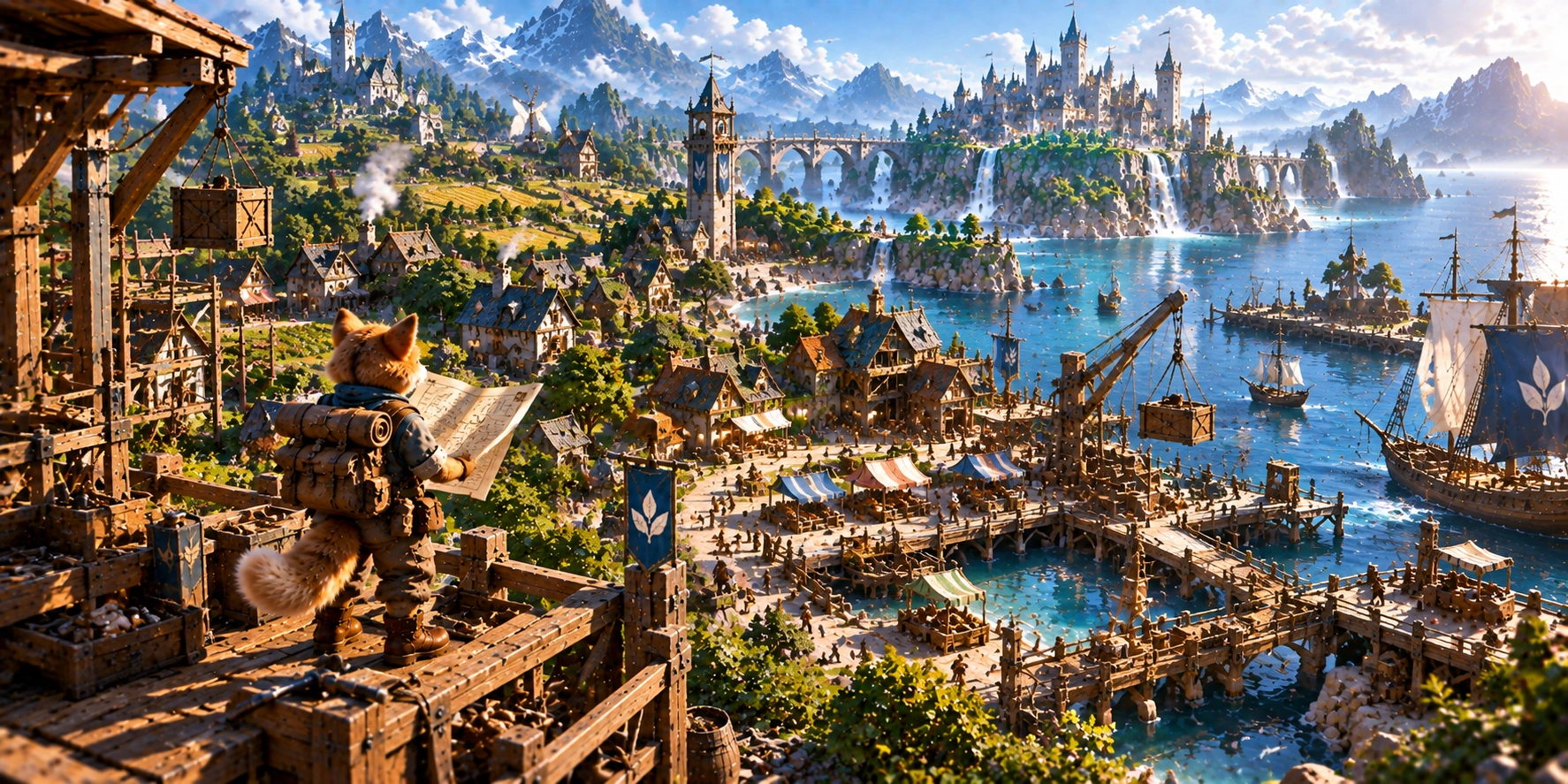
Chainers’ Web3 infrastructure is connected to Polygon and Immutable. Polygon has been used for the project’s blockchain components and digital assets, while further ecosystem development is also linked to Immutable infrastructure. In 2025, Chainers appeared in the Immutable Play catalog as a free-to-play MMO focused on a player-owned economy.
One of the main digital elements is the Chainer itself — a customizable character for which players can collect clothing, accessories, and other items. Earlier versions of the project placed significant emphasis on collectible NFTs and the daily acquisition of digital items, but as Chainers evolved, their utility became more closely integrated with gameplay.
The developers treat equipment, resources, and land as components of the broader Chainersverse economy. However, blockchain integration does not mean that every action must take place on-chain. Everyday operations can be handled by the game infrastructure, while the blockchain layer is used for assets and functions where verifiable ownership and transferability are relevant.
This approach separates the speed of gameplay from digital ownership transactions. For players, basic farming, crafting, and building mechanics can therefore remain similar to those found in traditional online games, while Web3 functionality becomes relevant when interacting with specific assets and economic instruments.
5. Chainers Development and Web3 Economy Model
Chainers has gradually evolved from a concept focused primarily on NFT characters and collectible items into a broader game universe. Its current model includes farming, crafting, building, character progression, trading, mini-games, and competitive mechanics. This allows digital assets to function as part of the gameplay cycle rather than as a standalone collection.
An important feature of the model is the relationship between production and consumption. Resources obtained through farming and other activities can be used for territory development, item creation, and further progression. Trading complements this system by creating economic connections between players with different specializations.
At the same time, the Web3 model introduces additional risks. The value of external tokens and digital assets can change independently of the game balance, while economic rules, reward pools, and the utility of individual elements may be adjusted by the developers. Blockchain integration also introduces risks related to smart contracts, wallets, and external market liquidity.
Overall, Chainers can be viewed as a browser-based MMO with sandbox and simulation elements, where building, farming, crafting, and trading are connected through a shared economy. Polygon and Immutable provide the blockchain layer for selected digital assets, but the gameplay model itself is not limited to NFTs or tokens. The project’s long-term sustainability will depend on maintaining a balance between resource production, demand for items, player trading, and the continued development of game content.