

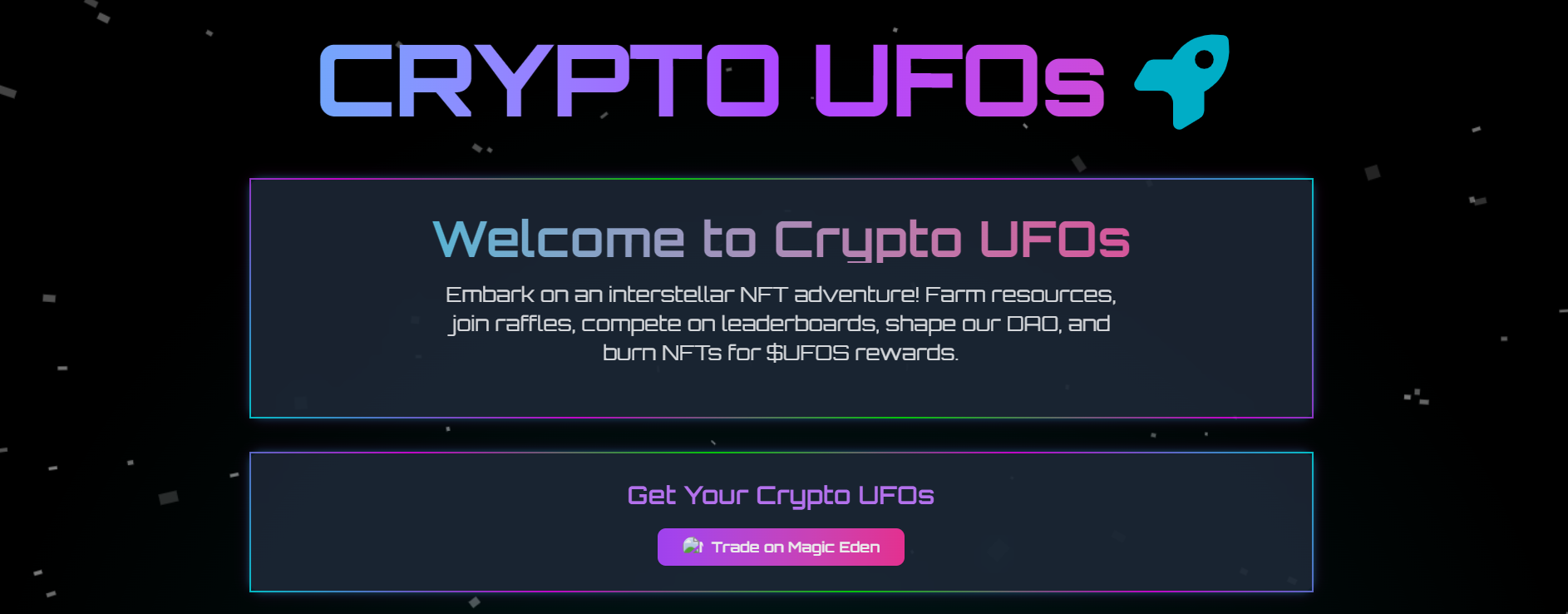
Crypto UFOs — a blockchain game project on Solana that combines PFP-NFTs, farming economy, social mechanics, and DAO governance into a unified digital world. At the core of the ecosystem is a collection of 10,000 pixelated aliens, granting access to the farming of the in-game token $UFOS, raffles, NFT burning for bonus rewards, and voting in the DAO. The project evolves as a "token-gated farm game" — a model where owning NFTs becomes not just a static asset, but a tool for participating in the economy, updates, and game strategy. The choice of Solana ensures low fees, fast transactions, and a stable infrastructure for the daily gameplay cycle.
- Crypto UFOs as an NFT Ecosystem on Solana
- Game Mechanics: Farm, Raffles, Burner, Leaderboard
- Economy and $UFOS Token
- Project Benefits and Risks
- Development Prospects and Crypto UFOs' Place in GameFi
1. Crypto UFOs as an NFT Ecosystem on Solana
Crypto UFOs started as a PFP collection of 10,000 pixelated aliens launched on Solana via LaunchMyNFT. However, the project quickly evolved from a simple image collection into a full-fledged gaming ecosystem where each NFT serves as a key to access farming, raffles, leaderboard participation, and DAO. This combination is typical for the new wave of GameFi projects, where NFTs become not just avatar decorations but assets that impact the economy.
The choice of Solana as the infrastructure is no coincidence: its high throughput allows for a fast cycle of actions — farming, raffle participation, burner mechanics transactions, DAO voting. This is especially important for farming games where users perform many small actions.
The team focuses on pixel-art style and a light lore: "Aliens are coming — farm your $UFOS to stay safe." This artistic approach creates a recognizable brand and helps build a community that plays, participates in votes, promotes the project on social media, and creates user content through the GM generator and NFT scanner.
2. Game Mechanics: Farm, Raffles, Burner, Leaderboard
At the core of Crypto UFOs is a game cycle where the NFT owner uses their "alien" to generate $UFOS, participate in events, and influence the game economy. The system is designed to encourage players to return to the ecosystem regularly, optimize farming, and make decisions based on risks and rewards.
Farm ($UFOS Farm)
Players send NFT characters to the farm and gradually receive $UFOS tokens. This is the main source of in-game value, and the amount of rewards depends on activity time and the number of NFTs.
Raffles
Raffles allow players to exchange earned $UFOS for tickets, giving them a chance to win NFTs, tokens, or special items. This system encourages spending in-game currency, reducing inflation.
Burner Mechanic
Burner is one of the more aggressive features. Players can permanently burn their NFT in exchange for increased rewards. This reduces the number of NFTs in circulation and encourages strategic decisions: to keep the asset or burn it for a benefit.
Leaderboard
The leaderboard supports the competitive element: monthly or seasonal rankings increase engagement, and top players become part of the project's media coverage.
DAO
The DAO panel allows NFT and token holders to participate in decisions — from adjusting game parameters to future updates. This increases the sense of ownership and strengthens trust in the team.
3. Economy and $UFOS Token
The $UFOS token is the central economic element. It is used for raffles, upgrades, future claim at listing, and DAO participation. It is earned exclusively within the game, making the economy more closed and manageable.
Below is a table of the key parameters of the $UFOS token and its functions:
| Parameter | Description |
|---|---|
| Generation Source | Farm (stake-like mechanic through NFT) |
| Main Expenses | Raffle tickets, in-game actions, future marketplace |
| Economic Impact | Regulates player activity and partially serves as an anti-inflation tool |
| Connection with NFTs | More NFTs → more farm potential; Burner reduces overall supply |
| Future Opportunities | Listing, extended DAO votes, in-game upgrades |
The project economy is based on a "closed loop" principle: NFTs create tokens, tokens are spent within the game, and mechanics like Burner and Raffles partially remove tokens and NFTs from circulation. This cycle helps maintain interest and prevents the rapid "collapse" that many GameFi projects experience.
4. Project Benefits and Risks
Crypto UFOs leverages Solana’s strengths — high speed and low fees, making the gaming process convenient and lowering the entry barrier for new players. Another advantage is the engaged community: users actively participate in the DAO, interact through the project's social tools, and maintain interest in the collection. Mechanics like Burner help regulate the number of NFTs in circulation and maintain economic balance.
However, the project remains sensitive to the general risks of the GameFi segment. The ecosystem depends on player activity: when interest declines, demand for NFTs and the $UFOS token falls. The Solana market is becoming more competitive, requiring the team to provide regular updates. Token volatility and the quality of DAO governance also play a key role, as these factors directly affect community trust and project stability.
This combination of strengths and potential vulnerabilities makes Crypto UFOs promising, but requiring continuous dynamics and support from both the team and players.
5. Development Prospects and Crypto UFOs' Place in GameFi
Crypto UFOs is developing as a long-term project: the team regularly publishes updates, expands game mechanics, and outlines a multi-year development plan. The transition from a simple PFP collection to a fully-fledged game indicates an effort to build an ecosystem where NFTs, tokens, and DAOs work as interconnected elements.
In the future, the project could expand the economy with a marketplace, in-game customization, new resources, and farm improvements. The DAO may gain additional governance tools — including treasury distribution, voting on partnerships, and tokenomics settings.
Given the growing sector of Solana-based games, Crypto UFOs could carve out a niche as a "casual farming GameFi" project, where gameplay is not overloaded with complexity, but the ecosystem allows for community building and engagement through raffles, leaderboards, and social tools.
The project remains young, but the combination of farming, PFP branding, and DAO makes it a promising example of a "community-driven" model in Web3 games, where the user participates not only in farming but in shaping the game's future.











