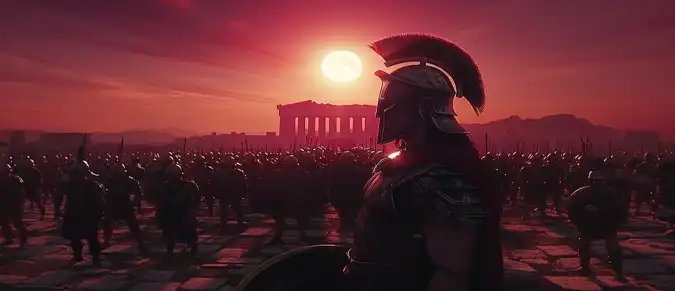

House of Sparta is a Web3 strategy game inspired by the atmosphere of Ancient Sparta, combining PvP battles, NFT characters, and a blockchain-based in-game economy. The project merges GameFi mechanics with elements of classic military strategy games, where players build armies, strengthen heroes, and participate in competitive battle modes. Unlike early Play-to-Earn projects, House of Sparta focuses not only on rewards but also on a complete gameplay loop featuring progression systems, clan mechanics, and digital asset management. The ecosystem is built around PvP combat, resource management, and NFT infrastructure that gradually forms its own in-game marketplace.
Contents
- The Concept and Structure of House of Sparta
- Gameplay Mechanics and PvP System
- NFTs, Army Building, and Character Progression
- Tokens and the Project Economy
- The Future of House of Sparta and GameFi Development
1. The Concept and Structure of House of Sparta
House of Sparta positions itself as a Web3 strategy game inspired by Ancient Sparta and competitive PvP mechanics. Players can build their own armies, upgrade warriors, and participate in battles for resources and account progression. Unlike traditional mobile strategy games, a large part of the in-game assets is connected to blockchain technology and owned directly by users.
The ecosystem combines NFTs, an in-game economy, and competitive gameplay modes. Players not only participate in battles but also interact with digital assets that can be used to strengthen armies and improve progression. Through this approach, House of Sparta aims to create a more sustainable engagement model than classic Play-to-Earn projects.
The social aspect is another important part of the ecosystem. The game includes clan systems, cooperative activities, and interactions between players. This helps maintain long-term community engagement while making competition a central element of the gameplay experience.
House of Sparta reflects a broader GameFi trend where blockchain games are evolving from simple reward systems into more advanced gaming worlds with progression, economy mechanics, and full competitive structures.
2. Gameplay Mechanics and PvP System
The core gameplay of House of Sparta revolves around PvP battles and army progression. Players assemble combat squads, select heroes with different characteristics, and develop strategies for battle. Unlike simplified Web3 projects, success here depends not only on NFT ownership but also on tactical decision-making.
The gameplay loop is based on gradual army development. Users begin with basic units and later unlock more advanced modes, stronger characters, and additional upgrades. As progression continues, players gain access to more challenging PvP content and higher-value rewards.
- players build armies using different warrior classes;
- PvP battles affect progression and resource generation;
- heroes have unique abilities and combat roles;
- equipment improves overall army efficiency;
- part of the reward system is integrated into the NFT economy.
One of the key features of House of Sparta is the combination of strategy gameplay and Web3 mechanics. Players must not only upgrade their heroes but also manage resources carefully between army progression, equipment enhancement, and preparation for future battles. This creates a deeper gameplay structure closer to classic PvP strategy games.
3. NFTs, Army Building, and Character Progression
House of Sparta actively integrates NFTs into its gameplay infrastructure. Unlike projects where digital assets function only as collectibles, NFTs here directly impact gameplay performance and army strength. Players obtain characters, equipment, and resources that can be used in battles and account progression.
Each hero has unique attributes and specialization paths. Some characters focus on offense, while others improve defense or provide support bonuses for allied units. This system creates tactical variety and allows players to experiment with different army compositions.
Equipment also plays an important role in the ecosystem. Items improve character statistics, increase survivability, and unlock additional combat bonuses. Rare NFT items usually provide stronger effects, which creates demand within the in-game marketplace.
The progression system revolves around upgrades and resource management. Players use materials to strengthen armies, level up heroes, and unlock additional gameplay opportunities. This creates a more sustainable economy because resources continuously cycle back into gameplay through upgrades and PvP preparation.
By combining NFTs, progression mechanics, and competitive gameplay, House of Sparta attempts to build a more advanced Web3 gaming model where digital assets have practical value beyond speculation.
4. Tokens and the Project Economy
The economic system of House of Sparta is built around a tokenized model that combines rewards, NFTs, and in-game resources. Tokens are used for army upgrades, ecosystem activities, and various operations within the game.
Like many modern GameFi projects, House of Sparta aims to balance rewards with long-term economic sustainability. If a digital asset exists only as a profit extraction tool, demand inside the ecosystem quickly weakens. Because of this, the project integrates tokens into character progression, item upgrades, and PvP systems.
| Category | Purpose | Role in the Ecosystem | Impact on Gameplay |
|---|---|---|---|
| Game Token | Rewards and in-game operations | Core economic element | Used for progression and activities |
| NFT Characters | Army creation | Combat units for players | Affect PvP and strategy |
| NFT Equipment | Stat enhancement | Rare in-game items | Increase army efficiency |
| Resources | Upgrades and progression | Part of the in-game economy | Used for account development |
The economic structure of House of Sparta demonstrates that the project focuses on continuous asset circulation within the game. Players participate not only in battles but also in resource distribution, army upgrades, and NFT-based interactions.
Additional ecosystem stability may come from new gameplay modes and community growth. The more mechanics connected to tokens and digital assets, the higher the chances of maintaining long-term demand within the platform.
5. The Future of House of Sparta and GameFi Development
House of Sparta is moving toward deeper Web3 gameplay experiences where quality gameplay matters as much as rewards. This reflects a broader GameFi industry trend, as players increasingly expect blockchain projects to deliver complete strategy experiences with PvP systems, progression, and advanced in-game economies.
One of the project’s strengths is the combination of NFTs, PvP mechanics, and classic strategy elements. Players participate in battles, build armies, and interact with digital assets inside the ecosystem. This approach makes House of Sparta feel closer to traditional online strategy games than early Play-to-Earn projects.
At the same time, the project remains part of the high-risk Web3 sector. Community activity, crypto market conditions, and NFT popularity directly affect the game economy and the value of in-game assets.
Despite these risks, House of Sparta demonstrates how modern GameFi projects are evolving toward more complex gaming models where long-term progression, PvP systems, and strategic gameplay are just as important as token rewards.
Interest in the project may continue growing through the introduction of new game modes, clan events, and expanded NFT infrastructure. For modern Web3 games, regular updates are one of the key factors for maintaining user engagement. If House of Sparta can preserve a balance between PvP gameplay, progression systems, and economic mechanics, the project will have stronger chances of becoming one of the more recognizable GameFi ecosystems. In the long term, community growth and competitive gameplay may become major drivers of the platform’s expansion.











