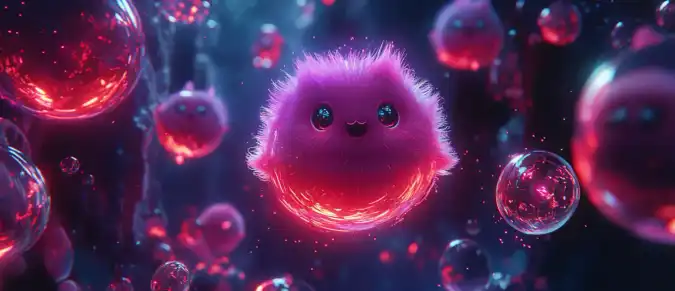

Kugle — is a gaming ecosystem that merges familiar gameplay with Web3 capabilities. Players care for virtual pets, help them grow, and participate in competitions, while each pet exists as an NFT with unique characteristics. The team aims to make the blockchain “invisible” — allowing the technology to enhance ownership and transparency without disrupting gameplay. Kugle demonstrates how entertainment and the real value of digital assets can coexist in harmony.
- Kugle: Essence and Mission
- Technological Architecture and Infrastructure
- Gameplay and Mechanics of Kugle Game
- Tokenomics, NFTs, and In-Game Resources
- Risks, Challenges, and Ecosystem Prospects

Kugle: Essence and Mission
The Kugle project positions itself as a platform with virtual pets that combines platformer mechanics, collectible gameplay, and asset ownership. Players hatch pets from eggs, care for them, train their abilities, and compete with others. Each pet is represented as an NFT, which makes it unique and fully owned by the player.
The main goal of Kugle is to show that blockchain can be friendly and simple. Players don’t need to understand technology to enjoy the experience — everything related to tokens, staking, and NFTs happens in the background, keeping gameplay smooth. The internal economy is designed to maintain the value of assets and prevent inflation.
Thus, Kugle becomes a bridge between Web2 and Web3: familiar entertainment enhanced with genuine ownership and transparent reward mechanisms.
Technological Architecture and Infrastructure
Kugle’s architecture combines a powerful gaming engine and flexible blockchain infrastructure. The client side is built using a cross-platform engine, making it available on PC, Android, and iOS — accessible for a global audience.
Smart contracts record every operation involving tokens, NFTs, and in-game resources. They manage trading, rewards, and supply limits. The transparent logic allows players to verify token circulation and game economics.
The whole infrastructure operates with minimal fees and high speed, ensuring seamless blockchain integration. Players enjoy a smooth Web2 experience while the transparency and security of Web3 work silently in the background.
Gameplay and Mechanics of Kugle Game
Kugle’s gameplay centers around caring for pets and participating in various activities. Each player begins by incubating an egg, growing a pet, completing missions, and collecting resources. The game merges mobile-friendly simplicity with the strategic depth of collecting and breeding.
Before listing the features, it’s important to note that Kugle emphasizes interaction over routine. It rewards consistent activity, attention to pets, and participation in events — fostering long-term engagement and a sense of evolution.
- Guest Mode — instant start without a crypto wallet, allowing immediate play.
- Daily Missions — short tasks that build rhythm and reward consistency.
- Pet Care — feeding, training, and improving pet attributes.
- Competitions and Mini-Games — arcade battles, races, and challenges.
- World Exploration — gathering resources, food, and discovering new territories.
- Breeding — creating new pets with unique genetic combinations.
- Marketplace — free NFT trading and collection management.
This system makes Kugle dynamic and versatile: players can focus on nurturing, competing, or trading. Each gameplay element contributes to the ecosystem’s economy while maintaining accessibility and balance.
Tokenomics, NFTs, and In-Game Resources
Kugle’s economy follows the principles of limited supply, a self-sustaining cycle, and equilibrium between effort and reward. Player involvement is crucial — the token is not distributed for free but serves as a pass to advanced features and exclusive rewards.
Before exploring the table, note that each asset in Kugle serves a specific role. Tokens unlock access, NFTs represent individuality, and resources fuel development. This logical structure supports a sustainable and transparent economy.
| Component | Role | Usage | Highlights |
|---|---|---|---|
| GU Token | Main currency | Access to in-game events, functions, and bonuses | Limited supply, not farmed directly through gameplay |
| NFT Eggs | Source of new pets | Purchase, incubation, breeding | Rarity and lineage determine market value |
| Pets (NFTs) | Playable characters | Participation in missions, competitions, trading | Inherited traits and abilities across generations |
| Heat / Carbon | Progress materials | Used for breeding and pet enhancement | Generated through player activity and engagement |
| Fees & “Burning” | Inflation control | Regulates the number of active assets | Maintains balance and sustainability in the economy |
Rather than adopting the classic “play-to-earn” concept, Kugle focuses on “play and own.” This turns the game into a long-term ecosystem where success depends on strategy and involvement, not chance.
Risks, Challenges, and Ecosystem Prospects
Like any Web3 project, Kugle faces challenges such as smart contract security, token regulation, and maintaining user interest. Lack of audits can lead to vulnerabilities, and token oversupply can reduce market value. The team must balance incentives and restrictions to sustain a healthy economy.
Still, Kugle’s prospects remain promising. Its friendly UI, refined mechanics, and well-designed economy create a strong foundation for growth. The project could become a notable example of sustainable Web3 gaming — where entertainment and ownership of digital assets exist in genuine balance.











