

Mirandus is an innovative MMORPG developed by Gala Games, combining elements of classic fantasy and advanced blockchain technology. The game offers players complete freedom in a vast world where they can own in-game assets, explore uncharted territories, and interact with other participants. The key feature of Mirandus is the use of blockchain technology to ensure true ownership of in-game items and lands.
Table of Contents:
- Development History and Concept
- Gameplay and In-Game World
- In-Game Races and Their Features
- Asset Ownership System and Economy
- The Role of Blockchain Technology and NFTs
- In-Game Currency Materium
- Development Prospects and Feedback
- Conclusion
Development History and Concept
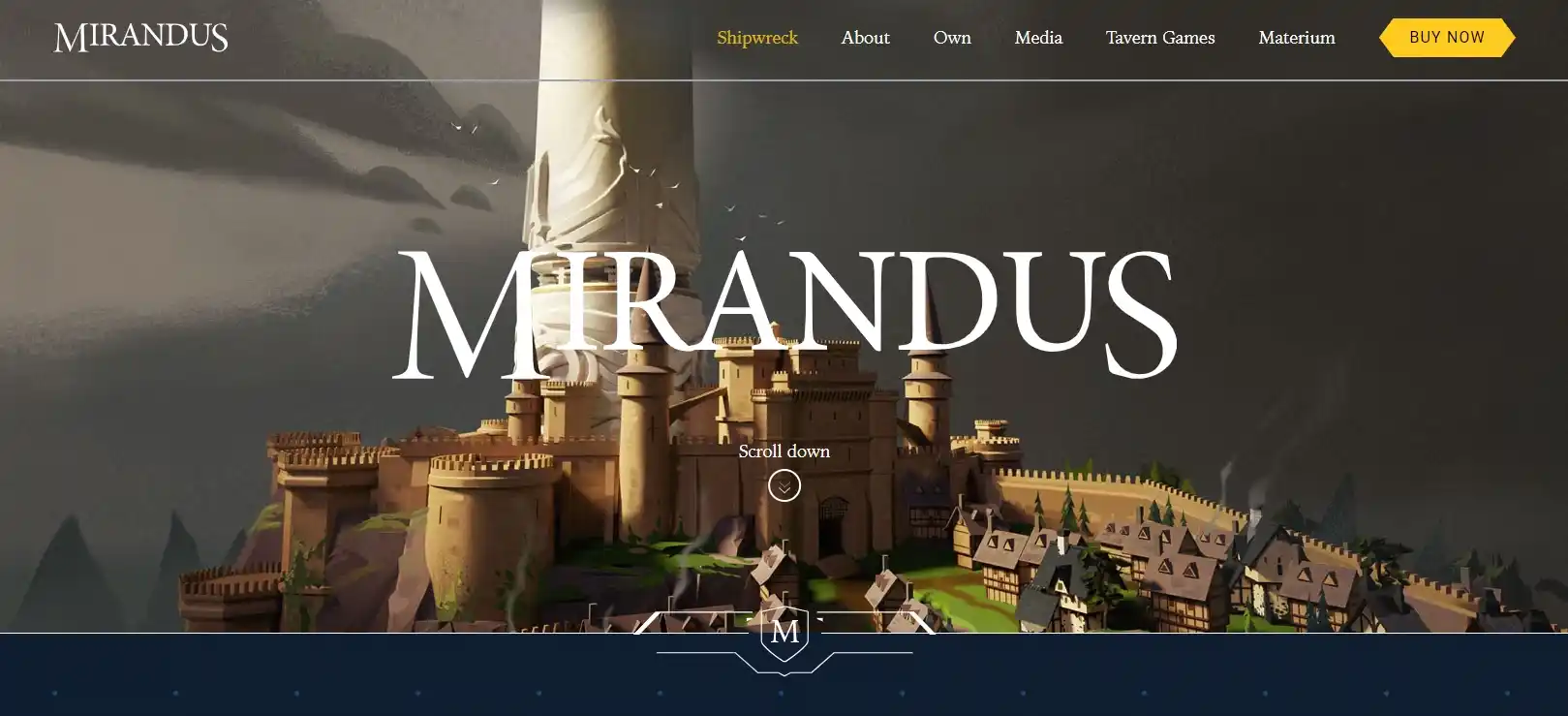
Gala Games, known for its projects in the field of blockchain gaming, such as Town Star and Spider Tanks, announced Mirandus as its most ambitious project. The game is being developed by Gala Games' in-house team, highlighting its importance for the company. The concept of Mirandus is based on creating a world governed by five player-monarchs, where users have absolute freedom of choice: from exploring wild lands to serving at the court of one of the monarchs or opening their own shop in one of the great cities.
Gameplay and In-Game World
In Mirandus, players are given complete freedom of action — there are no maps or quest-givers. Everyone can choose their path: embark on a solo journey through the wild lands, fight monsters in forests and dungeons, become a knight at the monarch's court, or develop their own business in one of the five great cities. This approach allows each player to define their role and playstyle, creating a unique story in this open world.
In-Game Races and Their Features
Players can choose from several races, each with unique abilities and characteristics. The available races include:
- Elves: An ancient race with special magical abilities.
- Halflings: Small but agile creatures known for their stealth.
- Orcs: Strong and resilient warriors, excellent in combat.
- Dwarves: Masters of crafting and resource gathering.
- Humans: A versatile race with diverse skills.
Each race is divided into subtypes with unique abilities, allowing players to choose a character that matches their playstyle.
Asset Ownership System and Economy
The central mechanic of Mirandus is the ownership of in-game assets. Players can purchase land plots (deeds) to become landowners, where construction is possible — from small farms to large cities. The game includes 1,650 such plots. Additionally, players can build structures on other users' lands, setting terms for rental and cooperation, opening broad opportunities for interaction and the development of the game's economy.
The Role of Blockchain Technology and NFTs
Mirandus integrates blockchain technology to guarantee true ownership of in-game assets. All characters, lands, and items are represented as NFTs, allowing players to freely exchange them on the secondary market and fully control their property. This approach ensures a high level of transparency and reliability, building trust in the in-game economy and creating a safe ecosystem for user interaction.
In-Game Currency Materium
Materium is a magical in-game resource necessary for potion crafting, teleportation, and energy restoration. Its availability enhances the character, making them more powerful. Materium is found in various parts of the game world and exists in several states: liquid, solid, and gaseous. This unique resource opens new opportunities for players, helping develop character abilities and facilitating exploration of the game world.
Development Prospects and Feedback
Mirandus integrates blockchain technology to guarantee true ownership of in-game assets. All characters, lands, and items are issued as NFTs, enabling players to freely trade them on the secondary market. This approach provides transparency, security, and full ownership control, creating a reliable foundation for the in-game economy and expanding player opportunities.
Conclusion
Mirandus represents an ambitious project that combines classic fantasy gameplay with advanced blockchain technologies, offering players unique opportunities for in-game asset ownership and freedom of action. However, the game's success will depend on the developers' ability to implement the declared mechanics and attract a broad audience. Considering current trends in the gaming industry and the growing interest in blockchain games, Mirandus has the potential to occupy a significant niche in the market, offering players an innovative and engaging gaming experience.











