
NomStead is a browser-based Web3 game that combines farming simulation, sandbox MMORPG elements, crafting, building, and a player-driven economy. The project evolved from the game Kingdom and moved into the Immutable ecosystem in 2025, meaning descriptions of NomStead as a Solana game do not match its current official documentation: the project’s primary blockchain is Immutable zkEVM. The game is accessible through a browser on both mobile devices and desktop computers, while its world is built around player-owned land plots. In 2026, the developers began restructuring NomStead into two connected environments — Kingdoms, focused on resource production, and Stadiums, centered on PvP and PvE gameplay.
Contents
- NomStead: Farming MMORPG and Project Development
- Farming and Kingdom Development
- NomStead Economy: Trading, Silver, Gold and Gold Bars
- NFTs and Immutable zkEVM Blockchain Integration
- NomStead Kingdoms and Stadiums: Web3 Game Development
1. NomStead: Farming MMORPG and Project Development
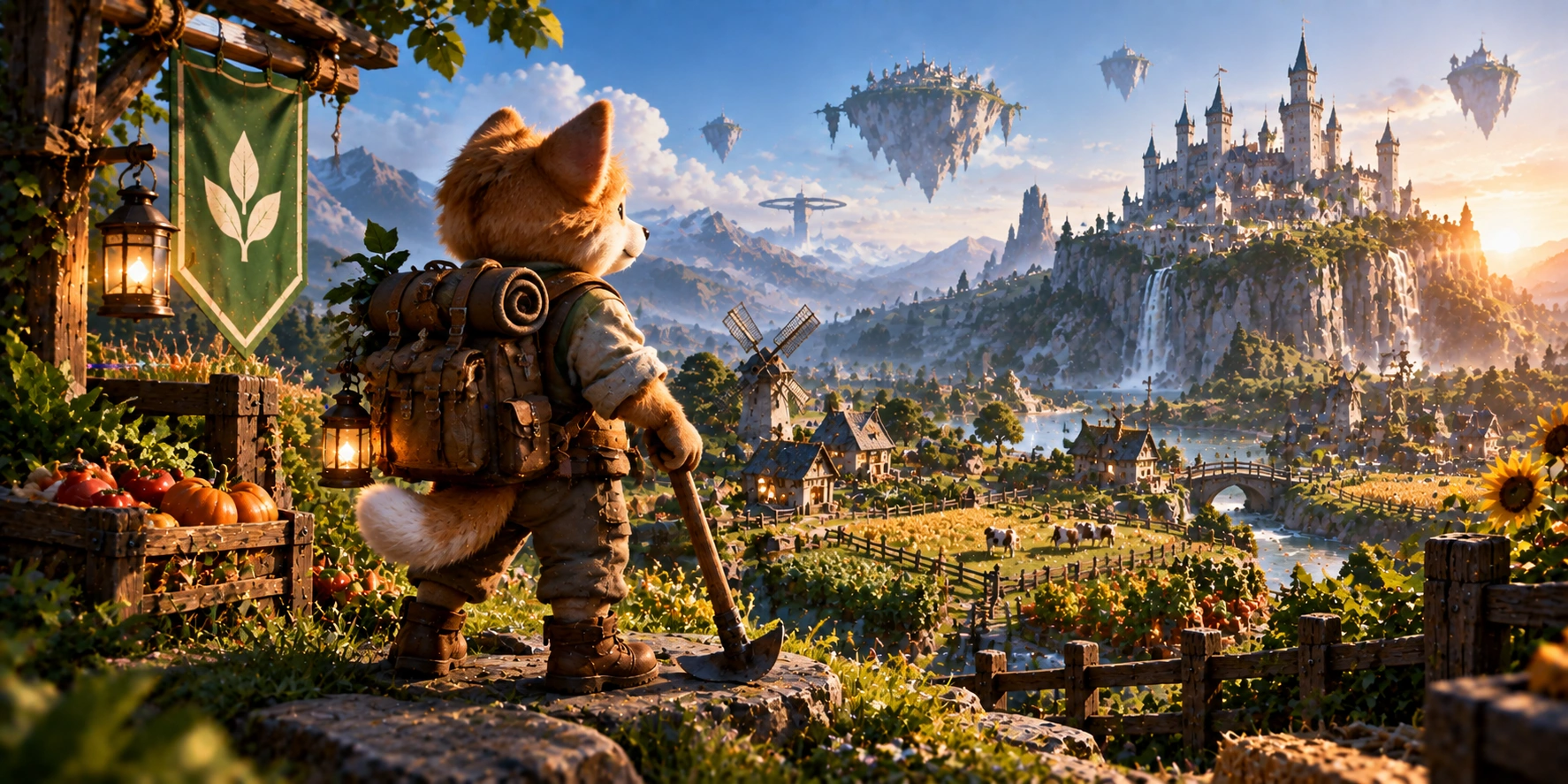
NomStead is positioned as a casual sandbox MMORPG with an economy largely shaped by player activity. Its gameplay takes place in a shared pixel-art world where participants create their own kingdoms, gather resources, grow crops, craft items, and interact with other players. Immutable Play classifies the project across the Casual, MMO, Strategy, and Cozy categories.
Before its rebranding, the project was developed under the name Kingdom. In 2025, the team focused on a new version of the game and its integration with the Immutable ecosystem. NomStead runs directly in a browser and is designed for both desktop and mobile devices, reducing the need to install a separate game client.
Despite its focus on farming mechanics, NomStead is not a traditional idle farming game. It includes NPC quests, map exploration, manual resource gathering, crafting, building, trading, and social interactions. Some activities follow a relaxed and repetitive gameplay loop, but the economy still relies on regular player participation and the exchange of produced goods.
NomStead’s official media kit describes the project as an on-chain MMORPG on Immutable zkEVM in Public Alpha. This distinction is important when classifying the game: third-party references to Solana or similarly named tokens on that network do not by themselves confirm a connection between the main NomStead game and Solana.
2. Farming and Kingdom Development
After creating an account, players begin by completing introductory quests. The first missions introduce resource gathering, including vegetables and plants found across different areas of the map. Upon reaching level two, players can obtain their first land plot and establish their own kingdom.
The initial plot is a grassland tile that can be placed in an available area of the shared world map. Connecting with neighboring tiles can provide access to faster movement between locations. Land serves as the foundation for further progression, allowing players to grow resources, place crafted objects, and establish a trading point.
NomStead’s main gameplay mechanics include:
- growing and harvesting agricultural resources;
- gathering resources across different areas of the game world;
- crafting tools, objects, equipment, and other items;
- building and developing a personal kingdom;
- completing NPC quests, daily objectives, and guild quests;
- trading resources and crafted items;
- interacting and cooperating with other players;
- participating in PvP and PvE activities.
Crafting plays an important role in the economy because collected resources serve as raw materials for producing new items. Farming is therefore connected to other gameplay systems: gathered materials can be used to develop land, complete quests, or manufacture goods for trading.
This structure differs from fully automated idle games. NomStead uses an accessible farming loop while adding MMO mechanics and player specialization. The economic value of resources depends not only on how they are obtained but also on how other participants use them within the broader production chain.
3. NomStead Economy: Trading, Silver, Gold and Gold Bars
NomStead’s economy is built around production and player-to-player exchange. According to the project documentation, the game uses two main in-game currencies — Silver and Gold. Silver can be earned by completing quests and spent on items and recipes from NPCs. Gold is used for player-to-player trading and for purchasing certain premium items.
In 2026, the team introduced an updated economic model in which Gold connects NomStead’s production economy with on-chain assets. Instead of launching a conventional ERC-20 token, the developers chose a Gold Bars model based on ERC-1155 NFTs. In-game Gold can be converted into these bars, which can then function as blockchain-based assets.
| Element | Type | Purpose |
|---|---|---|
| Silver | In-game currency | Purchasing items and recipes from NPCs |
| Gold | In-game currency | Player-to-player trading and participation in the game economy |
| Gold Bar | ERC-1155 NFT | On-chain representation of Gold for ownership and transfer |
| Gold Bar Furnace | In-game object | Used to mint Gold Bars from in-game Gold |
| Marketplace | In-game market | Trading non-NFT items through an order book system |
The Gold Bar Furnace adds another production layer to the economy. Building a furnace requires a dedicated recipe and a substantial amount of resources, while its owners can set their own minting fees for guild members or other players. As a result, creating an on-chain asset becomes part of the game’s crafting system rather than a separate process outside the gameplay loop.
The team also decided not to turn every in-game item into an NFT. Standard objects and resources are intended to trade through a centralized in-game order book marketplace, while blockchain infrastructure is reserved for a limited selection of assets. This approach reduces the number of on-chain transactions and separates everyday in-game trading from digital assets designed for external ownership and transfer.
4. NFTs and Immutable zkEVM Blockchain Integration
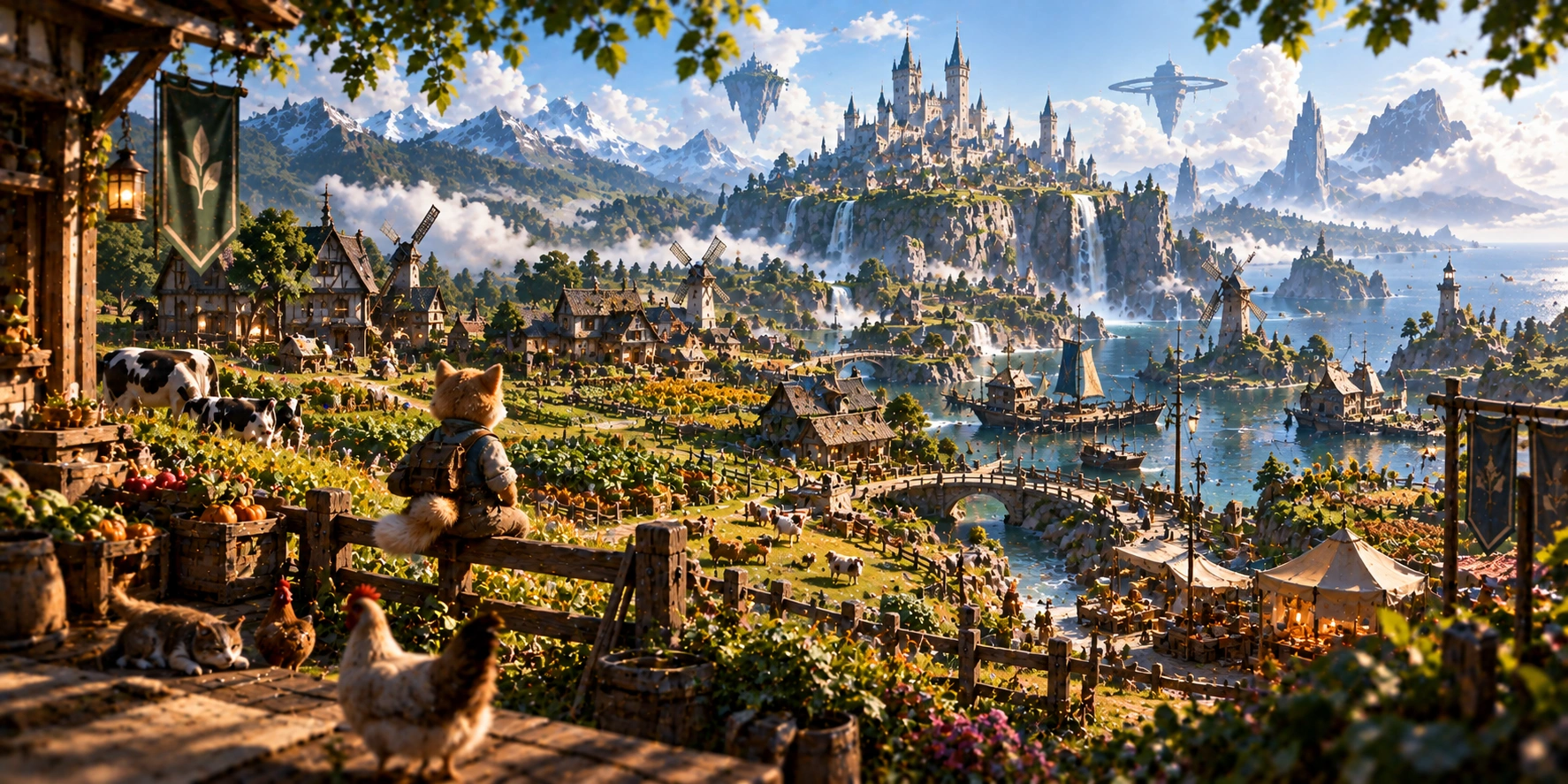
NomStead’s Web3 layer operates on Immutable zkEVM, a blockchain infrastructure within the Ethereum ecosystem designed for gaming applications. Official project materials identify Immutable zkEVM as the game’s primary network. NomStead therefore should not be classified as a Solana game solely because third-party tokens with similar names may exist on that blockchain.
Tiles are one of the key types of digital assets in the game and represent the land plots that form the game world. Land is not used solely as a collectible asset: players can place buildings, grow resources, and develop their kingdoms on it. Different types of terrain can influence available resources and the role of individual plots within the broader economy.
Under the updated 2026 model, the developers planned to retain four permanent NFT categories: Tiles, Visas, Packs, and Companions. At the same time, Gold Bars serve as a separate on-chain instrument designed to transfer value between connected game modes and enable external trading.
This architecture reflects a more selective approach to Web3 integration. Instead of tokenizing every resource, blockchain is used where verifiable ownership and asset transfers outside the standard game database are relevant. At the same time, game operations, economic balance, server availability, and the rules governing asset utility remain dependent on the project’s infrastructure and development decisions.
5. NomStead Kingdoms and Stadiums: Web3 Game Development
In June 2026, the team presented the next stage of NomStead as two interconnected game environments. NomStead Kingdoms retains farming, crafting, building, and kingdom development as its core mechanics. Players produce resources, weapons, potions, and cosmetic items that contribute to the internal economy.
NomStead Stadiums is being developed as a separate PvP and PvE environment focused on combat and the use of player-created equipment. The economic connection between the two modes is built around Gold Bars: regular Gold cannot be transferred directly between Kingdoms and Stadiums, so its on-chain representation is used to move value between them.
This separation creates greater specialization. Kingdoms focuses on production and social gameplay, while Stadiums can generate additional demand for resources and equipment. The sustainability of this model will depend on player activity and the balance between the production and consumption of in-game items.
Development plans included the Gold Bar Furnace, a marketplace for non-NFT items, and Stadiums, followed by PvE dungeons, a seasonal system, improvements to Kingdoms, and additional content. Some elements of the economy may still be adjusted based on testing. Overall, NomStead is developing as a browser-based sandbox MMORPG with a Web3 economy where farming, crafting, and trading are combined with digital ownership on Immutable zkEVM. Its future development will largely depend on how effectively Kingdoms, Stadiums, and the Gold Bars mechanism can operate as a connected game economy.