
Plume Network is a blockchain infrastructure focused on the tokenization and use of Real World Assets in on-chain finance. The network combines an EVM-compatible environment, asset issuance tools, compliance mechanisms, and DeFi applications, forming an ecosystem the team refers to as RWAfi. Plume Mainnet launched in June 2025 and uses Ethereum as its settlement layer. Its ecosystem includes tokenized Treasury products, private credit, alternative assets, and other financial instruments that can interact with DeFi protocols.
Contents:
- What Is Plume Network and How Does RWAfi Work?
- Plume Architecture and RWA Tokenization Infrastructure
- Ecosystem, Nest, and Real World Assets in DeFi
- Plume Network and Other Blockchains for RWA
- PLUME Token, Regulation, and Network Risks

1. What Is Plume Network and How Does RWAfi Work?
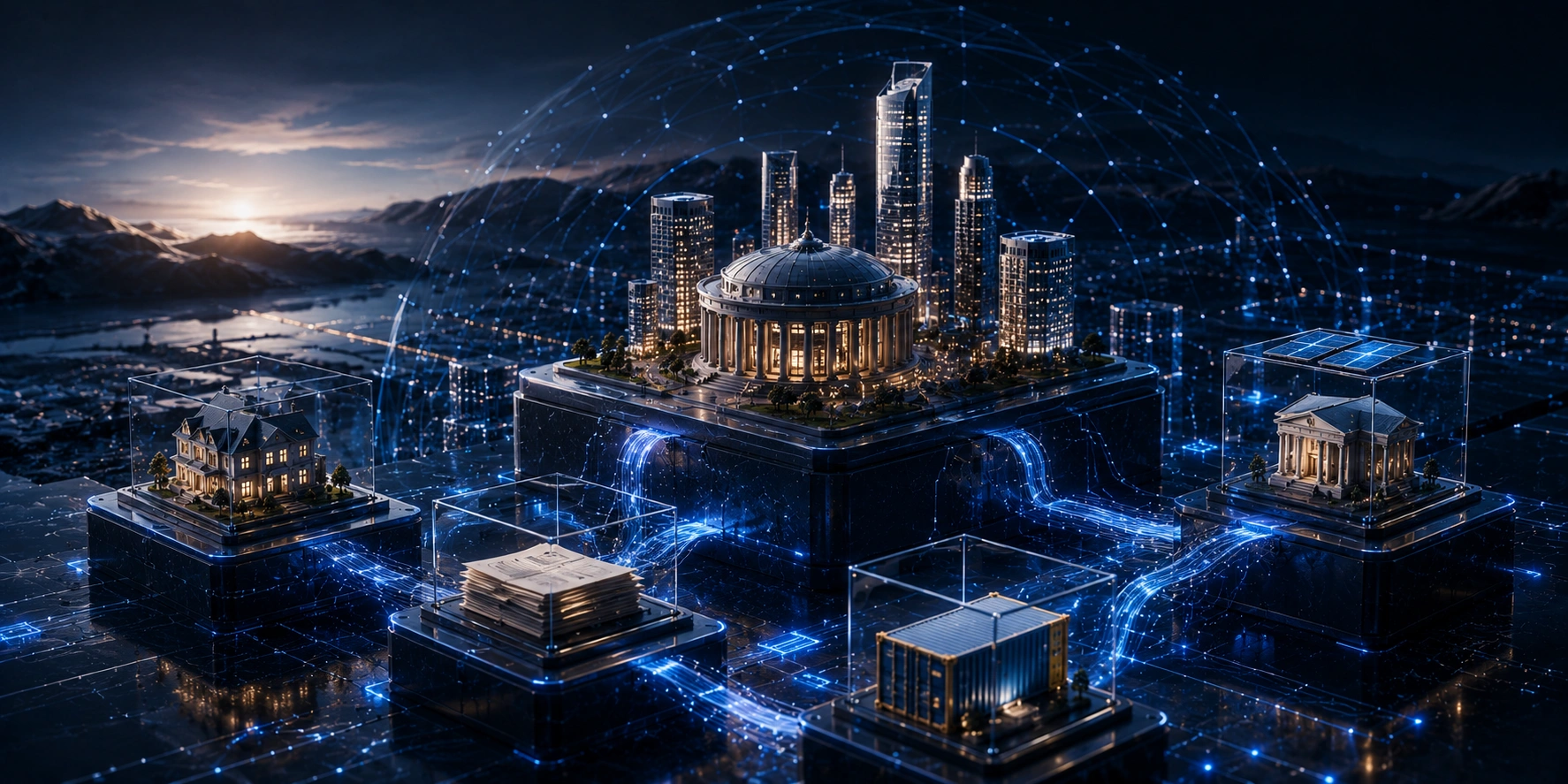
Plume was created as a specialized blockchain environment for Real World Assets. This category includes financial and physical assets whose economic value originates outside the blockchain, such as government bonds, private credit, investment funds, real estate, commodities, and other instruments. Through tokenization, rights or economic exposure to these assets can be represented as digital tokens.
Plume's concept goes beyond simply issuing tokens. The project uses the term RWAfi to describe a model in which real-world assets become part of decentralized finance. Tokenized positions can potentially be used in lending, trading, yield-generating applications, or as collateral when permitted by the structure of the specific asset and protocol.
Plume was founded by Chris Yin, Teddy Pornprinya, and Eugene Shen. Before launching its mainnet, the project raised funding from participants in both traditional finance and crypto markets. In December 2024, Plume announced a $20 million Series A round with participation from Brevan Howard Digital, Haun Ventures, Galaxy Ventures, Lightspeed Faction, and other investors.
Plume Mainnet launched in June 2025. The project subsequently expanded its integrations with issuers and infrastructure providers for tokenized assets. The network remains a public blockchain environment, while specific requirements for regulated assets are implemented at the application and token levels through integrated compliance mechanisms.
2. Plume Architecture and RWA Tokenization Infrastructure
Plume is an EVM-compatible network, allowing developers to use familiar Ethereum tools and smart contracts. Its architecture is based on Arbitrum Nitro and Arbitrum Stylus technologies, while Ethereum serves as the settlement layer for the mainnet. The Plume Mainnet Chain ID is 98866.
The modular approach separates transaction execution from other infrastructure components. Plume also uses Celestia for data availability. This architecture is designed to process transactions at lower costs than executing every operation directly on Ethereum while maintaining a connection to Ethereum's settlement layer.
- Arc — infrastructure for issuing, onboarding, and managing tokenized assets.
- EVM compatibility — enables Ethereum applications to be deployed using familiar development tools.
- Ethereum settlement — the mainnet uses Ethereum as its settlement layer.
- Celestia — serves as the data availability layer within the architecture.
- Compliance infrastructure — enables the integration of checks and restrictions required for certain regulated RWA products.
In addition to standard blockchain infrastructure, Plume has developed tools specifically for RWA. One of its key components is Arc, a tokenization engine designed to issue and manage digital representations of physical and financial assets. It connects the token creation process with data and compliance mechanisms.
This structure addresses one of the main challenges of tokenization: issuing a token is only one part of the process. A real financial asset also requires custody infrastructure, reliable data, a legal connection between the token and the underlying instrument, participant identification, and ongoing asset servicing.
3. Ecosystem, Nest, and Real World Assets in DeFi
Nest became one of the central components of the Plume ecosystem and was later integrated into Plume Vaults. This infrastructure brings RWA into on-chain vaults, through which users receive tokens associated with specific investment strategies. Returns in these products can be generated from Treasury instruments, private credit, trade finance, and other underlying assets.
Nest products have included nTBILL for exposure to tokenized U.S. Treasury instruments, nOPAL for short-term receivables, nWISDOM for private credit strategies, and nBASIS for market-neutral strategies. The composition and terms of individual vaults may change, meaning the name of an RWA token alone does not determine its current yield or risk profile.
Plume works with companies from both traditional and tokenized finance. The ecosystem has announced asset and infrastructure integrations involving WisdomTree, Securitize, Hamilton Lane, Superstate, and other participants. In 2025, Securitize announced plans to bring institutional assets to the Nest infrastructure, expanding the range of tokenized financial products available within the ecosystem.
An important feature of the model is composability — the ability to integrate RWA with other on-chain applications. Instead of holding a tokenized fund as an isolated digital asset, it can potentially be used in lending, trading, and other DeFi scenarios. Actual functionality, however, depends on the legal restrictions of the asset, available liquidity, smart contracts, and the rules of the specific application.
4. Plume Network and Other Blockchains for RWA
Tokenized real-world assets exist across Ethereum, Solana, Stellar, Avalanche, and other networks. Plume differs by specializing its broader infrastructure around RWA and by attempting to combine issuance, distribution, compliance, and DeFi use of tokenized assets within a single ecosystem. This specialization, however, does not reduce the underlying financial risks of the assets themselves.
| Parameter | Plume Network | General-Purpose L1/L2 | Traditional RWA Platform |
|---|---|---|---|
| Primary Focus | RWA and RWAfi | Various categories of dApps | Issuance of tokenized assets |
| Smart Contracts | EVM-compatible | Depends on the network | Depends on the platform |
| DeFi Integration | Built into the ecosystem model | Depends on available protocols | May be limited |
| RWA Tools | Integrated infrastructure | Usually provided by third-party projects | Specialized infrastructure |
| Compliance | Integrated into the RWA stack | Usually implemented by applications | Depends on the issuer and platform |
| Settlement Layer | Ethereum | Depends on the architecture | Depends on the blockchain used |
For issuers, specialized infrastructure can reduce the number of separate technical integrations required to launch a tokenized product. For users, the model provides access to different categories of RWA and financial applications within a compatible blockchain environment.
At the same time, the RWA market remains multichain. Plume has expanded its infrastructure beyond its own network: Nest was extended to Solana, while SkyLink is used to distribute RWA yield and liquidity across different blockchain ecosystems. The project's long-term model therefore includes both the development of its own network and the distribution of tokenized assets across other chains.
5. PLUME Token, Regulation, and Network Risks
PLUME is the network's native utility token and is used for gas fees, staking, and ecosystem mechanisms. Its total supply is 10 billion PLUME: 59% is allocated to the community, ecosystem, and foundation, 21% to early investors, and 20% to core contributors. PLUME holders can delegate tokens to validators and receive rewards. Returns depend on network parameters and validator commissions, while an unstaking waiting period limits the immediate liquidity of staked positions.
Regulation is particularly relevant because Plume works with financial assets. In 2025, Kimber Transfer Agency, which is associated with the project's infrastructure, registered with the SEC as a transfer agent. However, this does not constitute regulatory approval of every token or investment product within the ecosystem. Key risks also include vulnerabilities in smart contracts, bridges, and other blockchain infrastructure.
RWA products introduce additional risks related to issuers, custodians, borrowers, and the quality of underlying assets. Tokenization does not guarantee liquidity or immediate redemption of an investment position. Overall, Plume combines Ethereum infrastructure, DeFi, and tokenized real-world assets. When evaluating the ecosystem, it is important to consider not only the PLUME token and network architecture but also the structure of individual RWA products, liquidity, counterparties, legal rights, and redemption terms.











