
The concepts of Proof-of-Physical-Work (PoPW) and DePAI (Decentralized Physical AI) have emerged as some of the most discussed trends at the intersection of blockchain, artificial intelligence, and physical infrastructure. While early generations of crypto projects focused primarily on finance and digital assets, modern initiatives aim to connect blockchain technology with devices, sensors, robotics, and real-world data. As a result, a new economic model is taking shape in which value is created not only through computation but also through actions performed in the physical world. This approach is gradually becoming the foundation for a growing number of Web3 projects operating in the fields of DePIN, AI, and autonomous systems.
Contents
- What Is Proof-of-Physical-Work?
- How Proof-of-Physical-Work and DePAI Work
- Comparing Proof-of-Work, DePIN, and Proof-of-Physical-Work
- Key Features and Applications of DePAI
- The Future of DePAI and Its Role in the Web3 Industry
1. What Is Proof-of-Physical-Work?
Proof-of-Physical-Work (PoPW) is a concept designed to verify useful activity in the physical world. While Proof-of-Work relies on computational power and Proof-of-Stake depends on ownership of digital assets, PoPW focuses on measurable actions performed outside the blockchain.
Physical work may include collecting geospatial data, moving devices, interactions between autonomous agents, sensor operations, cargo delivery, or tasks performed by robotic systems. A key element of the concept is the ability to prove that an action has occurred and record its result within a distributed network.
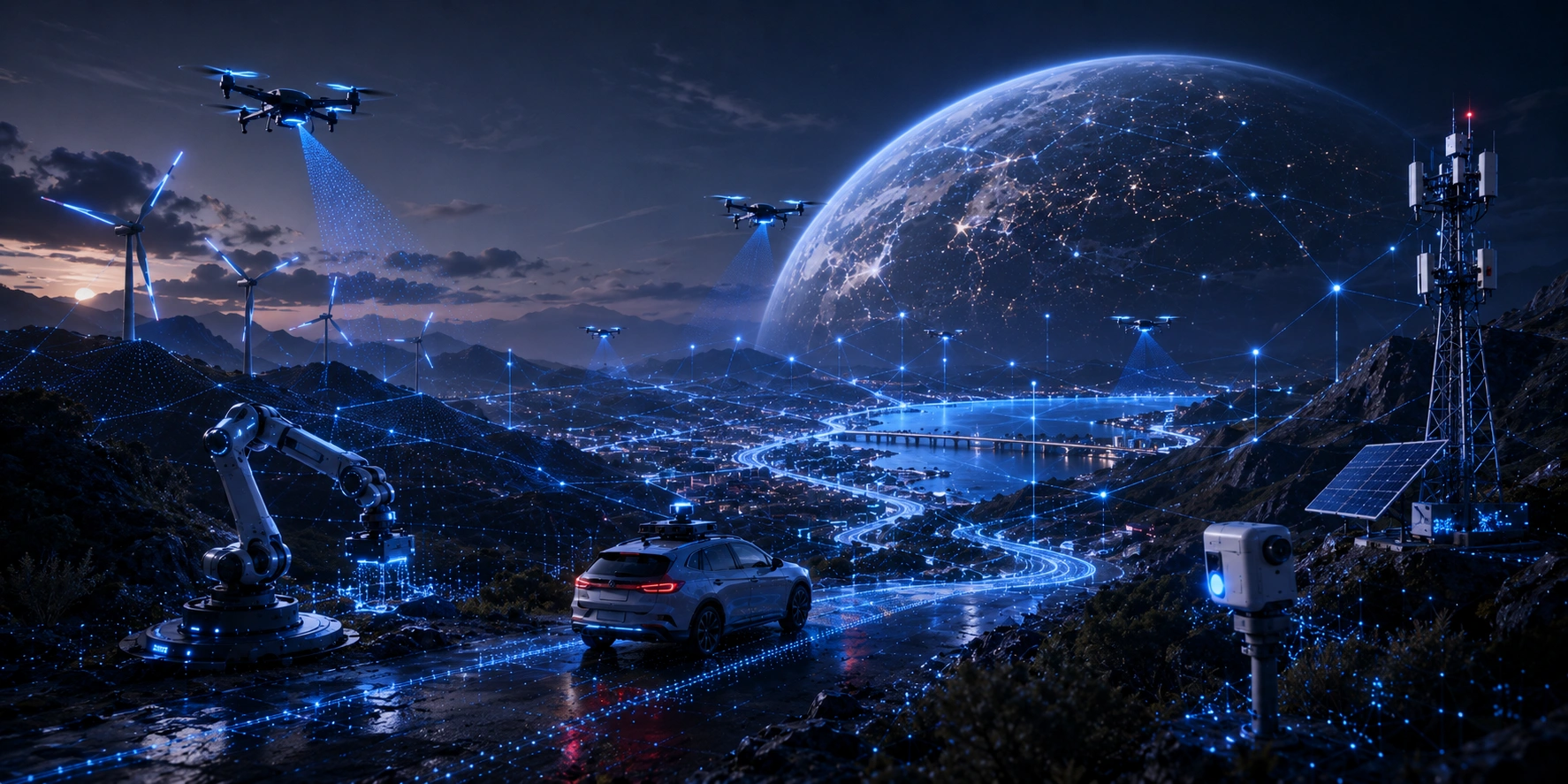
The development of this narrative is closely linked to the growing popularity of DePIN, or decentralized physical infrastructure networks. Projects such as Hivemapper, Helium, and GEODNET have demonstrated that participants are willing to provide hardware and receive rewards for contributing to infrastructure development.
Against this backdrop, the term DePAI (Decentralized Physical AI) emerged, combining artificial intelligence, autonomous systems, and blockchain technology. Its core idea is to create networks in which AI interacts with the physical world through decentralized infrastructure.
2. How Proof-of-Physical-Work and DePAI Work
The technical architecture of PoPW consists of several key components: a physical device, a verification system, a blockchain, and a reward mechanism. The device performs a task, generates data, and submits that information to the network for validation.
Verification can be performed in several ways. Cryptographic signatures, GPS coordinates, timestamps, data from multiple independent devices, and machine learning techniques can all be used to confirm that a task was completed. This helps reduce the risk of fraudulent or manipulated results.
In the DePAI model, autonomous AI agents are connected to the infrastructure. For example, a self-driving vehicle may transmit traffic data, while a robotic system could perform tasks within a logistics center. These verified actions become part of a distributed economy.
Another important feature is machine-to-machine communication. Agent-to-Agent interactions enable devices to exchange information without human involvement, laying the foundation for autonomous economic systems.
3. Comparing Proof-of-Work, DePIN, and Proof-of-Physical-Work
Despite their similar names, Proof-of-Work, DePIN, and Proof-of-Physical-Work solve different problems and rely on distinct value creation models. These approaches differ not only in the resources they utilize but also in what is considered valuable to the network.
In Proof-of-Work, participants secure the blockchain through computational power, while Proof-of-Stake relies on locked capital. DePIN extends incentives to physical infrastructure, whereas Proof-of-Physical-Work focuses on verified actions carried out by devices, humans, or autonomous systems in the real world. Comparing these models highlights how blockchain technology is gradually moving beyond financial applications toward coordinating physical resources, hardware, and intelligent agents.
| Model | Source of Value | Primary Resource | Example Use Case |
|---|---|---|---|
| Proof-of-Work | Computation | Hardware Processing Power | Bitcoin Mining |
| Proof-of-Stake | Capital | Locked Assets | Ethereum |
| DePIN | Infrastructure | Physical Devices | Helium, Hivemapper |
| Proof-of-Physical-Work | Real-World Actions | Verified Physical Work | Robots, Sensors, AI Agents |
| DePAI | AI and Physical Environments | Autonomous Systems | Decentralized AI Networks |
The table illustrates a shift from models primarily based on computation and capital to systems where value is generated through infrastructure, data, and actions performed in the physical world. Importantly, PoPW and DePAI are not necessarily intended to replace traditional consensus mechanisms; they are more often used as additional layers for verification and reward distribution.
Unlike traditional mining, PoPW does not require continuous mathematical calculations. Instead, the system focuses on useful activities that can have practical applications across multiple industries. For this reason, DePAI is often viewed as the next stage in the evolution of DePIN, where physical infrastructure is enhanced by intelligent agents and AI algorithms. However, the long-term viability of these networks depends on data reliability, device security, and the ability to objectively verify completed work.
4. Key Features and Applications of DePAI
DePAI can be applied across various sectors that require a combination of autonomy, data processing, and distributed infrastructure. Robotics, logistics, and smart city initiatives are currently among the most prominent areas of interest.
The growth of this narrative also aligns with increasing demand for high-quality datasets used to train artificial intelligence systems. The more physical devices connected to a network, the greater the amount of information available for analysis.
- Using physical devices to generate economic value.
- Integrating blockchain technology with artificial intelligence.
- Supporting autonomous AI agents and Agent-to-Agent interactions.
- Building decentralized networks of sensors and robots.
- Applications in logistics, navigation, and autonomous transportation.
- Creating new reward models for physical work.
- Increasing transparency through blockchain technology.
- Using cryptographic methods to verify actions.
One particularly interesting use case for DePAI is industrial automation. Automated systems can independently perform tasks, record results, and receive rewards in digital assets, creating the building blocks of a machine economy.
Beyond these examples, DePAI may also find applications in healthcare, environmental monitoring, and the management of critical infrastructure. As technology advances, the number of devices capable of interacting with one another without human intervention is expected to increase.
Over the long term, this could lead to the emergence of distributed ecosystems in which autonomous agents independently exchange data, perform tasks, and participate in economic activities. This concept of a machine economy is widely regarded as one of the most promising directions for the future development of Web3.
5. The Future of DePAI and Its Role in the Web3 Industry
Over the coming years, Proof-of-Physical-Work and DePAI may become major narratives within the Web3 industry. The growing number of connected devices, advances in robotics, and progress in artificial intelligence are creating favorable conditions for the development of entirely new types of networks.
Standardization of physical work verification mechanisms will play an important role in this process. To scale these ecosystems effectively, the industry will need reliable validation methods and interoperability between blockchains and connected devices.
In addition, the widespread adoption of autonomous agents could reshape existing economic models. If machines become capable of interacting with one another, paying for services, and exchanging data independently, entirely new forms of digital interaction may emerge.
Ultimately, Proof-of-Physical-Work and DePAI represent the next stage in the evolution of blockchain technology, where digital networks become increasingly connected to the physical world. These concepts are laying the groundwork for future projects in artificial intelligence, robotics, and decentralized infrastructure, gradually expanding the role of Web3 far beyond the financial sector.











