
The decentralized finance (DeFi) market is gradually expanding beyond transactions involving cryptocurrencies alone. One of the most significant developments is the tokenization of Real-World Assets (RWAs), which enables government bonds, real estate, corporate loans, commodities, and other financial instruments to be represented and utilized within blockchain infrastructure. This approach brings DeFi closer to the traditional financial system while creating new use cases for digital assets. As a result, RWAs are now widely regarded as one of the key drivers shaping the future of modern financial infrastructure.
Contents
- What Are RWAs and Why They Have Become an Essential Part of DeFi
- How RWAs Bridge DeFi and TradFi
- Benefits of Real-World Asset Tokenization
- Comparison of Traditional Assets and Tokenized RWAs
- Risks, Future Outlook, and the Impact of RWAs on Financial Markets
1. What Are RWAs and Why They Have Become an Essential Part of DeFi
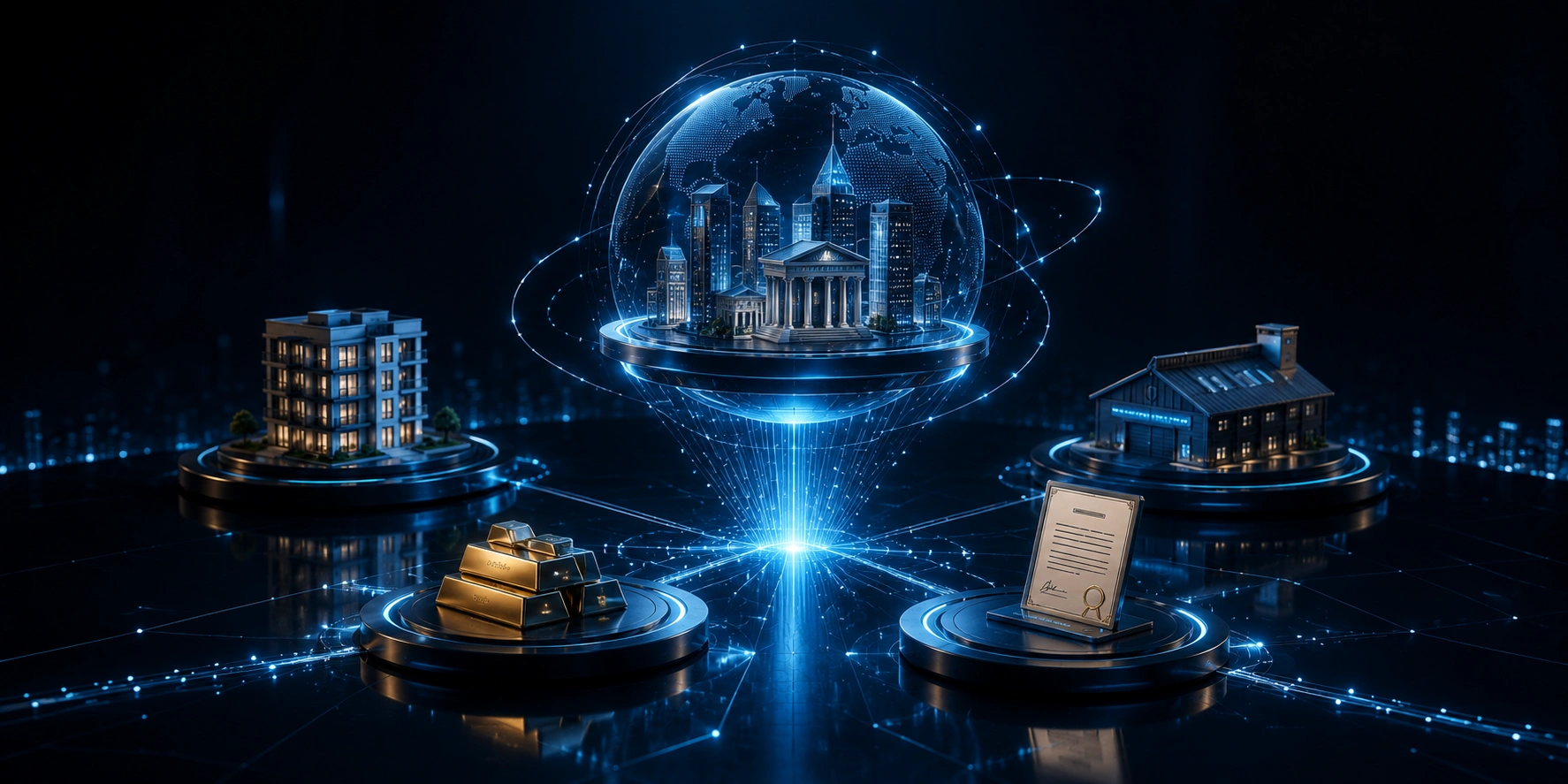
Real-World Assets (RWAs) are tangible assets, ownership rights, or financial obligations represented as digital tokens on a blockchain. This category includes government bonds, real estate, gold, corporate debt instruments, stocks, loan portfolios, invoices, and many other assets that exist outside blockchain networks.
The tokenization process involves creating a digital representation of an asset that is legally linked to ownership rights. Once issued, these tokens can be used across various DeFi protocols for trading, lending, liquidity management, or as collateral for loans. This approach combines the advantages of distributed ledger technology with the existing financial infrastructure.
During the early stages of DeFi, most applications relied exclusively on cryptocurrencies. This limited overall liquidity and made the ecosystem highly dependent on the volatility of digital assets. The emergence of RWAs enabled blockchain networks to integrate assets with clear economic value and more predictable sources of yield.
Today, tokenization is viewed not only as a technological innovation but also as a way to modernize traditional financial infrastructure. Major investment firms, banks, and financial service providers are gradually incorporating tokenized assets into their products, increasing institutional interest in blockchain technology.
2. How RWAs Bridge DeFi and TradFi
Traditional finance (TradFi) has historically relied on banks, custodians, central registries, and numerous intermediaries. In contrast, DeFi uses smart contracts to execute financial transactions automatically without requiring trust in a centralized institution.
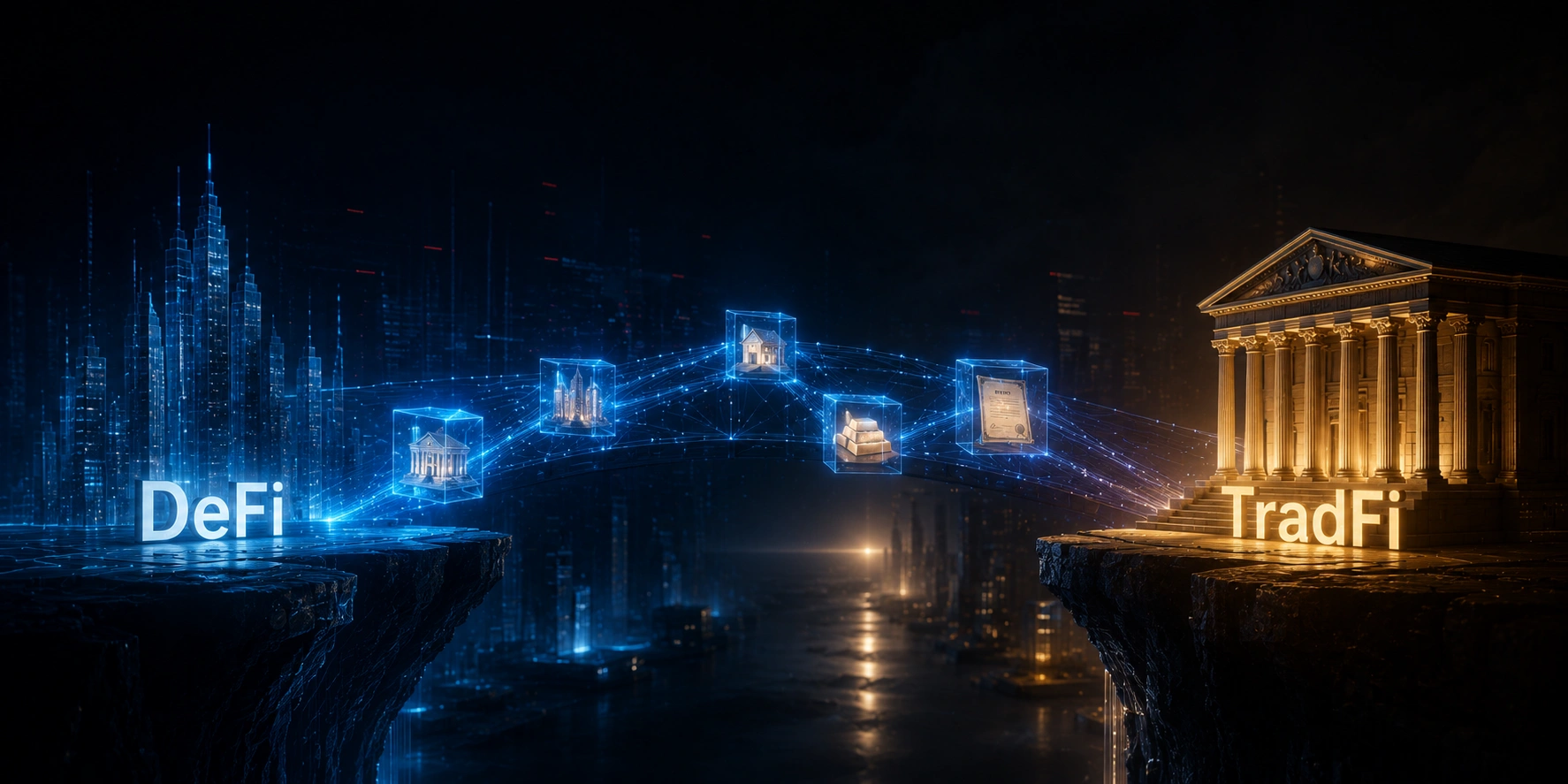
RWAs serve as a bridge between these two ecosystems. The underlying asset is stored and managed in accordance with applicable laws, while its digital representation circulates within blockchain networks. This allows investors to access programmable financial instruments without abandoning the existing legal and regulatory framework.
For example, tokenized government bonds can be used as collateral when obtaining loans through DeFi protocols. Likewise, tokenized money market funds and corporate bonds become part of blockchain-based liquidity while maintaining their connection to real-world financial instruments.
For TradFi, this creates new methods of issuing and distributing assets, while for DeFi it expands the pool of reliable collateral and reduces dependence on cryptocurrency-only liquidity. This is why the RWA market is increasingly viewed as one of the primary drivers bringing traditional and decentralized finance closer together.
3. Benefits of Real-World Asset Tokenization
The adoption of RWAs is transforming how assets are issued, transferred, and managed, making them more compatible with the digital economy. These benefits extend to both individual investors and financial institutions.
One of the key advantages of RWAs is their ability to combine the efficiency of blockchain technology with the value of traditional financial instruments. This gives investors new ways to manage capital while providing issuers with more flexible methods of creating and distributing financial assets. In practice, these benefits range from improving investment accessibility to automating financial operations.
- Fractional ownership of high-value assets through digital tokenization.
- Potentially improved liquidity for assets that were previously traded only in traditional markets.
- Round-the-clock settlement and token transfers without relying on stock exchange trading hours.
- Automation of financial transactions through smart contracts.
- Greater transparency through immutable blockchain records.
- Integration of traditional financial instruments with DeFi lending, staking, and liquidity protocols.
However, these advantages depend on the project's legal framework, the reliability of custodians, asset verification mechanisms, and regulatory compliance. Tokenization itself does not eliminate the investment risks associated with the underlying asset.
As the ecosystem evolves, specialized platforms are emerging to support the issuance, custody, and servicing of tokenized assets in accordance with the regulatory requirements of different jurisdictions. This contributes to growing confidence among institutional investors.
4. Comparison of Traditional Assets and Tokenized RWAs
Tokenization does not change the economic nature of an asset but significantly transforms how it is recorded, transferred, and utilized within financial services. For investors, this means a different user experience, where assets can be accessed through digital wallets or blockchain platforms instead of traditional brokers or custodians. For DeFi protocols, RWAs introduce assets backed by the real economy into decentralized financial ecosystems.
Therefore, comparing traditional assets with their tokenized counterparts involves more than evaluating returns. Infrastructure, liquidity, regulatory requirements, and integration capabilities are equally important factors. Although both versions represent the same underlying value, they differ considerably in the way they are managed and exchanged.
| Criteria | Traditional Assets | Tokenized RWAs |
|---|---|---|
| Ownership | Through custodians and registries | Through digital tokens |
| Accessibility | Depends on market infrastructure | Accessible through blockchain platforms |
| Divisibility | Often limited | Highly divisible through fractional tokenization |
| Settlement | According to exchange trading hours | Available almost 24/7 |
| Use in DeFi | Very limited | Can serve as collateral and a source of liquidity |
| Automation | Managed through centralized systems | Executed via smart contracts |
Nevertheless, the legal nature of the underlying asset remains the determining factor. If a token represents a security, it continues to fall under applicable securities regulations regardless of the technology used to record ownership.
For this reason, most RWA platforms are designed with customer identification procedures, secure custody, auditing, and regulatory compliance in mind. This framework enables effective interaction between blockchain-based financial services and traditional financial institutions.
5. Risks, Future Outlook, and the Impact of RWAs on Financial Markets
Despite the rapid growth of interest in tokenization, the RWA sector faces several challenges. These include regulatory uncertainty in some jurisdictions, the need for secure custody of underlying assets, reliable oracle infrastructure for transferring off-chain data to blockchains, and risks associated with smart contracts and liquidity.
Another important consideration is that tokenization does not eliminate the credit, market, or interest-rate risks of the underlying financial instrument. Instead, it changes the way assets are recorded and transferred. As a result, evaluating RWA projects requires analyzing not only the blockchain infrastructure but also the quality of the underlying assets, legal structures, and participating institutions.
At the same time, the growth of RWAs is gradually reshaping perceptions of digital finance. An increasing number of banks, investment firms, and asset issuers are exploring blockchain as infrastructure for issuing and managing financial products. Simultaneously, DeFi gains access to entirely new categories of assets that were previously unavailable within decentralized protocols.
As regulation becomes more mature, tokenization standards continue to evolve, and greater interoperability between TradFi and DeFi emerges, the importance of RWAs is expected to grow further. Tokenization is increasingly recognized as one of the most significant trends in modern finance because it combines programmable smart contracts, blockchain transparency, and the economic value of real-world assets within a unified digital ecosystem.











