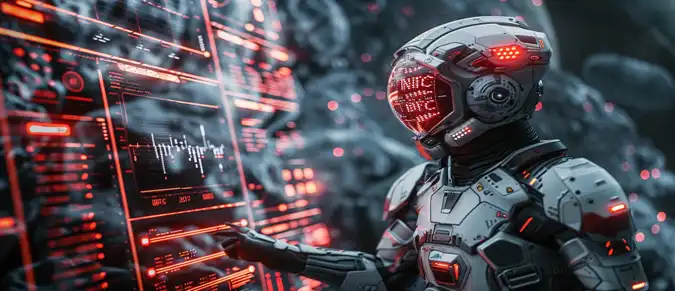

Astro Must is a Web3 game that aims to combine a traditional gaming experience with blockchain capabilities. At its core is a multi-genre universe where players explore worlds, develop characters, interact with NFTs, and participate in an in-game economy. Unlike many GameFi projects, the focus here is not only on earning but also on engagement, progression, and long-term gameplay value. This combination of gameplay, digital ownership, and economic systems makes Astro Must an interesting example of the evolution of Web3 gaming.
Contents
- What is Astro Must
- Gameplay Architecture and Multi-Format Experience
- NFT and Play-to-Mint
- Astro Must Tokens and Economy
- Prospects, Limitations and Final Evaluation
1. What is Astro Must
Astro Must is a Web3 game set in a space-themed universe where players become part of an evolving world. The project combines exploration, survival, RPG elements, and competitive modes within a unified environment where player actions influence overall progression. The game is designed for a broad audience: it does not require deep blockchain knowledge, and Web3 mechanics are introduced gradually. This makes Astro Must closer to a hybrid Web2 + Web3 model, where users first engage with gameplay and later explore the economy and digital assets.
The project is also built as a long-term platform with the ability to expand through new modes and mechanics. Special emphasis is placed on the community, where players become part of the ecosystem rather than just content consumers. This increases engagement and makes the game world more dynamic. Additionally, Astro Must aims to create an environment where value is generated not only through asset ownership but also through active participation, allowing the game to evolve alongside its audience.
2. Gameplay Architecture and Multi-Format Experience
One of the key features of Astro Must is its ambition to move beyond a single gameplay loop and build a multi-genre ecosystem. The project combines different types of activities — exploration, survival, combat, and progression — within a unified world with a shared logic and narrative. This approach makes the gameplay more flexible and diverse, allowing players to switch between modes and avoid repetition. As a result, player retention improves and long-term engagement becomes more sustainable. Additionally, the multi-format structure enables regular content updates without fundamentally changing the core game.
An equally important element is the unified progression system that connects all game modes. Player achievements retain their value and can be applied across different parts of the ecosystem, creating a sense of continuous development. This increases motivation, as every action contributes to overall progress rather than being limited to a single activity. Players begin to view progression as a long-term journey, while the system itself allows developers to introduce new mechanics without disrupting the existing structure.
3. NFT, Play-to-Mint and Digital Ownership
Why NFTs Matter
In Astro Must, NFTs are not just decorative assets but an integral part of gameplay. They provide access to features, enhance characters, and influence progression, making them embedded within the game rather than a separate monetization layer. The division into different collections simplifies the ecosystem, with each type of NFT serving a specific role — from onboarding to bonuses and enhancements. This helps players better understand which assets are relevant for their goals.
NFTs also strengthen the sense of digital ownership. Instead of temporary in-game items, players receive assets tied to their achievements and participation, making progression more meaningful and long-term.
Play-to-Mint as an Entry Model
Play-to-Mint connects gameplay with NFT acquisition. Players can earn digital assets through in-game actions rather than purchasing them, lowering the entry barrier and making Web3 mechanics more accessible. NFTs are perceived as rewards for effort rather than investments, increasing engagement and motivation.
This model also contributes to a more sustainable economy, as asset value is generated through player activity rather than purely through sales.
- NFTs provide access to features and gameplay advantages
- They are integrated into progression systems
- Assets can be earned through gameplay (Play-to-Mint)
- Collections simplify navigation within the ecosystem
- Rewards increase engagement and player motivation
- The model supports a more sustainable in-game economy
As a result, NFTs in Astro Must become a core part of the ecosystem, linking gameplay, progression, and economy into a unified structure. This creates a deeper experience where value is driven by player activity, not just asset ownership.
4. Astro Must Tokens and Economy
The economic model of Astro Must has evolved over time. Earlier versions included a dual-token system — $MUST and $COSMOS — each serving different functions within the ecosystem. More recent materials suggest a simplified and more flexible structure, making it easier for users to understand and adapt to real gameplay scenarios. This approach reduces complexity and improves sustainability.
Tokens are closely tied to gameplay. They are used for transactions, upgrades, interactions, and character progression. Their value depends on player activity: the higher the engagement, the more stable the economy becomes. This makes the balance between gameplay and economy a critical factor in the project's success.
| Token | Role |
|---|---|
| $MUST | Main in-game currency |
| $COSMOS | Staking and governance (early model) |
| Astro Tokens | Updated economic model |
Overall, Astro Must’s tokenomics is built around the interaction between gameplay and economy rather than existing independently. The simplified structure lowers the entry barrier, while long-term sustainability depends on player engagement and the quality of the gaming experience.
5. Prospects, Limitations and Final Evaluation
Astro Must stands out by combining gameplay, digital ownership, and economic systems into a unified framework. This approach makes the project potentially more sustainable compared to many Web3 games that focus primarily on tokens. Its multi-genre structure allows for gradual expansion without disrupting the core experience, helping maintain long-term user interest.
At the same time, the project faces several challenges. Its complex architecture requires high-quality implementation and careful balance between gameplay and economy. Any misalignment could reduce user engagement. Additionally, the project depends heavily on community activity — without active participation, even a strong concept may struggle to grow.
Overall, Astro Must can be seen as an attempt to create a more mature Web3 gaming model, where gameplay is just as important as earning potential. By combining multi-genre mechanics, NFTs, and an integrated economy, it has the potential to become a strong example of next-generation GameFi if executed successfully.











