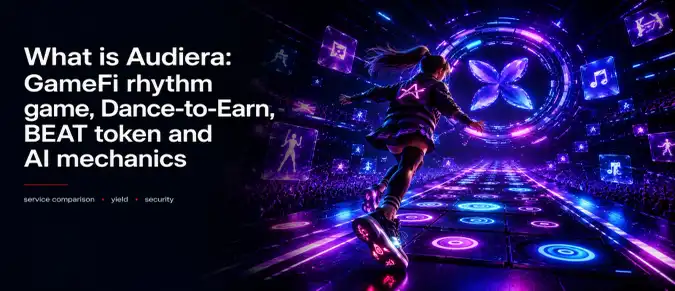

Audiera is a blockchain-based rhythm game and GameFi platform that combines music, social mechanics, artificial intelligence, and digital assets. The project is positioned as a Web3 evolution of the well-known Audition dance game franchise, which has attracted hundreds of millions of users. Audiera blends competitive gameplay, AI-powered content creation tools, and a Dance-to-Earn model that allows users to receive rewards for their activity. The platform is being developed on BNB Chain and aims to combine a traditional gaming experience with Web3 functionality.
Contents
- What Is Audiera and How Is It Connected to the Audition Franchise?
- How the Gameplay and Dance-to-Earn Model Work
- Comparing Audiera with Other GameFi Projects
- Core Platform Features and the Utility of the BEAT Token
- Audiera’s Prospects and the Future of Web3 Music Games

1. What Is Audiera and How Is It Connected to the Audition Franchise?
Audiera is a Web3 platform inspired by the classic Audition series of dance games. The team presents the project as an evolution of the familiar genre, where users not only take part in music-based competitions but also interact with a digital economy.
The project develops the concept of an “agent-native economy,” in which AI agents can participate alongside players. These agents may create content, interact with users, and perform specific functions within the ecosystem. This approach distinguishes Audiera from traditional rhythm games, where interaction is usually limited to the game client.
According to the developers, the ecosystem includes a mobile game, a Telegram mini-app, AI characters named Kira and Ray, and tools for creating music and digital items. At the same time, blockchain components remain primarily at the infrastructure level and do not require users to have advanced knowledge of cryptocurrencies.
Audiera reflects a broader industry trend: GameFi is moving away from simple play-to-earn models toward more complex entertainment platforms that combine gaming, AI, social interaction, and user-generated content.
2. How the Gameplay and Dance-to-Earn Model Work
Audiera is built around rhythm-based gameplay. Users perform actions in time with music, compete against other players, and receive scores based on accuracy and reaction speed. Some modes support both traditional controls and physical accessories such as a dance Fit Mat.
The Dance-to-Earn concept means that player activity can generate rewards within the ecosystem. Rather than focusing exclusively on speculative incentives, the developers aim to connect rewards with gaming skill, participation in events, and content creation.
Artificial intelligence also plays an additional role. Users may create music with AI-powered tools, while virtual characters help introduce new forms of interaction within the platform. Some project materials also mention the possibility of issuing user-generated content as NFTs.
A key feature of Audiera is the combination of mobile gameplay, social functions, and Web3 mechanics. This structure may appeal both to traditional gamers and to users interested in blockchain technology.
3. Comparing Audiera with Other GameFi Projects
Audiera operates at the intersection of several segments: music games, AI applications, and GameFi. Unlike many blockchain games focused on strategy or RPG mechanics, the project emphasizes rhythm, social interaction, and content creation.
| Project | Genre | Primary Blockchain | Key Feature |
|---|---|---|---|
| Audiera | Rhythm Game | BNB Chain | Dance-to-Earn and AI-generated music |
| Axie Infinity | GameFi | Ronin | Play-to-Earn and NFT creatures |
| StepN | Move-to-Earn | Solana | Rewards for physical activity |
| Parallel | Trading Card Game | Ethereum | Card gameplay with AI mechanics |
| The Sandbox | Metaverse | Ethereum | User-generated content and virtual worlds |
One of Audiera’s distinguishing features is its use of an established gaming brand and its focus on the music game audience. This allows the project to target not only the crypto community but also players from traditional online gaming markets.
At the same time, the project faces challenges common to GameFi, including the need to maintain an active user base, balance tokenomics, and release new content on a regular basis.
4. Core Platform Features and the Utility of the BEAT Token
The Audiera ecosystem consists of several components connected by the BEAT token. It is used as the main settlement asset and participates in the platform’s internal economy. The total token supply is capped at 1 billion units.
Audiera's functionality extends beyond gameplay alone. The project combines elements of GameFi, artificial intelligence, social interaction, and digital ownership to create a unified ecosystem centered around the BEAT token. As a result, users gain access not only to reward mechanisms but also to tools for content creation and participation in the platform's ongoing development.
- Music competitions based on the Dance-to-Earn model.
- AI tools for music generation.
- Integration of virtual characters Kira and Ray.
- Support for NFTs and user-generated content.
- A Telegram mini-app and mobile game.
- Use of the Fit Mat for physical activity.
- An internal economy based on the BEAT token.
- Potential ecosystem governance mechanisms.
According to publicly available materials, part of the platform’s revenue may be used to buy back and burn BEAT tokens. This model is intended to reduce the circulating supply, although its long-term effectiveness will depend on actual user activity and ecosystem growth.
The project is also developing social mechanics, including virtual spaces, interaction with AI agents, and user-generated content. Over time, this could allow Audiera to evolve from a single game into a broader entertainment platform.
5. Audiera’s Prospects and the Future of Web3 Music Games
Audiera is developing in one of the most competitive areas of Web3: GameFi. Despite the large number of blockchain games, music and rhythm-based projects remain a relatively underdeveloped niche. This creates opportunities to experiment with new forms of interaction between users, AI, and digital assets.
A key factor in the project’s success will be its ability to maintain a balance between entertainment and economics. The history of GameFi shows that projects focused mainly on financial returns often struggle when user activity declines. In Audiera’s case, long-term value will depend primarily on gameplay quality and the strength of its social features.
The development of AI functionality is equally important. If virtual characters, music generation, and user-created content become meaningful parts of the gaming experience, Audiera may establish its own position at the intersection of GameFi, AI, and SocialFi.
Overall, Audiera demonstrates how blockchain projects are attempting to combine entertainment, artificial intelligence, and digital economies. Regardless of its future development, the project already shows how traditional gaming genres can be adapted to the Web3 era.











