

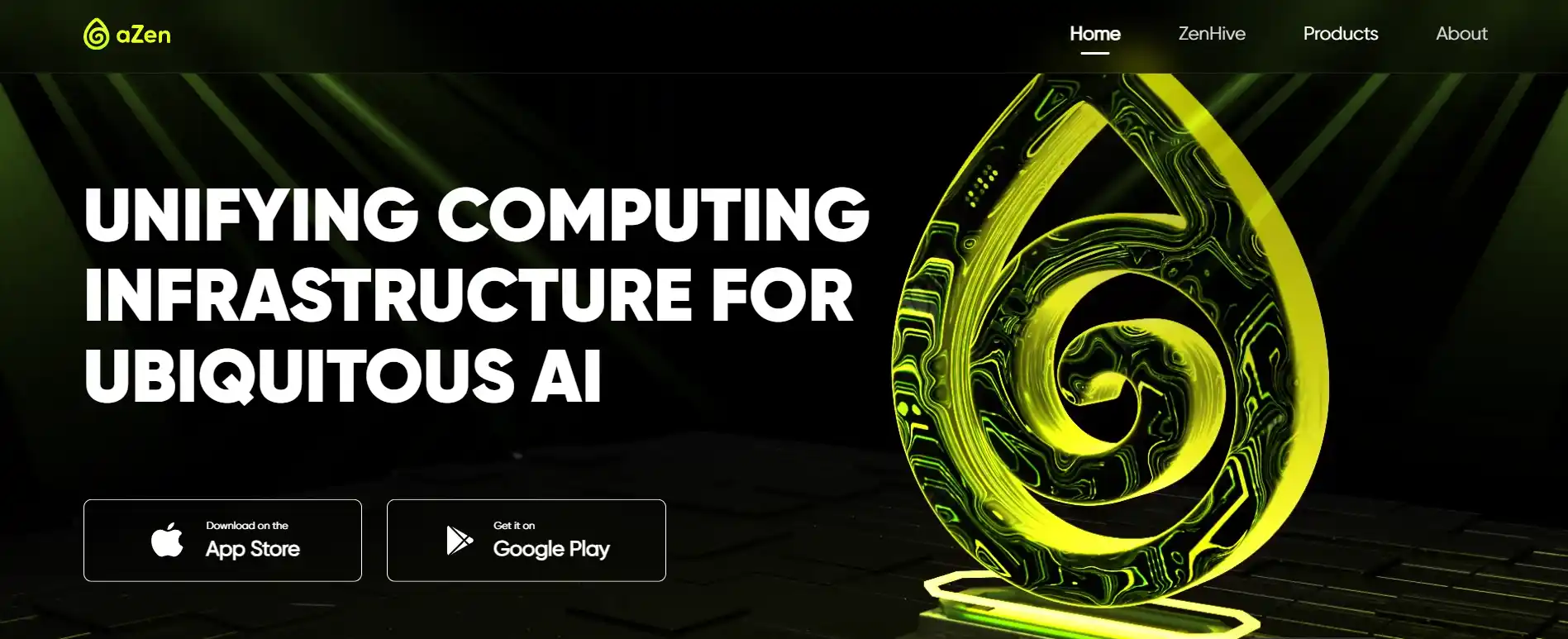
aZen Protocol is a platform that elevates the use of computing resources to an entirely new level. The project successfully merges artificial intelligence and decentralization technologies, creating a unique ecosystem where each user can efficiently utilize their unused resources and receive stable rewards.
- What is aZen Protocol: Concept and Benefits
- Technology and Platform Architecture
- Tokenomics and the $AZEN Economic Model
- Use Cases and Product Ecosystem
- Partnerships, Prospects, and Development Plans
What is aZen Protocol: Concept and Benefits
aZen Protocol is an innovative decentralized infrastructure designed to optimize idle computing power. The project is based on DePIN (Decentralized Physical Infrastructure Networks), enabling transparent and secure leasing of computing resources via blockchain.
The platform allows users to rent out computer and server resources in exchange for $AZEN tokens. As a result, idle CPU, GPU, and memory resources become valuable assets. Users gain the opportunity to earn additional income without significant costs or technical complexity.
Key benefits of the platform:
- Ease of use and accessibility for everyday users.
- Cost savings for businesses through external resource rental.
- High levels of automation and transparency.
- Support for a wide range of devices participating in the ecosystem.
- Reduced reliance on centralized servers and improved fault tolerance.
The aZen Protocol concept not only addresses inefficient use of computing power, but also lays a solid foundation for decentralized AI services where users become full participants in the computational process.
Technology and Platform Architecture
The foundation of aZen Protocol is an advanced architecture that combines blockchain, smart contracts, and DePIN technologies. One of the platform's key innovations is the tokenization of physical computing resources (CPU, GPU, RAM, Storage) into dynamic NFTs.
Each NFT verifies the availability of a specific resource, allowing renters to precisely select and pay for the computing power they need. The entire rental process is automated and governed by smart contracts, ensuring transparency and adherence to agreed terms.
The platform integrates effectively with cloud and edge computing solutions, resulting in minimal latency and high performance. aZen also utilizes a multi-layered data protection system and distributed storage architecture to ensure reliability and security.
The system is easily scalable and capable of handling large volumes of data, maintaining stability even under high loads and large user numbers.
Tokenomics and the $AZEN Economic Model
The aZen Protocol economic model revolves around its native platform token — $AZEN. It plays a central role in ecosystem operation, ensuring sustainability and growth.
The total token supply is 10 billion units. A large portion of tokens is allocated as rewards for users who lease out their computing resources and contribute to network expansion.
Key aspects of tokenomics include:
| Mechanism | Description |
|---|---|
| Rewards | Users earn tokens for providing resources, encouraging active participation and network growth. |
| Staking | Token holders can lock assets in smart contracts for passive income and governance rights through voting. |
| Service Payments | The token is used to pay for in-platform services: AI task processing, CDN acceleration, analytics, and other computational operations. |
This well-thought-out economic model supports token stability and incentivizes long-term community participation.
Use Cases and Product Ecosystem
The aZen Protocol ecosystem includes several products that simplify interaction with the platform:
- aZen Connect: A mobile app that allows users to lease resources, track earnings, and manage assets and tokens.
- aZen Marketplace: A decentralized marketplace for leasing and acquiring computing power. The platform automatically matches optimal rental conditions for both renters and resource providers.
- ZenHive: A unique device that connects users to the aZen network. ZenHive efficiently contributes computing power to AI tasks and $AZEN token mining.
These services allow seamless integration into the aZen ecosystem without requiring deep technical knowledge, making the platform widely accessible to individuals and businesses alike.
Partnerships, Prospects, and Development Plans
aZen Protocol is actively forming partnerships and implementing large-scale plans to expand its ecosystem. Notably, the project collaborates with Zenlayer, a leading IaaS provider, which has significantly increased the platform’s global infrastructure footprint.
Additionally, aZen works with Stratos to create efficient solutions for improving Web3 infrastructure. These alliances enhance aZen’s market position and reliability.
Future development plans include expanding support for various devices and operating systems to grow the user base. New AI services, algorithms, and analytics tools are also in the pipeline.
Special emphasis is placed on community development. Launching loyalty programs and scaling through active user participation are key elements of aZen's long-term strategy.
Overall, aZen Protocol shows strong growth potential and aims to become a leader in decentralized computing and AI. With technological innovation, strategic tokenomics, and community engagement, the project is well-positioned to achieve its vision.











