
BeraTone is a cosy multiplayer farming game and life simulator built around the Berachain ecosystem. The project combines farming, fishing, crafting, world exploration, quests, customization and social mechanics while retaining elements of the musical mini-games from its early concept. Its Web3 layer is connected to digital assets, BeraToners NFTs and Berachain infrastructure, although the developers aim to keep the core gameplay separate from mandatory cryptocurrency interactions. In 2025–2026, BeraTone moved from early demonstrations to closed playtests and experiments with BERA-based rewards.
Contents
- What Is BeraTone and How Does the Cosy Farming Game Work?
- Farming, Crafting, Fishing and World Exploration
- BeraToners, Founder’s Sailcloth and the Web3 Economy
- Berachain, BERA and Proof of Liquidity in the Project’s Infrastructure
- BeraTone Development and the Future of Its Farming Ecosystem
1. What Is BeraTone and How Does the Cosy Farming Game Work?
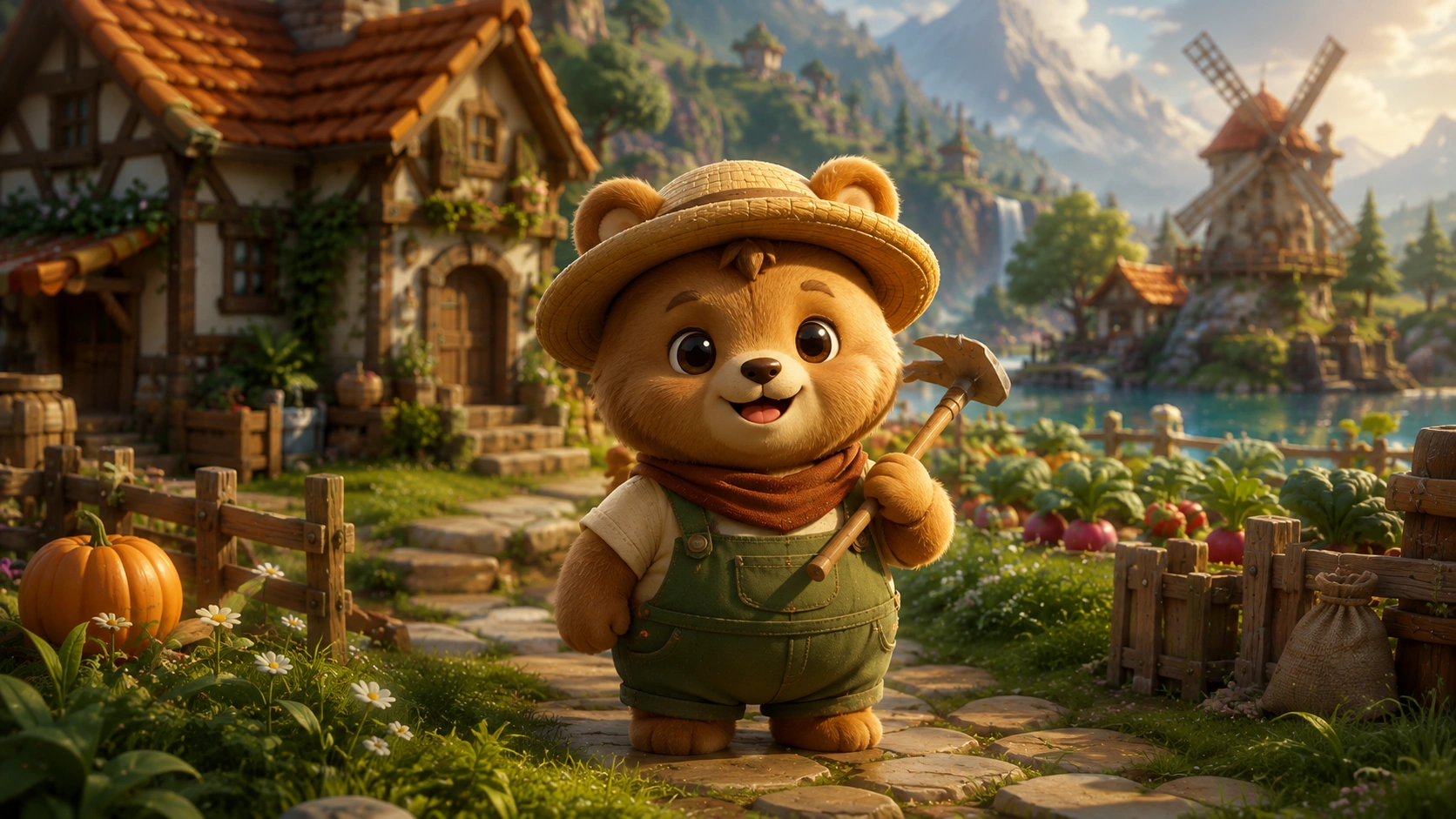
BeraTone’s history is connected to Bit Bears, an NFT collection from the early Berachain ecosystem. One of the project’s creators, PixelBera, worked on the visual design of Bit Bears before the idea of digital characters gradually evolved into a standalone game. The team initially experimented with 2D pixel art and rhythm-based gameplay but later shifted toward a three-dimensional life-simulation model.
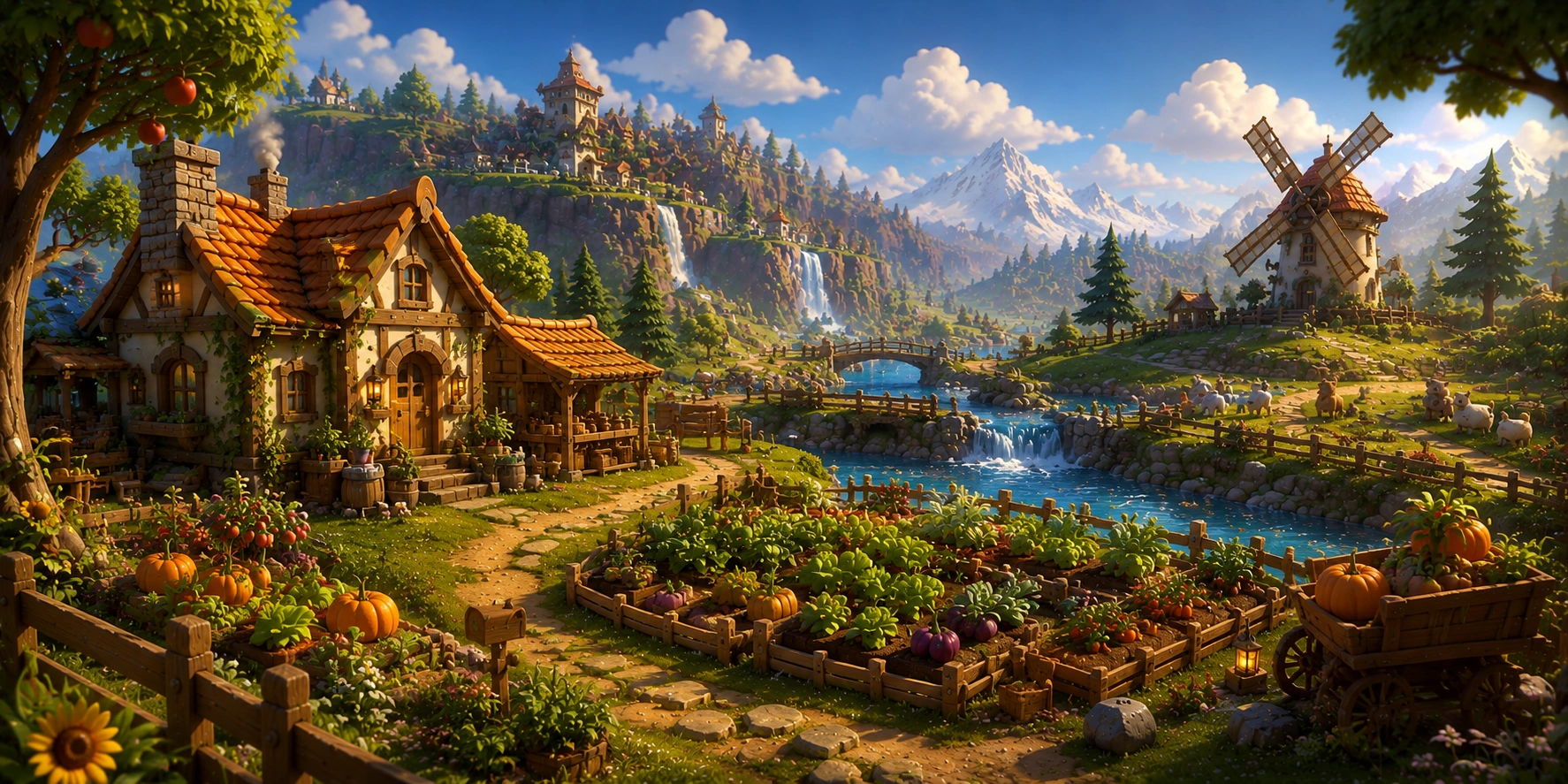
In its current concept, BeraTone combines elements of a farming simulator and an online RPG. Players receive their own territory that can be developed and customized, while they can also grow crops, collect resources and use crafting systems. Beyond the farm is a broader world featuring characters, quests, exploration and multiplayer interactions.
The project follows a familiar cosy-game loop built around gradually improving personal spaces, collecting resources and items, socializing and completing everyday activities. The developers have cited Animal Crossing, Stardew Valley and classic Nintendo games among their inspirations, while BeraTone adds a more pronounced shared online world.
BeraTone is not designed exclusively around a Play-to-Earn model. The core concept includes free-to-play access, with cryptocurrency features acting as an additional layer. For a life simulator, this distinction is important because farming, exploration, collecting and social interaction are intended to remain the main reasons for returning to the game rather than financial incentives alone.
2. Farming, Crafting, Fishing and World Exploration
Farming is one of the central systems in BeraTone. Players can develop their own plots, grow crops, collect resources and create personalized spaces. Customization plays an important role: the objective is not only to improve farm productivity but also to shape its appearance and showcase the result to other players.
The farming system is connected to crafting and exploration. Collected materials can be used to create items, while the wider world provides additional resources, characters and quests. Fishing expands the range of everyday activities, while musical mini-games preserve a connection to the project’s original rhythm-based concept.
| Component | Type | Role in BeraTone |
|---|---|---|
| Farming | Life Simulation | Allows players to grow crops and develop their own farm |
| Crafting | Progression | Uses collected resources to create in-game items |
| Fishing | Activity | Expands world exploration and resource collection |
| Quests | Adventure | Connect world exploration with characters and progression |
| Farmstead | Player Space | Provides a personal area for development and customization |
| Multiplayer | Social System | Allows players to interact and explore the world together |
The social component distinguishes BeraTone from fully single-player farming simulators. Users share a common world, can encounter other players’ characters and showcase customized spaces and digital items. The developers also view player-to-player trading as a natural extension of the game’s collectible model.
Blockchain is not required to process every in-game action. Planting crops, moving characters, participating in dialogues or completing most quests can operate through conventional game infrastructure. The on-chain layer is primarily intended for digital ownership and selected economic transactions.
3. BeraToners, Founder’s Sailcloth and the Web3 Economy
One of the project’s early Web3 assets was the Founder’s Sailcloth collection. It consists of 888 NFTs created for early members of the community. Holders received early access to testing, while initially announced in-game benefits included additional inventory capabilities, bonuses and selected economic features.
In May 2025, the project expanded its NFT layer with the launch of BeraToners. The collection includes 6,500 characters designed for use as in-game avatars. The models were also developed as fully rigged 3D VTuber characters, allowing them to be used not only within BeraTone but also for streaming and content creation.
Key Elements of BeraTone’s Gaming and Web3 Model:
- free-to-play access to the core gameplay;
- farming, fishing, crafting and shared-world exploration;
- personal farms and environmental customization;
- multiplayer interaction and trading;
- Founder’s Sailcloth as an early NFT collection;
- BeraToners as a collection of 6,500 playable 3D avatars;
- early access to selected playtest phases for NFT holders;
- digital items with potential on-chain ownership;
- integration with Berachain infrastructure;
- experiments with BERA rewards during testing campaigns.
An important aspect of BeraToners is the distinction between regular playable characters and collectible avatars. The team aims to attract an audience significantly larger than the number of NFT holders, meaning ownership of a BeraToner is not intended to be a basic requirement for accessing BeraTone. NFTs instead provide an additional identity and benefits layer for early community members.
The economic mechanics require separate consideration. The market value of NFTs and cryptocurrency rewards depends on demand, liquidity and the broader condition of the Berachain ecosystem. As a result, in-game assets should not be treated as a source of guaranteed returns, even when a particular playtest campaign offers crypto rewards.
4. Berachain, BERA and Proof of Liquidity in the Project’s Infrastructure
BeraTone is being developed within the Berachain ecosystem, an EVM-compatible Layer 1 network. This allows developers to use familiar Ethereum infrastructure for smart contracts and digital assets while integrating with Berachain’s broader economic mechanisms.
Within the network architecture, BERA is used as the gas and staking token. BGT serves a separate role as a non-transferable governance and reward asset connected to the Proof of Liquidity system. Users can earn BGT through supported reward vaults and then use it for governance or delegate it to validators. BGT can also be converted into BERA at a 1:1 ratio, while BERA cannot be converted back into BGT.
For BeraTone, integration with Proof of Liquidity potentially enables economic mechanics connected to the broader liquidity of Berachain. Early project materials described the possibility of interacting with native dApps and partner protocols directly from the game environment. However, these DeFi features should be distinguished from the confirmed core gameplay: farming in BeraTone is primarily a game mechanic rather than a synonym for liquidity farming.
In 2026, early playtest campaigns began experimenting with BERA as a reward asset. This does not mean that BeraTone has launched a separate confirmed token. Using Berachain’s existing native asset allows the project to test Web3 economic mechanics without immediately introducing another in-game cryptocurrency.
5. BeraTone Development and the Future of Its Farming Ecosystem
BeraTone evolved from an NFT project and an early 2D concept into a three-dimensional multiplayer life simulator. In January 2025, the project raised $2 million in seed funding in a round led by Animoca Brands, with participation from SNZ Holding, CitizenX, Avid3 and other investors. During 2025, the team expanded testing through early playtests covering controls, activities and selected areas of the game world. Player feedback was used to refine mechanics, while the launch of BeraToners expanded the community of early participants.
By 2026, BeraTone continued its gradual rollout through closed tests and campaigns featuring quests and BERA rewards. This approach allows the team to evaluate both the core farming and exploration loop and the integration of economic incentives. Key risks include the length of development, player retention, economic balance and the Web3 layer’s dependence on the broader Berachain ecosystem. Maintaining accessible free-to-play gameplay without giving NFT holders excessive advantages is another important challenge.
BeraTone’s prospects will depend primarily on the quality of its farming, crafting, exploration and multiplayer mechanics. If the core gameplay can retain an audience on its own, NFTs, BERA and Berachain can function as an additional economic layer rather than the main reason to play.











