

Bitmain Technologies, founded in 2013, has earned a reputation as a global giant in the blockchain and cryptocurrency sphere. Headquartered in Beijing, the company has become synonymous with high-performance mining hardware under its Antminer brand. Its operations span from designing specialized integrated circuits (ASICs) to managing some of the world's largest mining pools. Despite periodic criticism related to the centralization of the Bitcoin network, Bitmain's contribution to industry development and blockchain security remains undeniable. This review examines the key aspects of its multifaceted business.
Content:
- Bitmain History and Rise to Leadership
- Flagship Products: The Antminer Lineup
- Mining Pools and the Bitmain Ecosystem
- Bitmain's Impact on the Industry and Criticism
- Modern Strategy and Project Challenges
- Conclusion
Bitmain History and Rise to Leadership
Bitmain was born in 2013 through the efforts of Jihan Wu and Micree Zhan. Their goal was to surpass the low-productivity GPU systems used for cryptocurrency mining. The key to success was the creation of Application-Specific Integrated Circuits (ASICs), tailored to specific algorithms, such as SHA-256 for Bitcoin. These processors offered unprecedented power with low energy consumption, revolutionizing the mining landscape.
The ability for rapid technological iteration and scaling production volumes allowed the company to capture a dominant market share in the shortest possible time. Bitmain did not just create a product; it established a new industrial standard, making high-performance hardware the norm for the entire sector.
Flagship Products: The Antminer Lineup
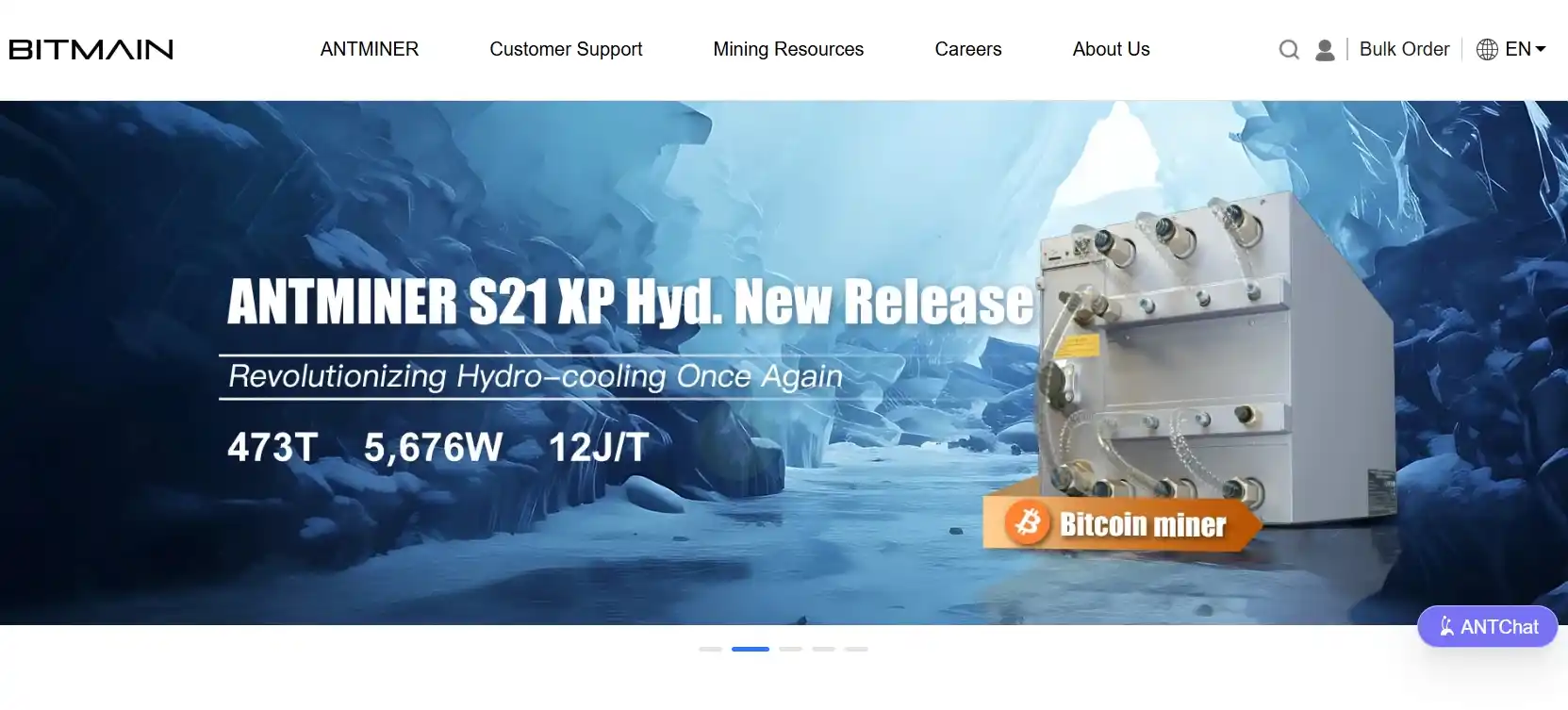
The core of Bitmain's business is the development and sale of mining devices under the Antminer brand. Each new generation of these machines demonstrates increased performance and improved energy efficiency. The model range covers various algorithms, allowing for the mining of not only Bitcoin but also other cryptocurrencies, such as Litecoin or Dash. The devices are supplied ready-to-use and are designed for installation in large data centers or mining farms.
When choosing a specific model, miners analyze several critical parameters. These include not only the absolute hashing speed, measured in terahashes per second (TH/s), but also the performance-to-power consumption ratio (J/TH). It is this indicator that largely determines the future profitability of the equipment.
| Model (example) | Algorithm | Approximate Speed | Key Feature |
|---|---|---|---|
| Antminer S19 XP | SHA-256 | ~140 TH/s | One of the most efficient models for Bitcoin mining |
| Antminer L7 | Scrypt | ~9500 MH/s | High performance for Litecoin mining |
| Antminer KS3 | Kadena | ~8 TH/s | Specialization on a less common algorithm |
The constant race for leadership in technical specifications forces competitors to follow Bitmain's innovations. The company regularly announces and releases more advanced devices, with the obsolescence of previous generations happening rapidly. This creates a dynamic but demanding market for consumers.
Mining Pools and the Bitmain Ecosystem
Beyond the hardware segment, the corporation develops a large-scale ecosystem that amplifies its influence on the network. Under its management are well-known mining pools such as BTC.com and Antpool, which combine participants' power for stable reward generation. For comprehensive client servicing, Bitmain offers a range of additional services.
- Equipment Hosting: Placement of Antminer devices in professional data centers with optimal cooling and connection to power grids.
- Cloud Mining: The ability to rent computing power without the need to purchase and configure physical devices.
- Technical Support: Consultations and assistance in maintaining mining equipment.
Providing such services creates a closed cycle of interaction with the consumer. This multifaceted activity transforms the company from an equipment manufacturer into a key infrastructure operator for the entire blockchain industry, providing additional income stability for its clients.
Bitmain's Impact on the Industry and Criticism
Bitmain's undeniable achievement is its colossal contribution to the security of the Bitcoin network. By supplying vast amounts of computing power, the company indirectly helps protect the blockchain from attacks. Furthermore, its engineering developments continually raise the bar for technological progress, stimulating advancements in the semiconductor industry as applied to cryptography tasks.
However, its dominant market position regularly becomes a subject of heated debate. Critics' main claims center on centralization risks. Control over a significant portion of the hash rate through its own pools and ownership of large mining farms theoretically poses a threat to the decentralized nature of cryptocurrencies. The company is also periodically accused of leveraging insider information, launching products with inflated prices, and not always having transparent policies. These factors form a controversial yet extremely significant image of the corporation within the community.
Modern Strategy and Project Challenges
Faced with high cryptocurrency market cyclicality and increasing competition, Bitmain is adapting its business model. The company is diversifying its activities, paying attention to new directions such as artificial intelligence, where its experience in creating high-performance chips can be in demand. Concurrently, active work is underway to reduce device energy consumption and utilize renewable energy sources for mining, which is critically important for sustainable development.
At the current stage, the organization is focused on strengthening relationships with large institutional clients and governments, offering them comprehensive blockchain solutions. Geographic expansion and the search for regions with cheap electricity for farm placement remain priority tasks. Bitmain's future will depend on its ability to balance innovation, market demands, and growing pressure from regulators worldwide.
Conclusion
Bitmain remains one of the most influential and controversial figures in the blockchain world. On one hand, its technological solutions have provided an industrial scale for mining and strengthened the infrastructure of leading cryptocurrencies. On the other hand, the degree of its influence raises legitimate questions about decentralization, which lies at the core of Bitcoin's philosophy. Today, the company is undergoing a transformation, trying to maintain leadership in a mature and competitive equipment market while simultaneously exploring adjacent high-tech spheres. Its future path will be a key indicator for the entire industry, demonstrating how industrial giants can coexist with decentralized ecosystems.











