
BitstarWar is a cosmic blockchain strategy game that combines SLG gameplay, NFT ownership, and a game model inspired by crypto mining. The player develops a planet, mines Starcoin, manages the energy system, strengthens the army, and participates in PvP battles. The core idea of the project is “Skill to Earn,” where progress efficiency is determined by player decisions rather than investments alone. Thanks to the combination of mining, strategy, and Web3 functionality, BitstarWar aims to establish itself as a complete game economy rather than another P2E simulator.
- BitstarWar as a Web3 Strategy
- Gameplay and Mechanics of BitstarWar
- Project Economy and In-Game Assets
- Technical Architecture of BitstarWar
- BitstarWar Prospects and Risks
BitstarWar as a Web3 Strategy
BitstarWar was created as a project capable of merging traditional space strategy mechanics with the flexible economy of the blockchain. The developers aimed for an organic integration of mining, energy systems, and digital assets into the storyline and progression. This is not a superficial token layer but a part of the game world, where resource extraction, asset value, and risks are directly linked to the economic model of the project.
The development took more than three years, and the setting revolves around five unique planets with their own bonuses, gameplay styles, and strategic advantages. The choice of planet affects the entire gameplay path—from building development to PvP strategy.
BitstarWar differs from typical GameFi projects through its focus on deep SLG mechanics: building chains, strategic resource allocation, army development, and finding the optimal balance between defense and resource extraction. This makes the project appealing both to crypto players and fans of space strategy games.
Gameplay and Mechanics of BitstarWar
The gameplay revolves around construction, energy generation, mining equipment development, and participating in combat. The player constantly balances between expanding infrastructure, increasing production capacity, and strengthening defenses.
Key BitstarWar Mechanics:
-
Planet System. The starting planet defines the strategy of progression.
-
Infrastructure. Construction of power plants, miners, production buildings, and defensive structures.
-
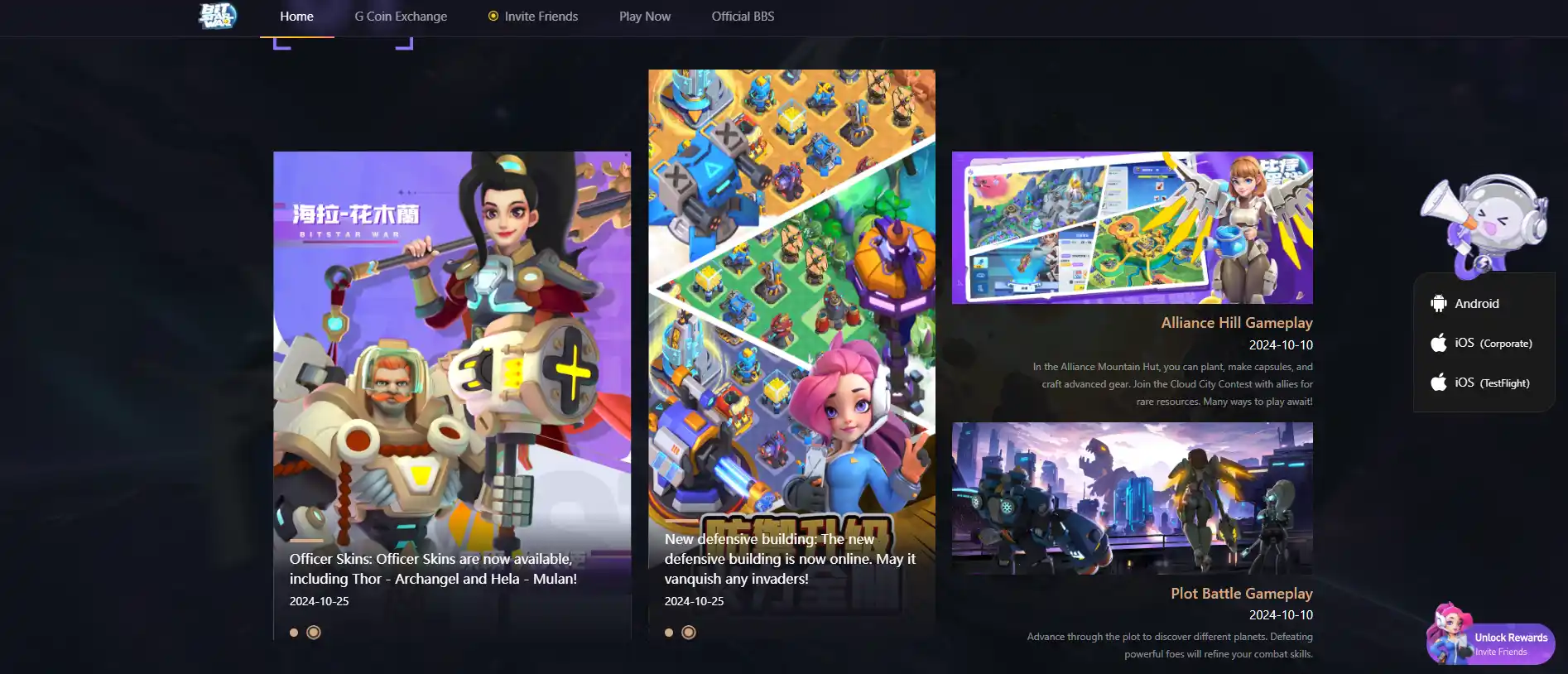
NFT Officers. Unique characters affecting mining efficiency and combat performance.
-
PvP and PvE Battles. Raids, base defense, missions, and seasonal events.
-
Energy Management. Controlling the balance between energy generation and miner load.
-
Seasons and Rankings. Tournaments, events, and player progression systems.
The combination of these mechanics creates the feeling of a true strategy game where success depends on long-term planning rather than a single action. The constant shifting of priorities—extraction, defense, attack—forces players to adapt strategies based on opponents’ behavior.
Project Economy and In-Game Assets
The economic model of BitstarWar is built on mining Starcoin, similar to crypto mining. Miners require energy and equipment, and mining efficiency depends on building levels, the state of the energy system, and officer upgrades.
NFTs are the core of the game’s digital assets. Officers, equipment, and unique items are issued as tokens that can be used in-game or traded on external marketplaces. This allows players to build the value of their profile not only through gameplay progress but also through digital ownership.
The economy is balanced through resource consumption systems: upgrades, crafting, army improvements, and participation in events. All these mechanics regulate Starcoin emission and prevent hyperinflation, which is critical for any game tokenomics.
Technical Architecture of BitstarWar
BitstarWar uses a hybrid architecture: combat logic and gameplay are processed on the server, while asset ownership and part of economic actions are recorded on the blockchain. This provides performance typical of mobile SLG games and transparency of the Web3 model.
Technical Elements Table of BitstarWar
| System Element | Description | Player Value |
|---|---|---|
| Blockchain | BNB Chain | Fast transactions, low fees |
| NFT Assets | Officers, equipment, rare items | Army enhancement and trading opportunities |
| Hybrid Logic | Gameplay processed off-chain | High performance |
| On-chain Operations | Buying/selling NFTs, ownership | Transparency and security |
| Wallets | MetaMask, Trust Wallet | Easy account connection |
| Platforms | iOS, Android, PC (emulators) | Wide accessibility |
This technical solution allows the project to scale without overloading the blockchain while maintaining real value and security of player assets. This approach combines the strengths of Web2 gaming and Web3 tokenomics.
BitstarWar Prospects and Risks
BitstarWar has the potential to become one of the strongest Web3 projects in the space strategy genre, thanks to its combination of deep mechanics, unique setting, and thoughtful tokenomics. The game attracts an audience that values strategy, infrastructure development, and complex economic chains.
Key prospects include expanding PvP activities, adding officers, new planets, interplanetary events, and strengthening competitive elements. These enhancements can improve the in-game economy and boost player engagement.
However, risks remain: token sustainability depends on emission control, regular updates, and community activity. Without continuous content support and UGC stimulation, demand for NFTs and in-game resources may decrease. With proper management, BitstarWar can establish itself as a benchmark Web3-SLG project on BNB Chain.











