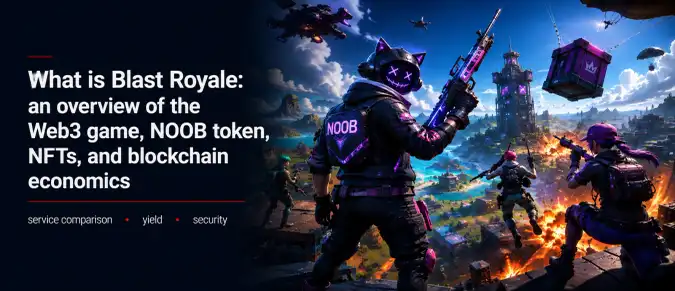

Blast Royale is a mobile Web3 battle royale game developed by the British studio First Light Games. The project combined short PvP matches, equipment, characters, seasonal progression, and blockchain mechanics built around NFTs and the NOOB token. The game's infrastructure was initially connected to Polygon, while the team later experimented with Immutable zkEVM, Ethereum, and Base as it gradually moved away from its original Play-to-Earn model. Despite audience growth and the launch of NOOB in 2024, First Light Games discontinued development of Blast Royale, with the game servers shutting down on June 30, 2025; the project’s source code was subsequently made available to the community. It is important to note that Blast Royale was developed by First Light Games, not Neon Machine.
Contents
- What Is Blast Royale and Who Developed the Web3 Game
- Blast Royale Gameplay: Battle Royale, Heroes and Game Modes
- NFTs, NOOB and the Blast Royale Web3 Economy
- Polygon, Ethereum and Base: Blockchain Infrastructure of the Game
- Blast Royale Shutdown and the Future of the Project
1. What Is Blast Royale and Who Developed the Web3 Game
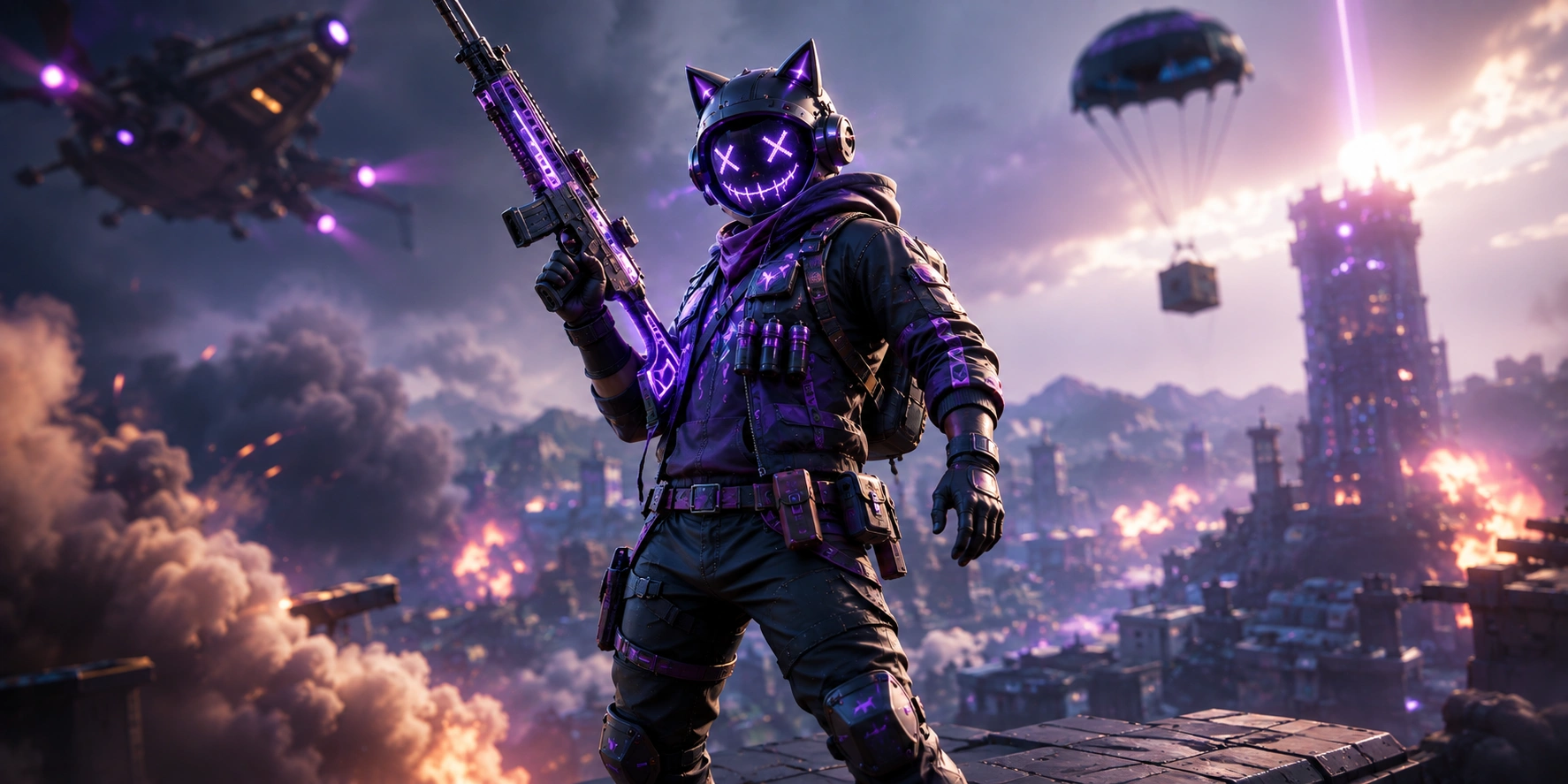
Blast Royale was created by London-based First Light Games as a mobile multiplayer title combining a conventional free-to-play model with an additional Web3 layer. The company was founded by professionals with experience in mobile and large-scale game development. Its leadership included Neil McFarland, previously associated with ustwo games, and Anil Das-Gupta, who had worked with companies including Capcom, Wargaming, and NaturalMotion.
Development of Blast Royale's Web3 direction began during a period of rapid growth in blockchain gaming. In April 2022, First Light Games raised $5 million through a private token sale. The round was led by Animoca Brands and Mechanism Capital, with participation from Dragonfly Capital, DeFiance Capital, Polygon, Merit Circle, Ancient8, and other investors. The funding was intended to support game development, team expansion, and community growth.
Unlike many early Play-to-Earn projects, Blast Royale was designed as a complete mobile game in which blockchain interaction was not required to enter a match. Users could download the client for free and participate in PvP, while digital assets and cryptocurrency functionality formed an additional economic layer. This approach separated the core gameplay loop from wallet interactions.
Blast Royale launched on mobile devices and eventually exceeded one million installs. Ahead of the Token Generation Event, the team reported approximately 1.2 million downloads, while the Loot-to-Airdrop campaign generated significant daily activity. This made the title a notable experiment in combining mainstream mobile gaming with a tokenized economy.
2. Blast Royale Gameplay: Battle Royale, Heroes and Game Modes
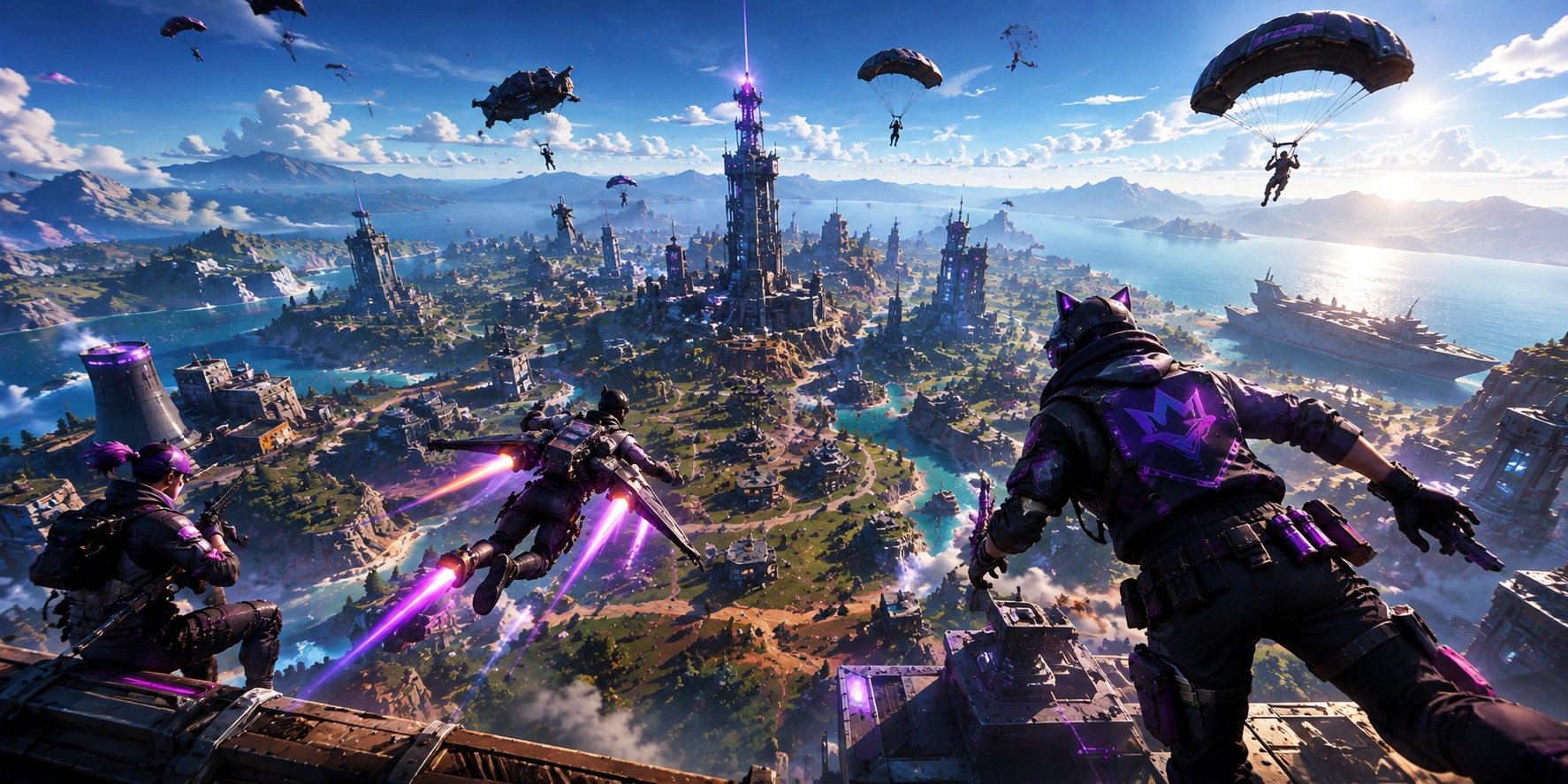
The core Blast Royale gameplay was built around short battle royale matches. Players entered a map, collected weapons, armor, and other items, and fought opponents while the safe zone gradually contracted. The last surviving player or team won the match. Sessions were optimized for mobile devices and generally lasted around three to five minutes.
Matches could include up to 30 players. In addition to shooting mechanics, positioning, equipment selection, special abilities, and consumable items played an important role. Users could compete individually or join other players in team-based modes. The project also supported ranked competitions, custom matches, tournaments, and temporary events.
| Component | Type | Role in Blast Royale |
|---|---|---|
| Battle Royale | PvP Mode | Short multiplayer survival matches with a shrinking playable zone |
| Heroes | Characters | Used by players in combat and connected to different customization options |
| Weapons | Combat Equipment | Collected during matches and used to define a player's combat style |
| Consumables | Consumable Items | Provide additional tactical options during combat |
| Corpos | NFT | PFP collection with additional in-game utility |
| NOOB | Web3 Token | Main token of the later Blastverse economy |
Progression continued outside individual matches. Users completed missions, participated in seasonal activities, developed their accounts, and received cosmetic or functional rewards. The Blast Pass served as a seasonal progression system similar to battle passes used in conventional free-to-play games.
As a result, the core mechanics required little understanding of blockchain technology. A player could treat Blast Royale as a compact top-down mobile shooter, while Web3 functionality became relevant when interacting with NFTs, tokens, and specific campaigns. This allowed the developers to experiment with digital ownership without recording every gameplay action on-chain.
3. NFTs, NOOB and the Blast Royale Web3 Economy
The economic model of Blast Royale changed several times during the project's development. In its early 2022 concept, the developers planned to use the BLST governance token alongside an in-game resource called Craft Spice. NFT equipment was intended to allow players to earn resources during matches, upgrade items, and interact with a marketplace. This system was later substantially redesigned, and the original Equipment NFTs and Craft Spice were removed from the core economic model.
NOOB became the central asset of the later version of the ecosystem. The token launched in November 2024 and was positioned as the primary economic asset of Blastverse. Ahead of the TGE, players participated in the Loot-to-Airdrop campaign, where in-game activity allowed them to collect NOOB-related rewards that were subsequently connected to the on-chain token. By the time of the listing, the team reported that more than 3 million NOOB had been spent in the game before the TGE.
Main Features of the Blast Royale Web3 Model:
- free-to-play access to the core Battle Royale gameplay;
- short PvP matches supporting up to 30 players;
- NOOB as the main token of the later Blastverse economy;
- Loot-to-Airdrop campaigns distributing rewards through gameplay activity;
- Corpos NFTs with additional in-game utility;
- Plague Doctor NFTs used as collectible cosmetic skins;
- the ability to connect selected NFTs with in-game characters;
- Ethereum infrastructure for NOOB and part of the NFT ecosystem;
- deployment of NOOB on Base to reduce transaction costs;
- experiments with staking and additional token utility.
Among Blast Royale's NFT projects, the Corpos collection played a particularly visible role. Owning a compatible NFT could unlock the corresponding character in the game. Some assets originally existed on Polygon, while users were later offered the option to migrate Corpos to Ethereum. A separate Plague Doctor collection consisted of 3,333 cosmetic skins.
This system differed from models in which purchasing an NFT was required before a player could access the game. Digital collectibles provided additional utility and customization, while the core PvP experience remained available without purchasing a token. The financial value of NFTs and NOOB nevertheless depended on secondary-market demand and activity within the gaming ecosystem, meaning that in-game benefits could not be treated as guaranteed investment returns.
4. Polygon, Ethereum and Base: Blockchain Infrastructure of the Game
Blast Royale changed its blockchain strategy several times. The project was initially developed using Polygon, which was intended to support NFT transactions and the game's digital economy while offering comparatively low transaction fees. Polygon also participated in First Light Games' 2022 investment round.
The studio later considered migrating part of the gaming infrastructure to Immutable zkEVM. This reflected a broader Web3 gaming trend in which developers began adopting specialized networks offering infrastructure for NFTs, wallets, and game-related transactions. Further changes to the token economy, however, eventually resulted in the use of several blockchain networks.
NOOB was initially issued as an ERC-20 token on Ethereum. Its Token Generation Event took place in November 2024, after which the asset appeared on several centralized exchanges. Ethereum's transaction costs became one of the challenges surrounding the distribution process: the team later acknowledged that gas fees during the launch made claiming tokens more difficult for some users.
In 2025, NOOB was also launched on Base. Liquidity was provided through Aerodrome, while users were given the ability to move tokens between Ethereum and Base. Expanding to lower-cost Layer 2 infrastructure was intended to make interactions with the gaming token more accessible. By its final stage, Blast Royale had therefore become a multichain ecosystem in which different generations of assets existed across Polygon, Ethereum, Base, and related gaming infrastructure.
5. Blast Royale Shutdown and the Future of the Project
Ahead of the NOOB launch, Blast Royale demonstrated significant user activity. Published figures included approximately 1.2 million total installs, around 85,000 daily users during the Loot-to-Airdrop campaign, and tens of thousands of daily players after the incentive campaign ended. These figures demonstrated the project's ability to attract an audience, but they did not guarantee the long-term sustainability of its Web3 economy.
The Token Generation Event in November 2024 proved to be a challenging stage. Users encountered technical issues during the claim process, while high Ethereum transaction fees increased the cost of receiving tokens. The team continued developing the infrastructure and expanded NOOB to Base in 2025, but these changes were not sufficient to ensure the project's long-term sustainability.
In May 2025, First Light Games announced that it would discontinue development of Blast Royale. The game servers were scheduled to shut down permanently on June 30, 2025. At the same time, the developers decided to make the game's source code available to the community from June 1, giving users and developers an opportunity to study it and potentially create their own continuations or modified versions of the project.
The history of Blast Royale demonstrates both the possibilities and challenges of integrating Web3 into a mainstream mobile game. First Light Games created a functional PvP title, attracted more than one million installs, and experimented with NFTs, gaming rewards, Loot-to-Airdrop campaigns, and a multichain token. However, transforming a free mobile shooter into a sustainable tokenized economy proved considerably more difficult. Following the shutdown of the official service, Blast Royale is best viewed as a completed experiment at the intersection of mobile battle royale and Web3 gaming, while the remaining NOOB tokens and NFTs should not be interpreted as assets backed by continued support for the original game.











