
Blast Royale Ranked Season is the competitive format of Blast Royale, a mobile Web3 game developed by UK-based studio First Light Games. The project combines short top-down battle royale matches, a Trophy system, seasonal leaderboards, Blast Pass progression, and team-based modes. As Blast Royale evolved, it gradually separated its core free-to-play gameplay from the blockchain economy, keeping NFTs and the NOOB token as an additional ecosystem layer. The Ranked system primarily measures competitive performance, with player positions determined by their results in matches.
Contents
- What Is Blast Royale and How Does Ranked Season Work?
- Ranked Matches, Trophies, Leaderboards, and Competitive Progression
- Blast Pass, NOOB, and the Web3 Economy of Blast Royale
- Immutable zkEVM, Ethereum, and the Game's NFT Infrastructure
- Blast Royale Development and the Future of Ranked Seasons
1. What Is Blast Royale and How Does Ranked Season Work?
Blast Royale was developed by First Light Games, a London-based studio whose team has experience in mobile and console game development. In 2022, the project raised $5 million through a private token sale co-led by Animoca Brands and Mechanism Capital. Other participants included Dragonfly Capital, DeFiance Capital, Polygon, Merit Circle, and Play Ventures Future Fund.
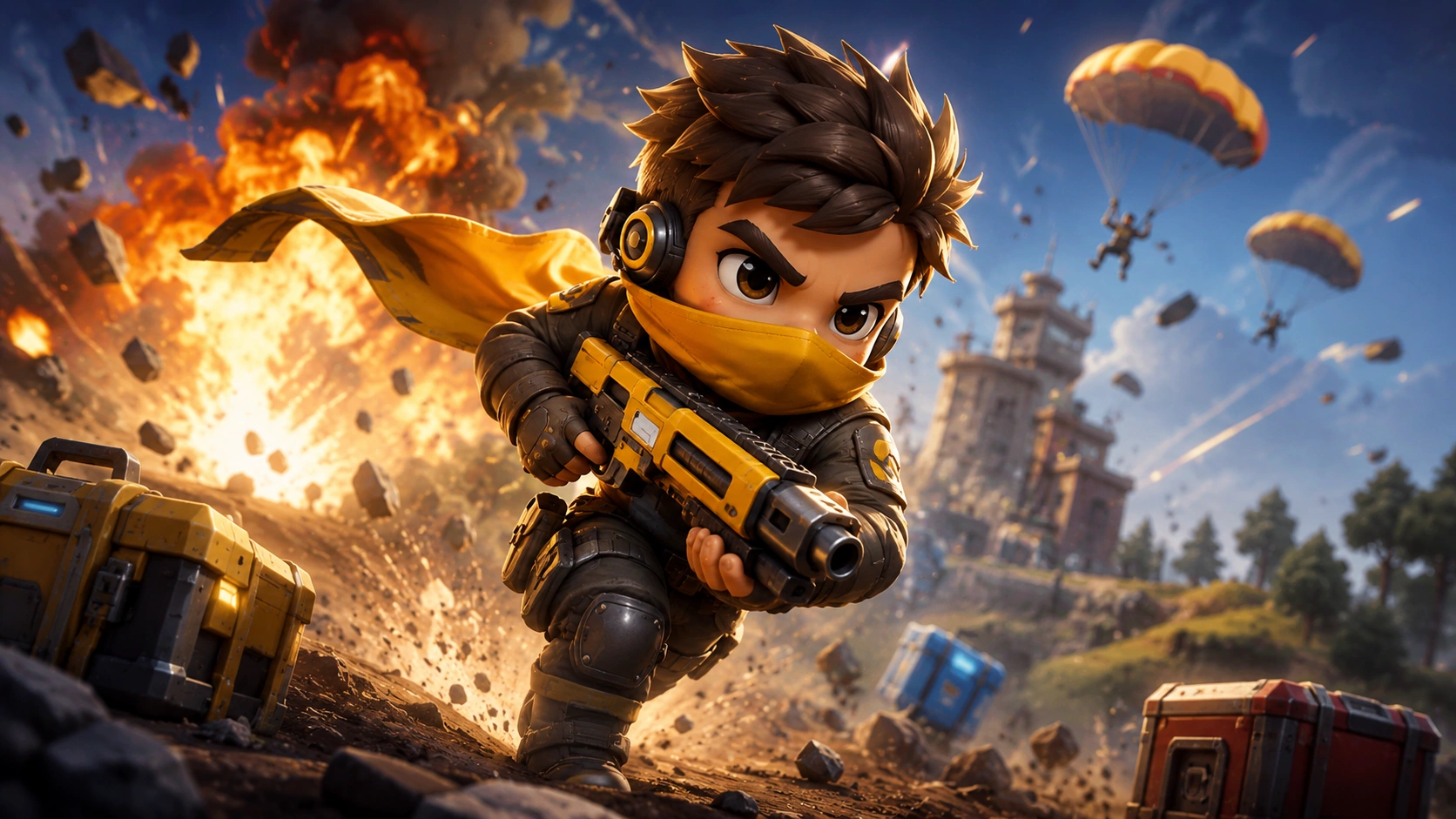
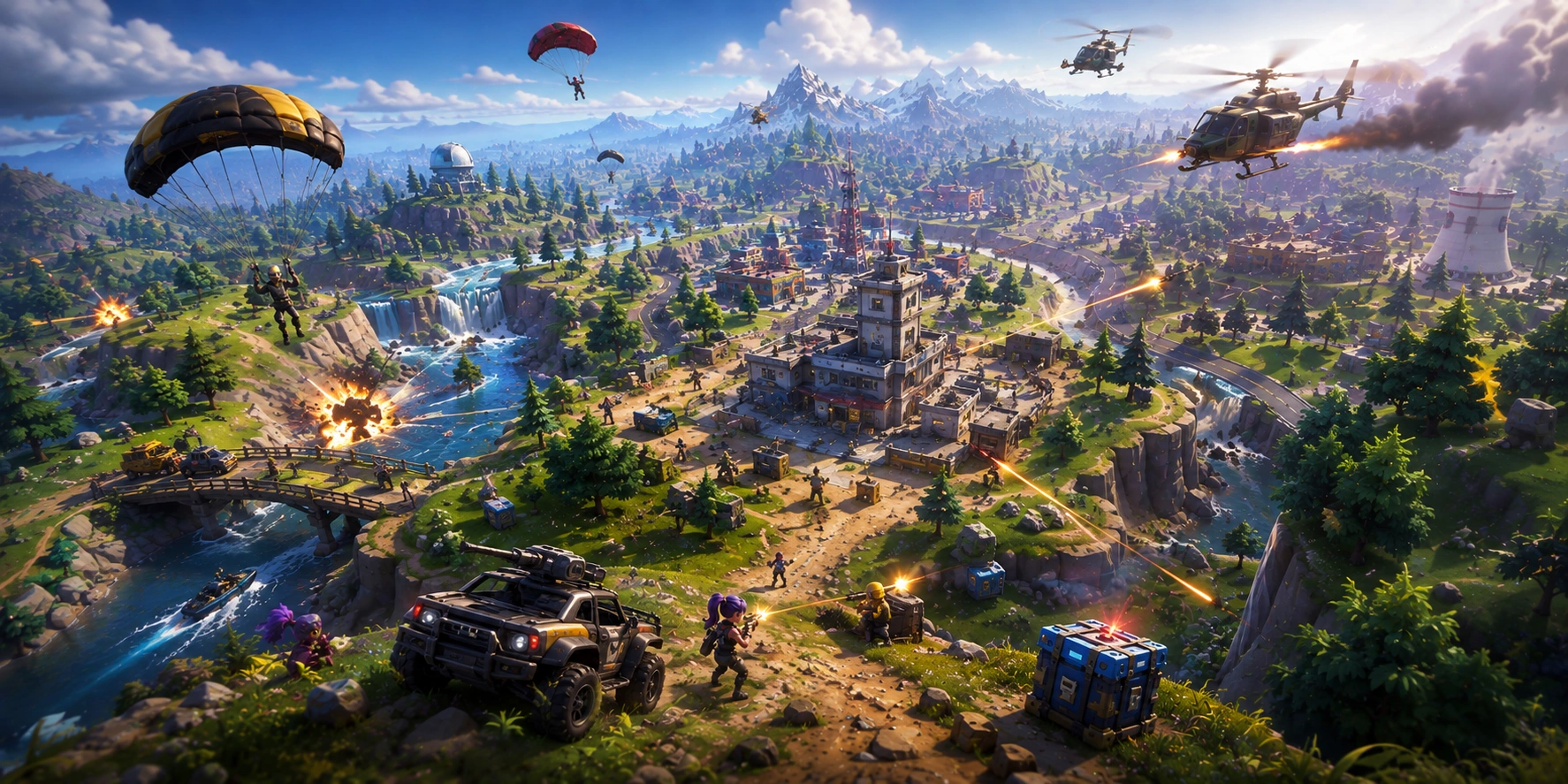
The game is built around fast-paced battle royale matches viewed from a top-down perspective. Players select a landing point, explore the map, open crates, collect weapons, armor, ammunition, and consumables, while avoiding the shrinking danger zone. The last surviving player or team wins. Matches are designed to last only a few minutes, making the gameplay suitable for short and repeatable mobile sessions.
Ranked differs from regular gameplay by introducing long-term competitive progression. Match results affect the number of Trophies held by a player. Strong performances allow users to climb the rankings and related competitive systems, while unsuccessful matches can result in Trophy losses.
Ranked Season should also be distinguished from Blast Pass Season. Blast Pass is a separate seasonal progression system that provides rewards, while Ranked focuses on competitive results, Trophies, and Leaderboards. Both systems are driven by match activity but serve different purposes within the overall progression model.
2. Ranked Matches, Trophies, Leaderboards, and Competitive Progression
Trophies are the primary indicator of Ranked progression. They are awarded based on match performance, including placement and the number of opponents eliminated. This structure encourages players not only to survive for as long as possible but also to participate actively in combat.
Trophies are also used to compare players globally. The Trophies Ladder ranks participants according to the number of Trophies they have accumulated. In addition to the main ranking, developers can introduce additional Leaderboards with specific requirements and metrics, which may change between seasons.
| Component | Type | Role in Blast Royale |
|---|---|---|
| Ranked | Competitive Mode | Provides ranked battle royale matches and competitive progression |
| Trophies | Ranking Score | Reflect player performance and determine position within the ranking system |
| Trophies Ladder | Leaderboard | Compares players based on their accumulated Trophies |
| Leagues | Progression | Separate participants according to their level of competitive progression |
| Championships | Seasonal Competition | Use match results for seasonal competition between players |
| Blast Pass | Season Pass | Provides a separate progression track with seasonal rewards |
Blast Royale documentation also describes a Championships system. Players automatically earn a score based on their match results, which is then counted toward a seasonal Championship. At the end of the period, leading participants can receive rewards and advance to higher tiers, while some players may move down.
Team formats further expand the competitive structure. Blast Royale has experimented with Duos, Trios, and Quads, while the larger Noob Island map supports up to 48 participants. The exact selection of Ranked modes can change with updates as developers adjust matchmaking according to game balance, player activity, and testing results.
3. Blast Pass, NOOB, and the Web3 Economy of Blast Royale
Blast Pass operates alongside the ranking system. Players earn Blast Pass Points, or BPP, by participating in matches, with the amount influenced by their final placement. Accumulated points unlock pass levels containing currencies and collectible rewards. In certain seasons, NOOB has also been included among available rewards.
NOOB became the primary token of the Blastverse ecosystem, replacing the project's earlier economic concept based on BLST and Craft Spice. The token launched in 2024 and is used across Web3 mechanics connected to Blast Royale. However, participation in regular matches does not require purchasing cryptocurrency or NFTs, as the game supports a free-to-play model with conventional in-game items.
Key Elements of the Blast Royale Ranked and Web3 Ecosystem:
- short top-down battle royale matches;
- Ranked as the main competitive mode;
- Trophies for measuring player performance;
- Trophies Ladder and additional Leaderboards;
- seasonal Championships and ranked progression;
- Blast Pass with separate levels and rewards;
- NOOB as the token of the Blastverse ecosystem;
- free-to-play access without mandatory NFT ownership;
- Corpos and Plague Doctors as NFT collections;
- selected events and campaigns with cryptocurrency rewards.
According to the tokenomics, 40% of the NOOB supply is allocated to Community Rewards. Of this amount, 36.5% is designated for gameplay rewards and major events, while 3.5% is allocated to NFT-holder airdrops. Another 25% was assigned to the Community Round, 15% to the Private Sale, 10.5% to Ecosystem & Development, 2.5% to the Strategic Round, and 7% to the team and advisors.
Ranked performance and token value should be evaluated separately. Trophies measure competitive results, while the market price of NOOB depends on liquidity, supply, and demand. The availability of cryptocurrency rewards in selected activities does not imply a fixed return from participating in Ranked matches.
4. Immutable zkEVM, Ethereum, and the Game's NFT Infrastructure
Blast Royale's blockchain architecture has changed during the project's development. The game initially used Polygon, where its early NFT infrastructure was deployed. First Light Games later partnered with Immutable and moved part of its Web3 ecosystem to Immutable zkEVM, an Ethereum-compatible Layer 2 infrastructure designed for blockchain gaming.
The current architecture is multichain. NOOB is available on Ethereum and Base, while project documentation also provides for its use within Immutable zkEVM. Blockchain infrastructure does not process shooting, movement, weapon pickups, or zone calculations during matches. High-frequency gameplay continues to operate through conventional game infrastructure.
The NFT ecosystem is also distributed across different networks. The Genesis Corpos collection consists of 888 characters and was migrated from Polygon to Ethereum. Ownership is associated with additional community features and in-game character appearances. The Plague Doctors collection consists of 3,333 cosmetic NFTs and uses Immutable zkEVM.
This separation means that access to Ranked gameplay does not depend directly on blockchain ownership. Players can participate competitively without holding NFTs, while the on-chain infrastructure is used for selected digital assets, NOOB, and related economic operations. This distinction is particularly important in a competitive game, where the market value of an NFT should not automatically determine match performance.
5. Blast Royale Development and the Future of Ranked Seasons
Blast Royale has gradually shifted from a model with a stronger emphasis on NFTs and Play-to-Earn toward a more conventional free-to-play battle royale structure. The Reloaded update formed part of this transition by reducing the influence of paid assets on combat characteristics and competitive balance. The game also introduced new maps, team modes, abilities, weapons, and cosmetic items. Noob Island expanded matches to as many as 48 participants, while Leaderboards became a more integrated part of the competitive system.
Ranked Season supports long-term competition through periodically updated rankings, conditions, and rewards. Blast Pass, Championships, Leaderboards, and events provide additional seasonal progression paths. Key challenges include maintaining an active player base, effective matchmaking, and gameplay balance. Ranked modes particularly depend on having enough active participants to provide fast matchmaking between players of comparable skill.
Blast Royale illustrates the transition of a Web3 battle royale toward a model where gameplay is the core product and NOOB, NFTs, and Immutable provide an additional economic layer. The future of Ranked seasons will therefore depend primarily on match quality, competitive balance, and the game's ability to maintain an active player community.











