
Cambria is a browser-based Web3 MMORPG built around a Risk-to-Earn model that combines character progression with real economic risk and on-chain assets. The project draws inspiration from classic MMOs such as RuneScape and Ultima Online and includes several interconnected game formats, most notably Gold Rush and Duel Arena. Its ecosystem combines PvP, PvE, resource gathering, crafting, trading, guilds, and mechanics that allow players to risk digital assets in exchange for potential rewards. Cambria joined the Ronin gaming ecosystem in 2024 and became one of the projects developing the emerging concept of degen gaming.
Contents
- What Is Cambria and How Does the Web3 Game on Ronin Work?
- Gold Rush and Duel Arena: Core Gameplay Mechanics
- Cambria Economy: Royal Charters, Rewards, and NFTs
- Risk-to-Earn and Degen Gaming Features in Cambria
- Cambria and the Development of Web3 Gaming on Ronin
1. What Is Cambria and How Does the Web3 Game on Ronin Work?
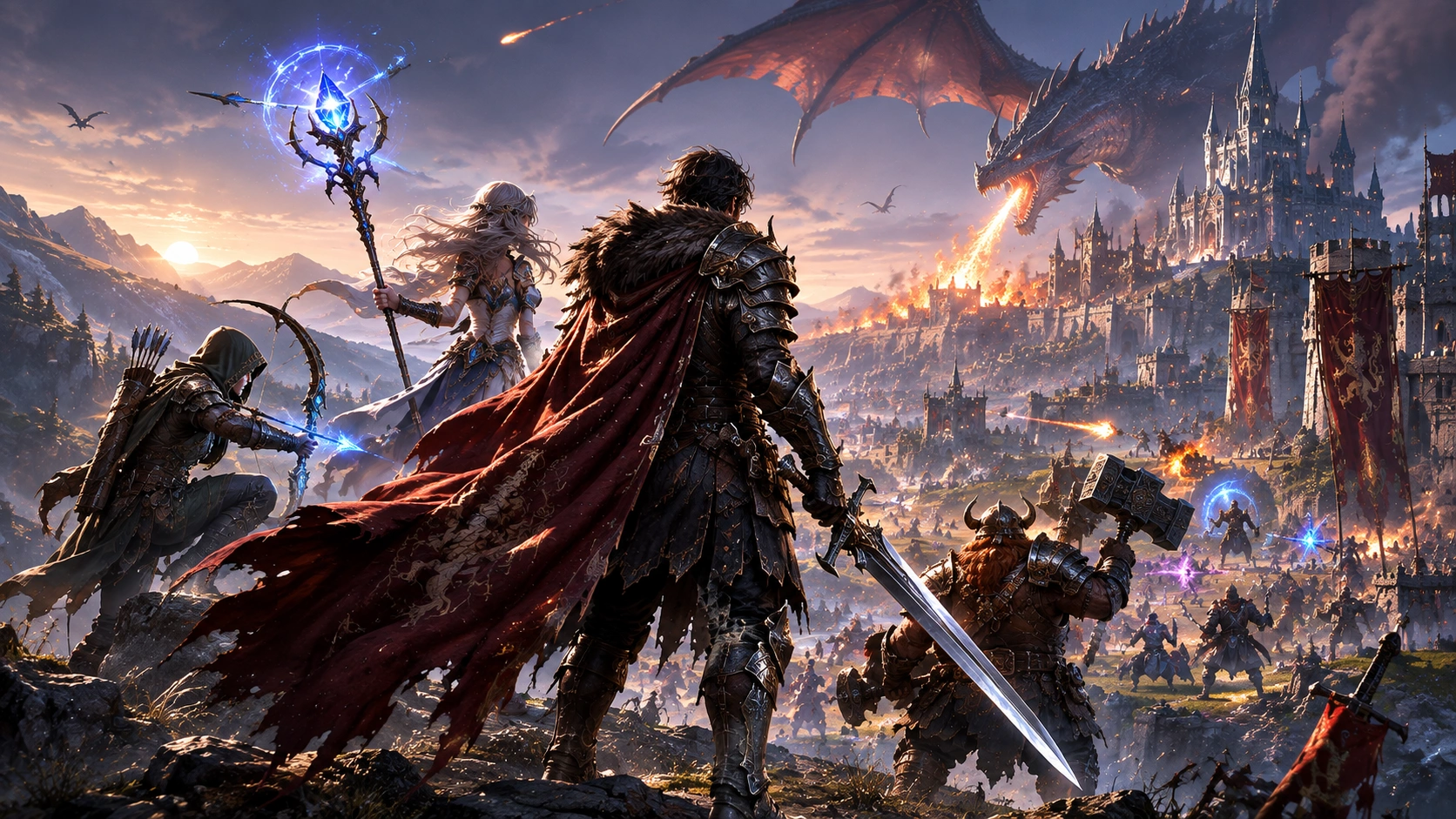
Cambria is a competitive 2D MMO with pixel-art graphics and an open economy in which interactions between players play an important role. Players develop skills, fight monsters and other users, gather resources, craft items, trade, and explore the game world. The developers describe this concept as Risk-to-Earn, emphasizing the relationship between the level of risk taken by a player and the potential reward.
The game's design is heavily influenced by traditional MMORPG principles. Instead of following a strictly linear character progression system, users can specialize in specific skills and perform different economic roles. One player may focus on gathering resources, while another can specialize in equipment production, trading, or PvP. As a result, a significant part of the in-game economy is shaped by the actions of the players themselves.
In 2024, Cambria announced its move to the Ronin ecosystem. The blockchain, originally developed by Sky Mavis for Axie Infinity and later opened to other gaming projects, is used for digital asset transactions and selected economic interactions. However, not every character action is necessarily recorded on-chain: blockchain infrastructure is primarily used where digital assets, rewards, and economic transactions are involved.
Cambria is being developed not as a single static game but as a broader gaming universe with several formats. The best-known are Gold Rush, a seasonal MMORPG built around resources and high-risk economics, and Duel Arena, which focuses on short PvP battles with the option to use on-chain stakes.
2. Gold Rush and Duel Arena: Core Gameplay Mechanics
Gold Rush is Cambria's large-scale MMO mode. Players enter a medieval fantasy world where they gather resources, participate in PvE, craft items, trade, and compete for valuable areas. Different territories have different risk levels: safer areas generally offer lower potential returns, while contested zones provide access to more valuable resources but increase the likelihood of encounters with other players.
Energy is an important resource in Gold Rush. It is consumed while players remain outside safe zones, with higher-tier areas requiring more Energy. Energy Orbs have been used to restore this resource. The system limits unlimited farming and requires users to evaluate the potential value of their expedition against the resources required to continue it.
Collected items and resources can be delivered to the Royal Treasury. Specific rules have changed between seasons, but the general principle involves converting the results of gameplay activity into points, ranking metrics, and a share of seasonal rewards. For example, Royal Favor has been used as a metric representing a player's contribution and influence during a particular campaign.
Duel Arena uses a different model. Two users compete in a PvP battle, while selected modes allow players to risk RON. The winner receives the amount placed at stake, while the loser gives up their share. The outcome is not determined solely by equipment: the combat system includes decisions related to positioning and tactical adjustments during the battle, directly connecting financial risk with PvP gameplay.
3. Cambria Economy: Royal Charters, Rewards, and NFTs
Cambria's economy differs from the traditional Play-to-Earn model because part of the potential reward is generated through the spending and risks taken by participants themselves. In seasonal versions of Gold Rush, players purchased Royal Charters, Energy Orbs, and other game resources, while a portion of the generated funds was allocated to reward pools. Final rewards depended on the rules of each season and the performance of an individual player or their guild.
The Royal Charter provided access to the expanded Gold Rush economy. During certain seasons, it was required for full Energy recovery, item transfers, and access to maximum reward opportunities. Charters were also integrated into the Paymaster system and could be used to establish guilds through the Viceroy role.
| Component | Purpose | Use |
|---|---|---|
| Royal Charter | Access to the expanded economy | Rewards, Energy recovery, and participation in additional mechanics |
| Energy | Gameplay activity resource | Consumed while exploring dangerous territories |
| Energy Orbs | Energy restoration | Allow players to continue participating in Gold Rush activities |
| Royal Favor | Gameplay contribution metric | Rankings, rewards, and seasonal mechanics |
| Founder NFT | Ecosystem collectible asset | Additional access, gameplay rights, and selected benefits |
| RON | Ronin ecosystem asset | On-chain transactions, rewards, and stakes in selected PvP modes |
The economy includes several distinct player roles. Adventurers explore the world and gather resources independently. Paymasters can place a Royal Charter into the Syndicate Vault and receive a portion of the economic activity associated with other users. Viceroys can establish guilds, while guild members can compete collectively for leaderboard positions and share the rewards they earn.
The project also uses NFTs. The Founder Collection is associated with additional rights and access to selected parts of the ecosystem, including gameplay benefits and participation in Cambria's development. Other mechanics have included Core NFTs, cosmetic assets, pets, and various game items. The specific utility of these assets depends on the game mode and season, meaning their functions may change as the project evolves.
4. Risk-to-Earn and Degen Gaming Features in Cambria
The term Risk-to-Earn describes one of Cambria's central concepts: the opportunity to obtain additional value is connected to the possibility of losing resources or digital assets. Users determine their own level of exposure, ranging from relatively safe resource gathering to PvP in dangerous areas or direct battles involving on-chain stakes.
This approach places the project within the broader degen gaming category. In this context, degen gaming refers to gameplay mechanics designed for an audience willing to accept higher economic risk in exchange for potentially greater rewards. Cambria combines this model with traditional MMORPG elements such as skill progression, character specialization, crafting, player-driven markets, and social competition.
Key features of Cambria:
- 2D browser-based MMORPG with pixel-art graphics;
- gaming infrastructure and digital assets within the Ronin ecosystem;
- Risk-to-Earn model involving real digital asset risk;
- Gold Rush with PvE, PvP, resource gathering, and crafting;
- Duel Arena with competitive 1v1 battles;
- an economy largely shaped by player activity;
- Royal Charters, Energy, and seasonal reward systems;
- guilds, Paymasters, Viceroys, and different economic roles;
- NFTs and other on-chain assets;
- a seasonal model with changing rules and reward pools.
An important part of the design is the relationship between safety and potential returns. Players can choose less competitive territories to reduce the probability of losing resources or enter high-activity areas where more valuable opportunities may be available. This turns risk management into a fundamental element of gameplay strategy.
At the same time, this type of economy creates additional requirements for users. Unlike in a traditional MMORPG, mistakes can have more than purely in-game consequences: in selected modes, they may result in the loss of assets with market value. Cambria should therefore be viewed not as a source of guaranteed earnings but as an experimental gaming economy with an elevated level of financial risk.
5. Cambria and the Development of Web3 Gaming on Ronin
Cambria occupies a distinct position among games in the Ronin ecosystem because it combines traditional MMO design with high-risk economic mechanics. While many early GameFi projects were built around distributing tokens for repetitive actions, Cambria connects rewards with competition, scarce resources, PvP, and the need to make economic decisions.
Results from the early seasons demonstrated player interest in this model. According to the developers, the first Gold Rush season attracted more than 9,600 players, generated 5,340 Royal Charters, and saw more than 33,000 Energy Orbs purchased. Later seasons expanded guild systems, reward distribution, and interaction between different economic roles.
In 2025, Cambria's collaboration with Ronin continued through dedicated campaigns. Ronin Trials were introduced in Duel Arena with additional rewards for network users, while Gold Rush Season 3 increased the importance of guilds and cooperative competition. In April 2026, the Cambria team continued publishing updates about the project's development, meaning the ecosystem remains an evolving product whose parameters may change between seasons.
Cambria demonstrates an alternative direction for the evolution of blockchain gaming: Web3 is used not only to verify ownership of NFTs but also as a foundation for economic risk between participants. The combination of MMO mechanics, player-driven markets, guilds, PvP, and on-chain assets makes the project a notable example of Risk-to-Earn and degen gaming. At the same time, this model requires players to understand that potential rewards are not guaranteed and that higher returns within the gameplay loop are accompanied by the possibility of real financial losses.











