
Champions Arena Grand Prix is a term associated with the competitive side of the Web3 RPG Champions Arena, although Gala Games' official materials do not identify Grand Prix as a separate blockchain game or standalone release. The main project is Champions Arena, a turn-based RPG developed by South Korean studio OneUniverse and launched in August 2023 with support from Gala Games. The game combined PvE, ranked PvP battles, progression for more than 100 characters, NFTs, and GALA rewards. In 2025, the project introduced the new Supreme Arena mode, but in January 2026 Gala announced that Champions Arena would enter its sunset phase, meaning it is now more accurately viewed as a winding-down Web3 project rather than an actively expanding game.
Contents
- Champions Arena Grand Prix and the History of the Web3 RPG
- Champions Arena Gameplay, PvE and PvP Battles
- NFT Champions, Minting Scroll and the Game Economy
- GalaChain, GALA and the Competitive System
- Champions Arena Development and the Project's Sunset Phase
1. Champions Arena Grand Prix and the History of the Web3 RPG
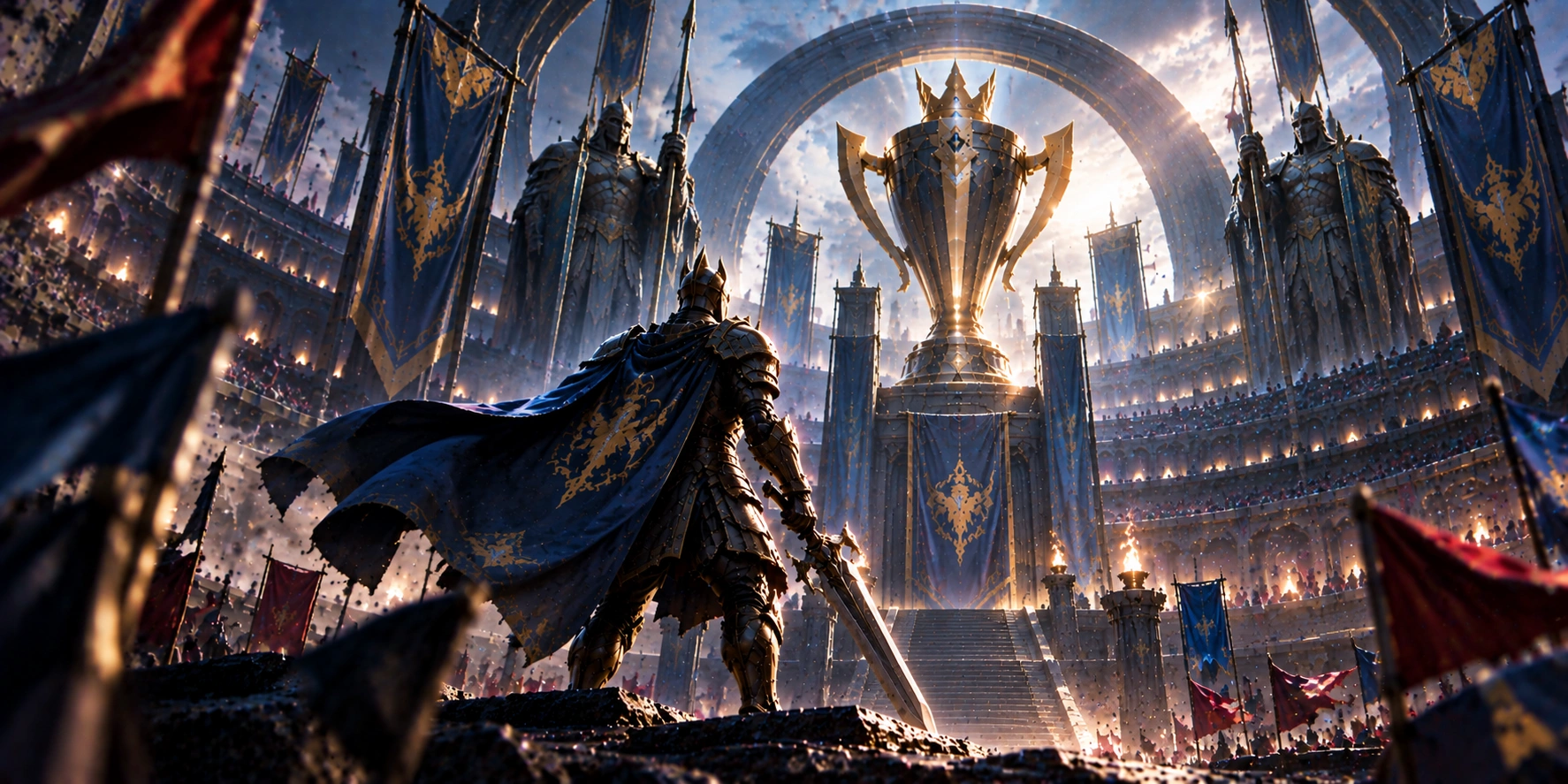
Champions Arena was first introduced by Gala Games in 2022. Development was handled by OneUniverse, a South Korean gaming studio that built the project around a traditional collectible turn-based RPG model. The official launch took place on August 24, 2023, on mobile devices and PC through Gala's infrastructure.
The game was built around a collection of more than 100 Champions. Characters differed in stats, skills, roles, and visual styles, requiring players to build teams based on interactions between heroes. The system was complemented by equipment, skill cards, level progression, and rank upgrades.
The name Champions Arena Grand Prix does not appear in Gala's main materials as a separate game, token, or standalone blockchain product. It is therefore more accurate to associate it with the competitive side of Champions Arena, including Arena, ranked events, and later Supreme Arena. When analyzing the project, the core RPG and its competitive mechanics should not be treated as separate products.
Champions Arena was originally designed as a hybrid of Web2 and Web3. Users could start playing for free without purchasing an NFT, while blockchain features introduced additional options for character ownership, trading, and participation in the Victory Points system. This approach lowered the entry barrier compared with early play-to-earn games, where an NFT was often required before gameplay could begin.
2. Champions Arena Gameplay, PvE and PvP Battles
Champions Arena is based on turn-based team battles. Players form a group of Champions and select actions according to enemy characteristics, character abilities, and available cards. Although the structure resembles mobile hero-collector RPGs, much of the gameplay is built around combinations of attacks, defensive effects, and special abilities.
The PvE component included Campaign, exploration, quests, and other modes designed for character progression and resource acquisition. Tower of Trial offered a sequence of increasingly difficult challenges, while Co-op and guild-related mechanics introduced collaborative elements. Progress depended not only on a Champion's rarity but also on level, equipment, and team composition.
Main Champions Arena gameplay mechanics included:
- collecting more than 100 Champions;
- turn-based team battles;
- PvE Campaign and additional challenges;
- ranked PvP Arena;
- Champion leveling and rank progression;
- weapons, equipment, and Soul Stones;
- guilds and the Estates system;
- NFT creation using Minting Scrolls;
- Victory Points and related GALA rewards;
- Supreme Arena with expanded teams.
In July 2025, the developers introduced Supreme Arena, a 10-versus-10 mode. The first four Champions started the battle, and when a character was defeated, the next Champion from the reserve entered the fight. Players received five free battles per day and could purchase additional attempts with Gems.
Supreme Arena used a 28-day seasonal structure and maps with Sun, Moon, and Stars attributes that affected Champion stats. To earn Victory Points, players had to include at least one NFT Champion in their team. The competitive mode therefore served both as part of the RPG gameplay and as an integration point for Web3 mechanics.
3. NFT Champions, Minting Scroll and the Game Economy
One of the distinctive features of Champions Arena was the ability to play with regular characters and later convert eligible assets into NFTs. This process used a Minting Scroll. The model differed from games in which every playable character is issued on-chain from the beginning.
An NFT Champion retained its associated characteristics and could participate in the Web3 economy. Users could transfer supported assets from GalaChain to Ethereum and trade them on external NFT marketplaces, including OpenSea. Gala also published separate instructions for finding official collections and verifying Champion attributes.
| Element | Type | Purpose | Web3 Role |
|---|---|---|---|
| Champion | Game character | Battles, progression, and team building | Could be represented as an NFT |
| Minting Scroll | Game item | Minting an eligible Champion | Converting a game character into an NFT |
| Estate | NFT / game asset | Guild and economic infrastructure | Blockchain-based digital ownership |
| Nexus | NFT | Champion-related functionality | Part of the Web3 ownership and rental system |
| Victory Points | Game points | Tracking performance in competitive modes | Used in the distribution of GALA rewards |
The NFT model did not mean that every character automatically had market value. Prices depended on rarity, attributes, in-game demand, and secondary-market liquidity. The economic value of NFTs was also closely tied to the continued operation of the game itself: as the player base declined, the practical utility of associated assets could also decrease.
In addition to NFTs, Champions Arena used conventional in-game currencies and resources, including Gems and Lapis. This created a hybrid economy in which not every action required a blockchain transaction. Such an architecture preserved a familiar mobile gaming loop while using Web3 primarily where digital ownership or external trading was required.
4. GalaChain, GALA and the Competitive System
GalaChain served as the blockchain infrastructure for Champions Arena. In earlier publications, the network was also referred to as GYRI, but Gala later established GalaChain as the official brand. Champions Arena was one of the products using this infrastructure for NFTs and related operations. When necessary, supported assets could interact with Ethereum through a bridge mechanism.
GalaChain is a separate blockchain infrastructure within the Gala ecosystem, while Champions Arena is not an independent L1 or L2 network. This distinction is important when evaluating the project: the game's developers were responsible for gameplay balance and content, while blockchain functionality was integrated through Gala's broader technology ecosystem.
The GALA token was used within the Champions Arena rewards system. In the PvP model, players using eligible NFT Champions could earn Victory Points, which were taken into account when distributing GALA. Results depended on gameplay conditions and rankings, meaning the rewards were variable rather than a fixed return generated by owning an NFT.
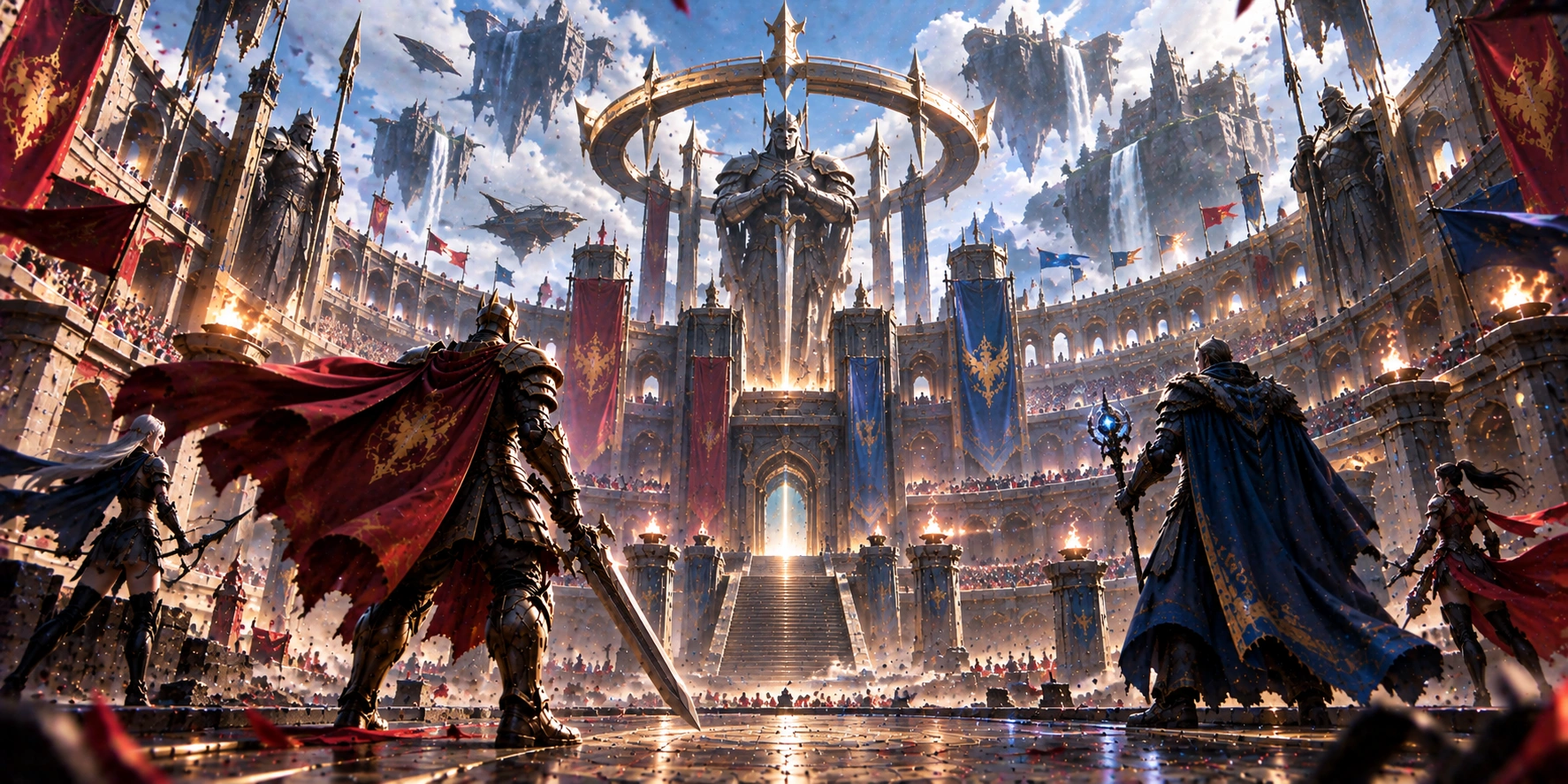
In Supreme Arena during the summer of 2025, the connection between competitive gameplay and NFTs remained in place. At least one NFT Champion was required to earn VP, while a separate ranked event offered GALA rewards. Rented NFT Champions were not eligible for Supreme Arena battles, distinguishing the mode from some earlier mechanics.
This system demonstrated a Web3 gaming model in which blockchain did not replace the game server or core gameplay. Battles, progression, and most calculations took place within the game, while GalaChain was used for selected assets and economic functions. This reduced the number of actions players had to perform directly through a crypto wallet.
5. Champions Arena Development and the Project's Sunset Phase
Throughout 2024 and 2025, Champions Arena continued to receive new content, characters, and seasonal events. In 2025, the game hosted May Mayhem PvP campaigns, launched Supreme Arena, and celebrated its second anniversary in August. The developers also continued releasing Minting Scrolls, Gems, and limited NFT offerings.
In early 2026, the mobile version was still receiving events, new Champions, and Battle Pass content. However, Gala announced a review of its gaming portfolio in January.
On January 27, 2026, Champions Arena, along with Eternal Paradox and Treasure Tapper, was moved into the sunset phase. Gala explained the decision as a reallocation of resources toward DeFi infrastructure and other development areas. At the time of the announcement, an exact server shutdown date had not been specified.
The sunset phase directly affects how the game's NFT economy should be evaluated. Champions, Estates, and other assets derived much of their utility from an active game world. Blockchain can preserve a record of NFT ownership, but it cannot guarantee continued operation of game servers, gameplay logic, or demand for those assets.
Champions Arena Grand Prix is therefore better understood in the context of Champions Arena's history and competitive modes rather than as a separate active blockchain game. The project combined a free-to-play RPG, PvE and PvP with NFTs, GalaChain, and GALA, while its transition into sunset highlighted an important Web3 gaming risk: ownership of a digital asset does not guarantee that its in-game utility will remain after support for the underlying product ends.