
Dark Country is a Web3 game that combines collectible card strategy, NFTs, and a separate virtual land layer. The project uses an American Gothic setting, presenting a dark version of the Wild West populated by cowboys, rangers, undead creatures, ghosts, vampires, and other supernatural beings. The card-based gameplay was influenced by Magic: The Gathering and Hearthstone, while the developers expanded the traditional CCG model with lands, heroes, quests, and a tokenized economy. Dark Country also stands out for its multichain approach: WAX and Flow historically became the project's key networks, while the team later experimented with Immutable X.
Contents:
- Dark Country: Gameplay and the American Gothic World
- Card Battles, Heroes, and Gameplay Mechanics
- NFTs, Lands, and Dark Country Multichain Infrastructure
- Shadow Dimes: SDM Token and Game Economy
- Dark Country Development and Web3 Gaming Prospects
1. Dark Country: Gameplay and the American Gothic World
Dark Country began taking shape as a collectible card game with blockchain elements before the GameFi concept became widely adopted. The Alpha version became available in September 2020, while the game client was distributed for Windows and macOS through itch.io. The developers positioned the core card game as free-to-play, allowing users to explore its mechanics without being required to purchase NFTs.
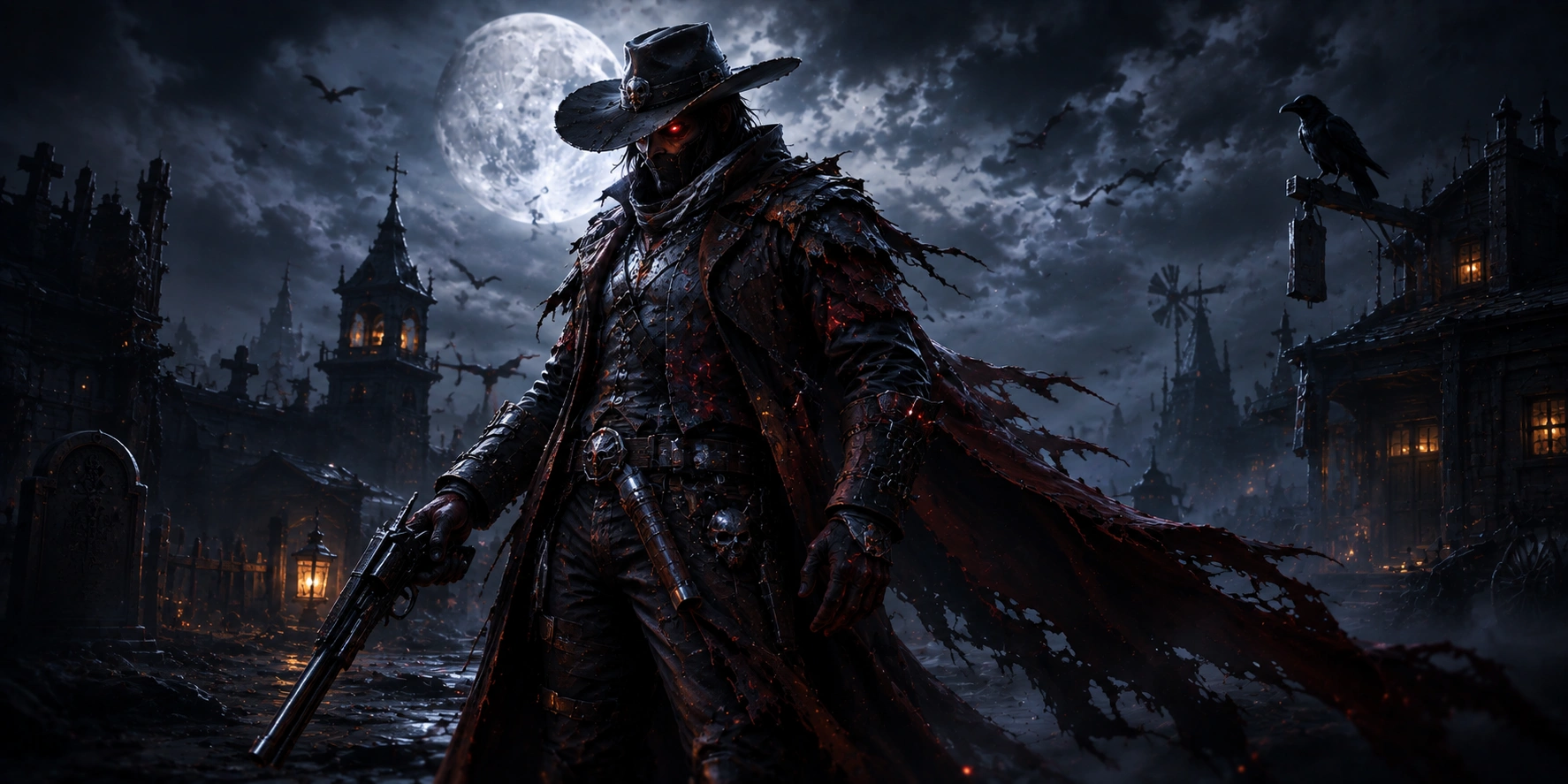
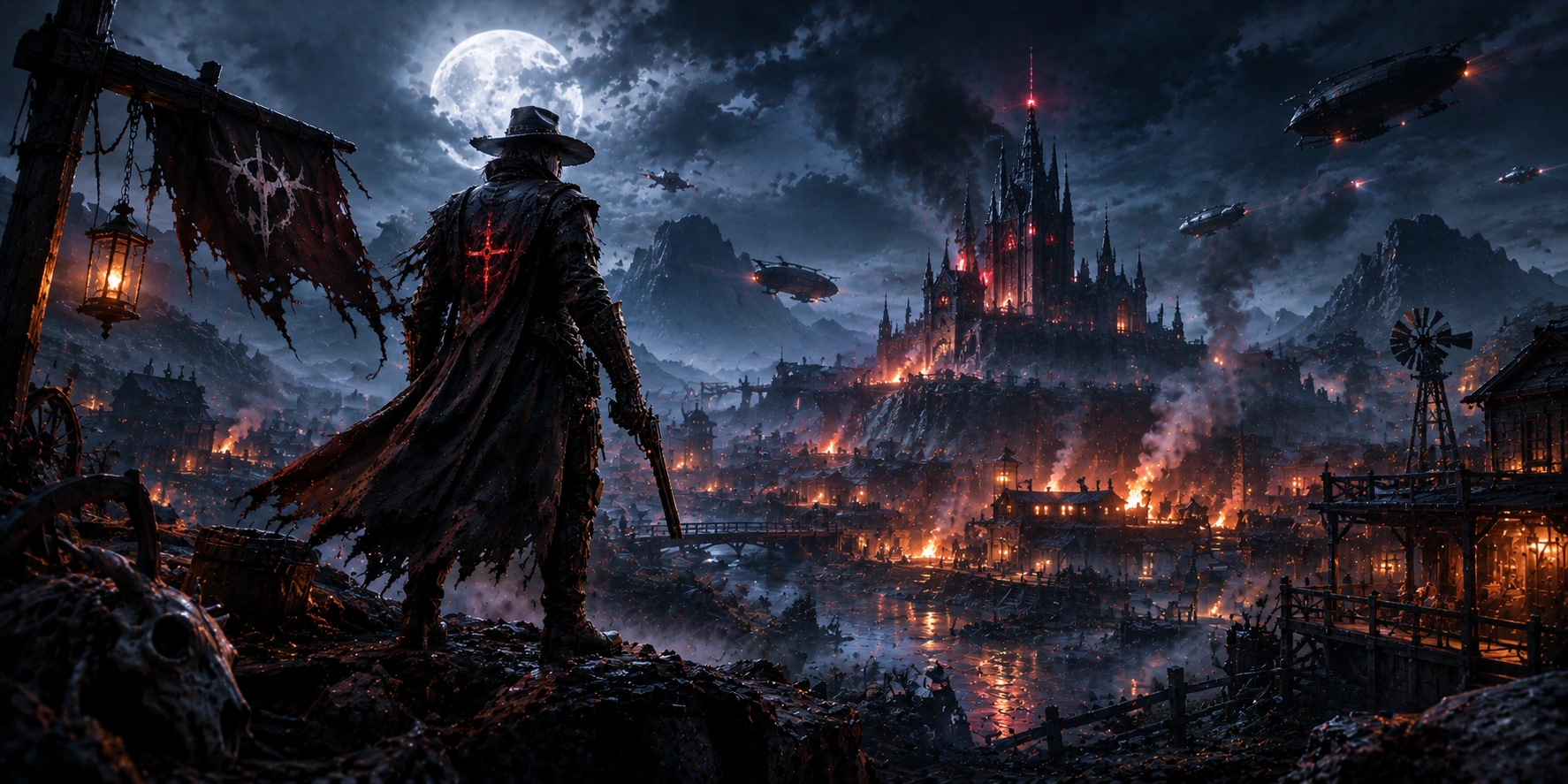
Visually, the project differs significantly from typical fantasy CCGs. Its world combines the atmosphere of the American frontier with horror and mysticism. The cards feature cowboys, outlaws, Native American-inspired motifs, zombies, demons, ghosts, and other characters. This visual style became known as American Gothic and formed the foundation for both the card game and the broader Dark Country Lands universe.
In early versions, players could choose one of four races, build a deck consisting of creatures, spells, and items, and enter battles against other users. The main objective follows the traditional structure of the genre: players use available cards and their combinations to reduce the opponent's health to zero before their own health is depleted.
The card client, however, represents only one part of the project. As Dark Country evolved, the team added a land layer, a hero system, buildings, quests, and economic mechanics. As a result, the project gradually moved from a conventional NFT card game toward a hybrid model in which CCG battles are connected to the development of a broader virtual world.
2. Card Battles, Heroes, and Gameplay Mechanics
PvP matches remain at the core of Dark Country. Before entering a battle, users build a deck by selecting creatures, spells, and other available cards. Different combinations make it possible to adjust the playstyle: some decks can focus on direct attacks, while others emphasize board control and interactions between multiple effects.
In March 2022, a client update introduced the ability to use owned WAX NFTs directly in the deck builder. This represented an important step in integrating the card client with the blockchain layer, as NFTs moved beyond being purely collectible assets and gained direct utility within the gameplay.
Key elements of Dark Country gameplay:
- PvP — card battles between players.
- Custom Games — matches with friends through dedicated game rooms.
- Deck Building — creating a deck from creatures, spells, and other cards.
- Heroes — characters used to interact with the Lands system and quests.
- Quests — activities on virtual lands involving heroes and resources.
- Buildings — structures on land that can be upgraded to modify gameplay capabilities.
- Tournaments — competitive events organized by the developers with prize pools.
The project also experimented with expanding its competitive structure through leagues, seasons, daily PvP rewards, and Guild Wars. Some of these features were introduced gradually, while others initially appeared in the roadmap. When evaluating Dark Country, it is therefore important to distinguish between mechanics that were actually launched and features that the team presented as plans for future development.
3. NFTs, Lands, and Dark Country Multichain Infrastructure
One of the project's key characteristics is its multichain architecture. Instead of linking all assets to a single network, the developers designed separate game continents for different blockchains. WAX and Flow became the main networks of the early ecosystem. The project's NFTs were sold and traded through corresponding marketplaces, including AtomicHub and other services.
In Dark Country, NFTs are not limited to cards. Heroes and Lands also received distinct roles within the ecosystem. Under the virtual world concept, each blockchain continent has a map consisting of 100 × 100 land plots. Of the 10,000 available positions, 4,000 were intended for user ownership, while the remaining plots were planned for special gameplay activities.
| Asset | Purpose | Role in the Ecosystem |
|---|---|---|
| Cards | Card NFTs | Deck building and PvP |
| Heroes | Game characters | Quests and interaction with Lands |
| Lands | Virtual land | Buildings, activities, and economy |
| Buildings | Land development | Additional gameplay functions |
| SDM | In-game currency | Rewards and economic operations |
| WAX / Flow | Blockchain networks | NFT and gaming infrastructure |
An important parameter of virtual land is Influence. It depends on the characteristics of a plot, its location, development level, and activities conducted on it. Under the original economic model, higher Influence was intended to affect the share of Shadow Dimes received by a landowner. PvP and other activities were therefore connected to the economy of individual land plots.
4. Shadow Dimes: SDM Token and Game Economy
Shadow Dime, or SDM, is used as the primary in-game currency of Dark Country. Its purpose is to connect the card game with the Lands economy. SDM can be earned through certain gameplay activities and then used within the ecosystem. In 2022, the team announced the launch of SDM on the main WAX and Flow networks and integrated the currency with the Land layer and the card game client.
Under the original model, SDM was distributed among participants based on gameplay activities and land parameters. Landowners could receive rewards based on Farming Rate and Influence, while players could earn rewards through activities on Lands and PvP. This created an interaction between owners of infrastructure-related NFTs and users actively participating in the card game.
SDM also received several spending mechanisms. The currency was used to upgrade buildings and related functions, while in 2022 the developers launched the SDM Market, where Shadow Dimes could be used to purchase packs containing standard cards. At launch, one such pack cost 20,000 SDM, while tokens spent on certain operations were removed from circulation according to the economic mechanics in place at the time.
Dark Country's tokenomics, however, was revised several times. In its 2023 roadmap, the team announced plans to unify SDM across different networks and modify the token structure to simplify the future integration of additional blockchains. An additional soft currency called GOLD was also considered as a mechanism for balancing SDM production. These elements were published as development plans and therefore should not automatically be considered fully implemented features of the current version.
5. Dark Country Development and Web3 Gaming Prospects
Dark Country has gone through several stages of development. Following the Alpha launch in 2020, the team expanded the card system, organized PvP tournaments, released new NFT collections, and tested Lands. By 2021, the developers reported more than 50,000 PvP rounds played and hundreds of thousands of NFTs distributed. In 2022, the card client became more closely integrated with NFTs and SDM.
In 2023, the project's blockchain strategy continued to expand. In addition to WAX and Flow, Dark Country prepared the Cursed NFT Collection for Immutable X. This was consistent with the project's original concept, in which different blockchain networks could be used for separate parts of the virtual world, although the practical role and activity of each integration changed as the ecosystem evolved.
On the official website, which remains operational in 2026, Dark Country continues to be described as an NFT game featuring cards, lands, heroes, asset trading, and the ability to earn SDM through gameplay activities. At the same time, a significant portion of the detailed documentation and update history dates from 2020–2023. This is important when analyzing the project: the presence of a mechanic in an early roadmap or documentation does not necessarily mean that it remains equally relevant in the current version.
Dark Country represents an example of an early transition from an NFT card game toward a more complex Web3 model. Instead of using blockchain exclusively for collectible cards, the developers connected digital ownership with lands, heroes, PvP, and an in-game currency. The economic sustainability of such a system depends on player activity, demand for NFTs, the balance between SDM issuance and spending, and continued product development. Dark Country can therefore be viewed both as a card strategy game and as an experiment with the multichain economy of a virtual gaming world.











