

A reader finishes an article about a new AI tool. The next card offers another AI headline, but the reader still does not know whether the tool supports their workflow. The topic matches; the next question does not.
As I plan a connected body of articles, I find this distinction useful: a publication needs both an archive and a reading path. The archive records what exists. A reading path gives someone a reason to continue.
Start with the question left open
For each article, I would write down the question it answers and the question it leaves behind. A news report might explain what changed. A practical guide could show how to use that change. A comparison might help a reader decide whether it matters to them.
Those are different jobs. Connecting them requires an editorial choice, not merely a shared tag. My test is simple: can I explain, in one sentence, why this destination is useful at this point in the story?
For example, after a report about an AI image tool, useful next steps could be a supported-formats guide, a comparison of output controls, or an explanation of commercial-use terms. These are hypothetical examples, not recommendations for a particular product.
Make the next step legible
A link is a small promise about what happens next. The W3C explanation of WCAG 2.4.4 says a link’s purpose should be understandable from its text or its programmatically associated context. That is an accessibility principle, not a measured claim about retention.
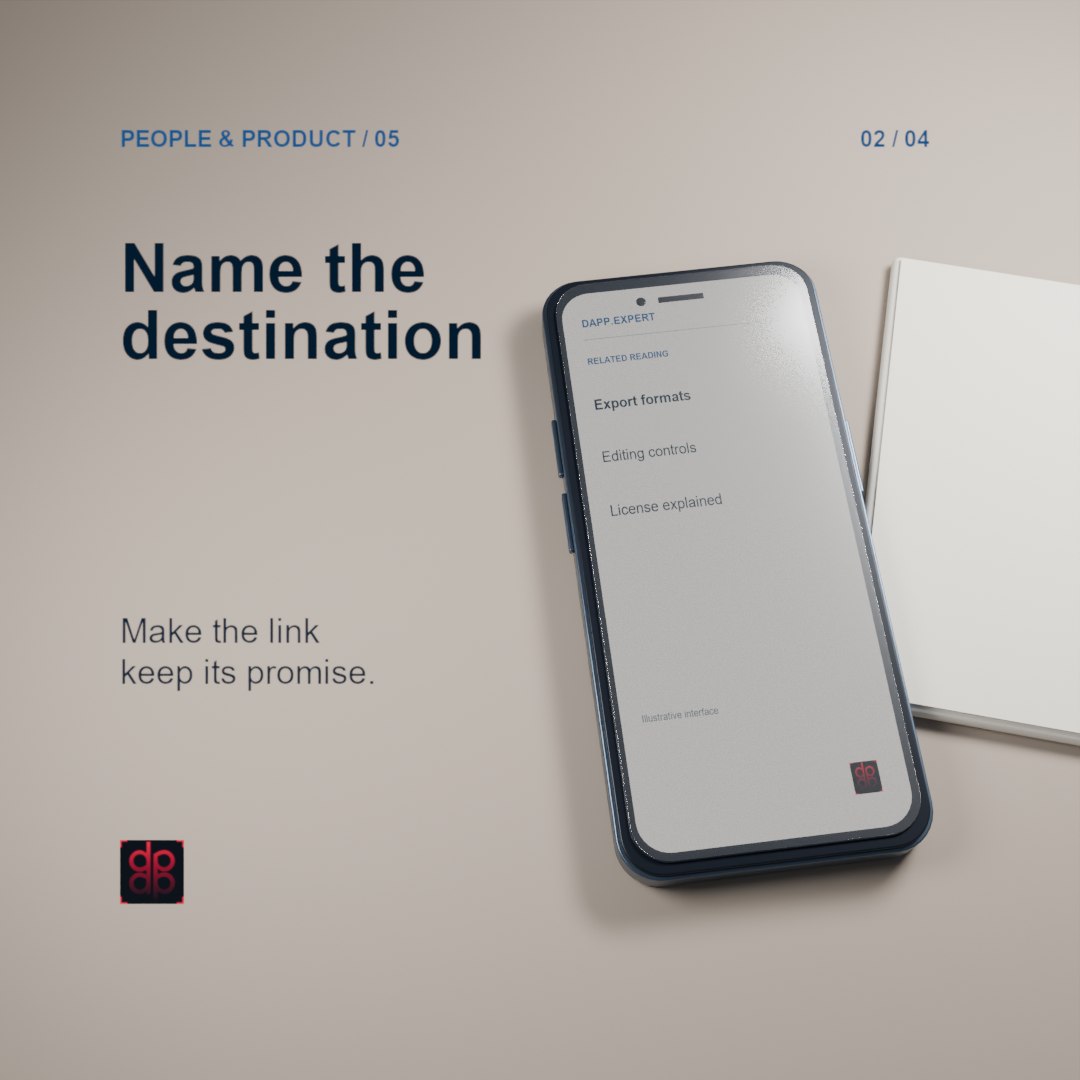
Instead of placing three identical “Read more” labels under a story, I would describe the jobs of the destinations: “Check the supported export formats,” “Compare editing controls,” or “Understand the license.” The actual destination must deliver that promise.
Google’s link guidance also recommends descriptive, concise anchor text and relevant internal links in context. It does not prescribe a magic number of links. A technically crawlable link should use a real anchor element with an href; a visual card alone is not evidence that its destination is discoverable.
Give each connection a reason
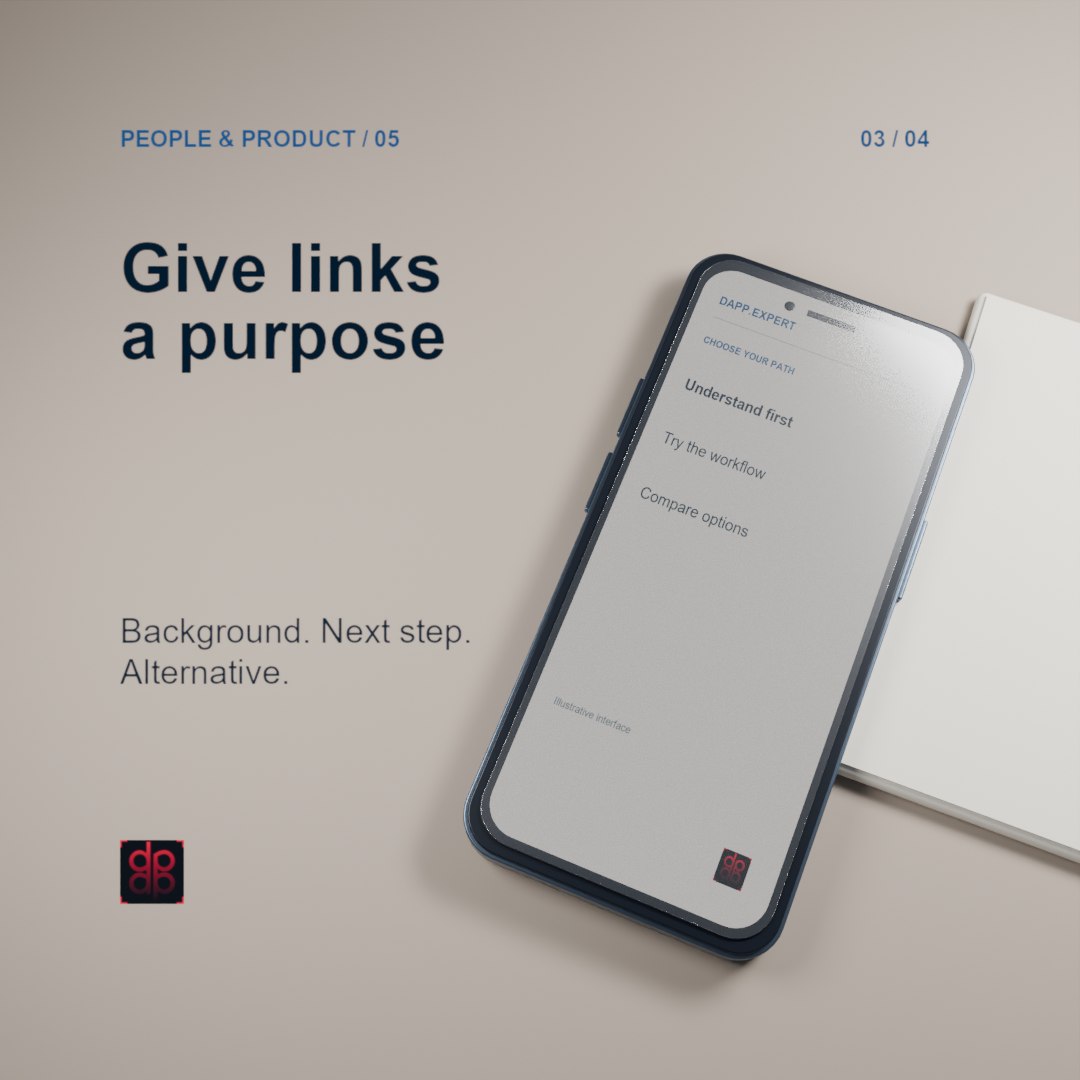
I would distinguish three types of continuation:
Background: a prerequisite that helps the reader understand the current material.
Next step: a practical action or deeper question that follows from it.
Alternative: another approach, limitation, or competing interpretation worth considering.
This is my editorial framework, not a universal taxonomy. A page may need one of these links, several, or none. The objective is to support the task, rather than make every reader traverse a predetermined sequence.
Keep language changes honest
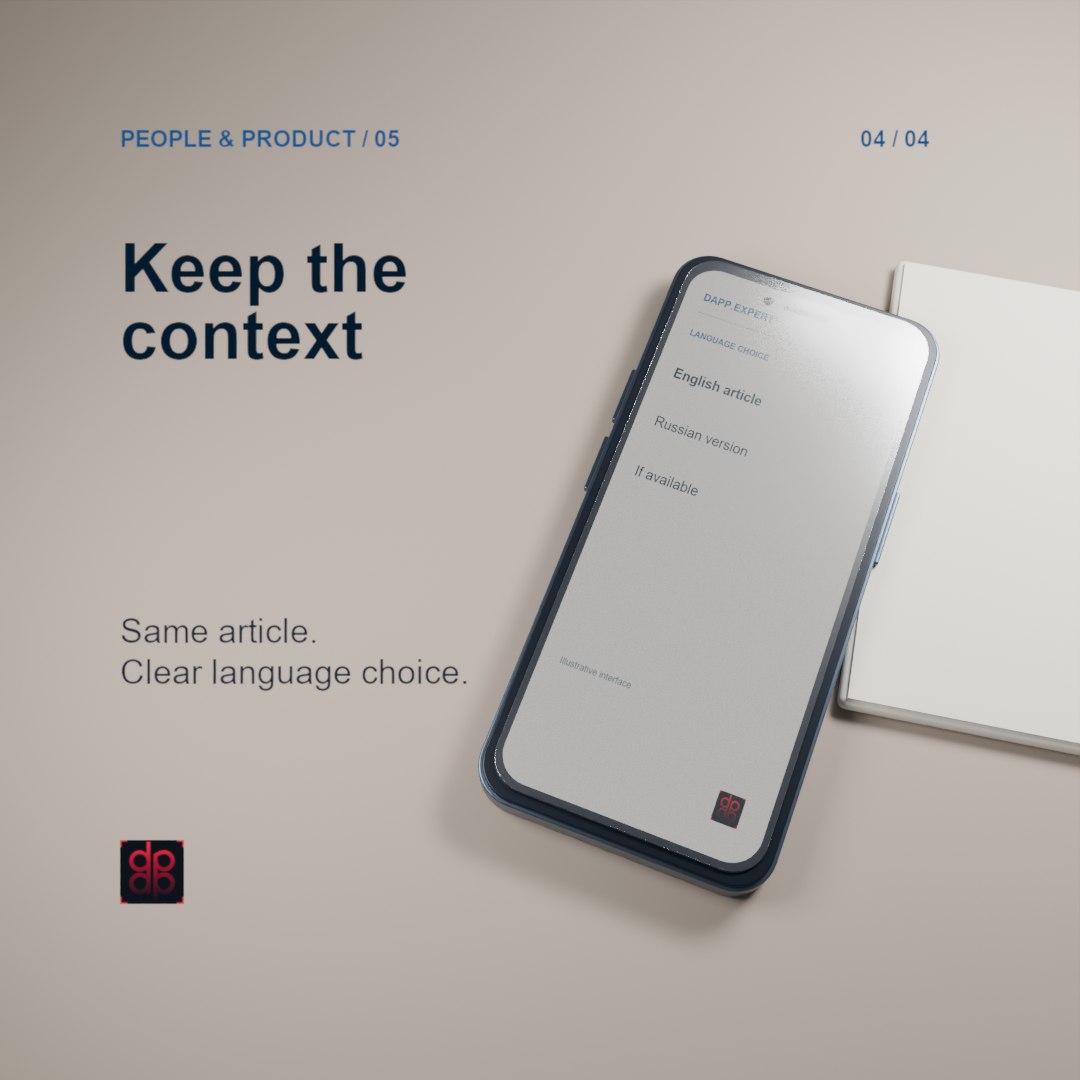
A path also breaks when its language changes unexpectedly. Google recommends distinct URLs for language versions and links that let visitors choose between them, rather than automatic language redirects.
My recommendation is to take a language switch to the equivalent article when a translation exists. When it does not, say so and offer an explicit choice. Sending someone to a homepage without explaining the change does not answer the question they were reading about. That is a design recommendation, not a claim that a specific implementation is already deployed.
Check the journey, not just the click
Before publishing a connection, I would open it on a phone and check the destination, language, title, and promised information. Then I would ask a reader what they expect before clicking and whether the page met that expectation.
Clicks can show that a link attracted attention. They cannot, on their own, show that it helped. The standard I want for a series is more concrete: each article should stand on its own, while the next one earns its place by answering a real question.
Sources
Primary guidance checked November 9, 2026. The proposed editorial framework and examples are recommendations; no traffic or retention uplift is claimed.











