

A request to summarize a document and a request to investigate why two reports disagree may look similar in a chat window. They ask very different things of the system behind it. The first can follow a known sequence. The second may require choosing what to inspect after each discovery.
As I think through AI features for a publishing product, the question I find useful is not “Do we need agents?” It is “Which decisions should the model be allowed to make?” That turns a fashionable label into a design choice.
Look at who chooses the next step
Anthropic’s Building effective agents distinguishes workflows with predefined execution paths from agents that dynamically direct their process and tool use. LangChain’s workflow documentation makes the same basic distinction. These are useful architectural definitions, not a universal naming standard.
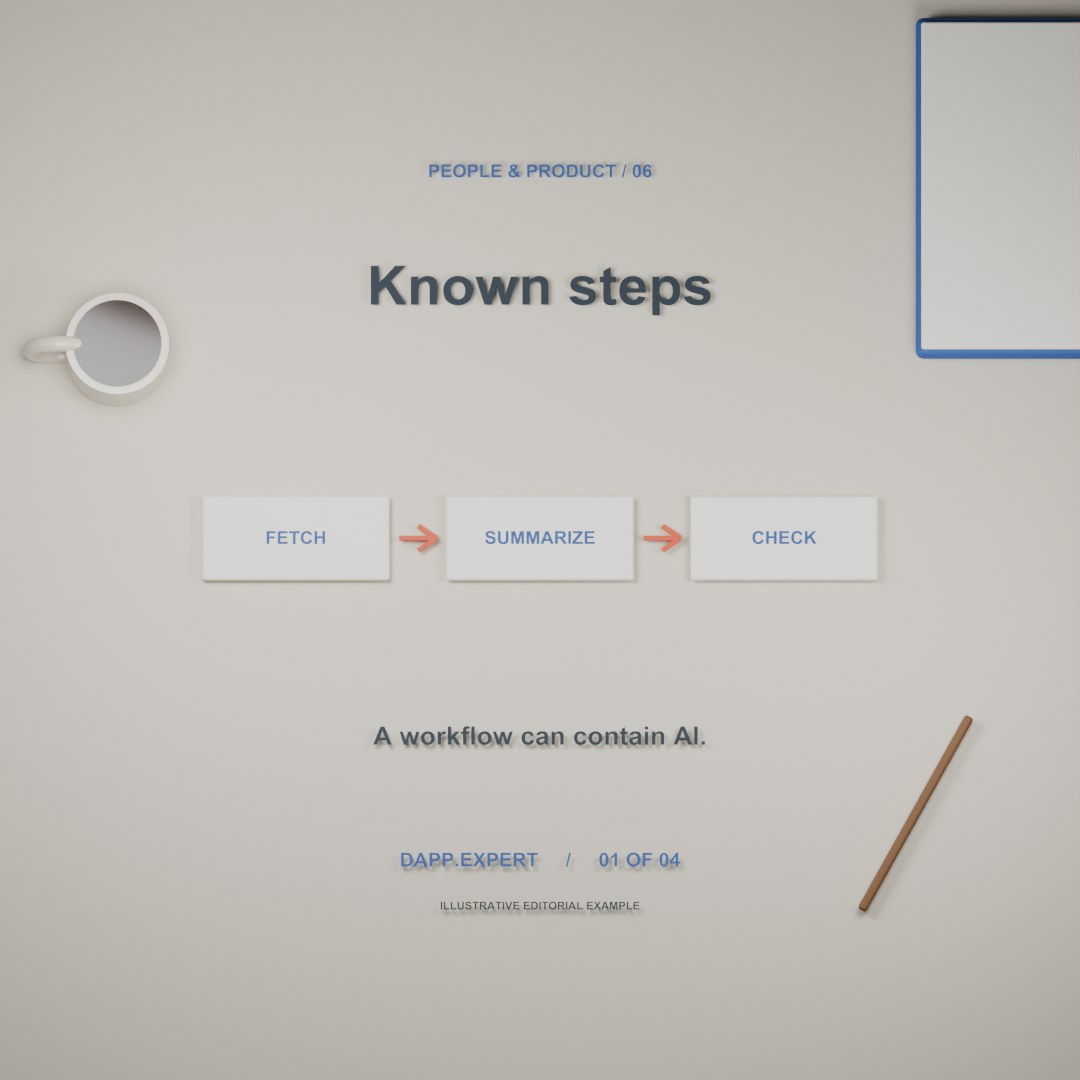
A workflow can still contain a language model. For example, software might retrieve an approved document, ask a model to summarize it, check the output format, and save a draft. The writing is probabilistic; the allowed sequence is defined in advance. A workflow is not automatically correct simply because its transitions are explicit.
Start with a task you can describe
Consider a hypothetical editorial assistant that receives a source URL and prepares a short briefing. If the expected steps are always fetch, extract, summarize, and review, I would start with that sequence. Missing content should produce an explicit failure or a request for another source.
LangChain documents prompt chaining as a pattern for tasks that can be separated into smaller, verifiable steps. Its examples illustrate the structure; they do not establish a quality guarantee for a different product.
My first test would be whether the simpler process handles representative inputs, including an inaccessible page, a changed headline, and a document that contradicts the requested framing. Counting successful happy-path demonstrations would miss the important cases.
Add discretion where the path is genuinely uncertain
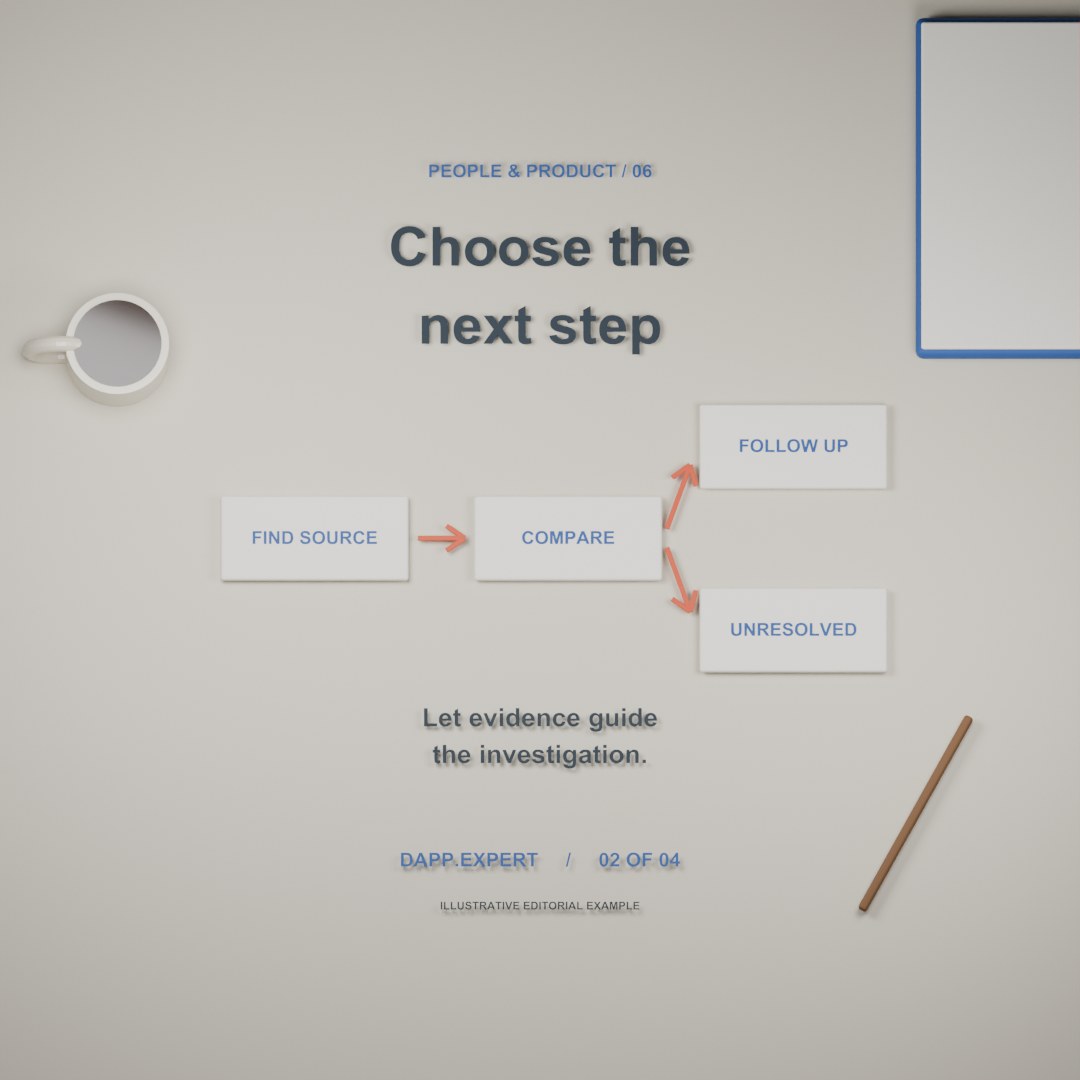
Now change the request: explain why several sources describe the same event differently. An assistant may need to find the original announcement, compare dates, follow a correction, or conclude that the available evidence is insufficient. The useful next action depends on what the last action revealed.
That is a stronger candidate for model-directed investigation. Anthropic describes agents as useful for open-ended tasks whose steps cannot readily be fixed in advance, while warning about added cost and compounding errors. It recommends environmental feedback, stopping conditions, and testing.
I would give this investigator a bounded job: permitted sources and tools, a time or action budget, a definition of sufficient evidence, and an explicit “unresolved” outcome. Uncertainty should remain visible rather than becoming a reason to keep searching indefinitely.
Separate investigation from permission to act
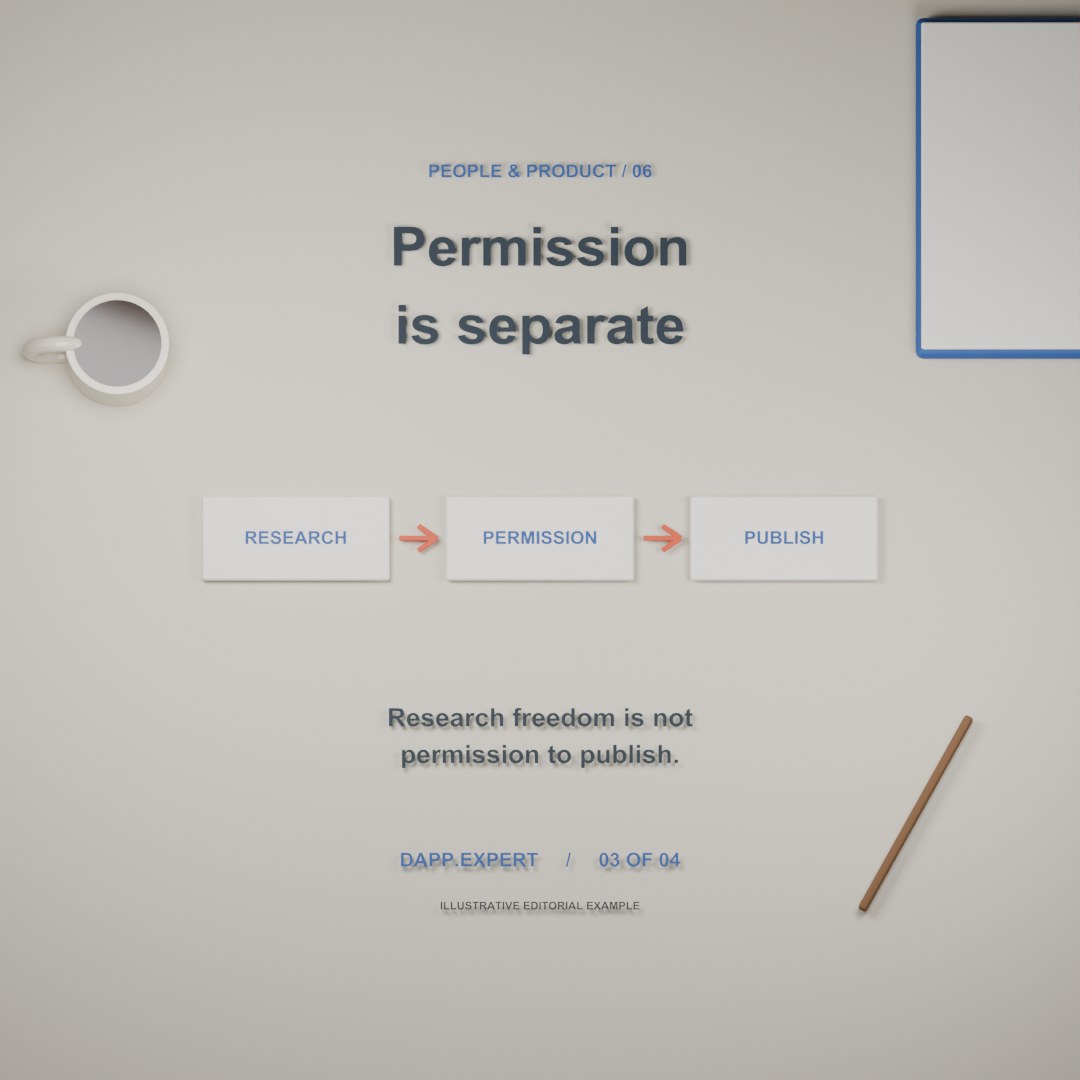
Choosing what to read is a different responsibility from choosing what to publish. In my proposed editorial setup, an investigator could gather evidence and prepare a recommendation while a separate publication step checks the destination, required fields, and the authorization already granted.
This is my design recommendation, not a description of a deployed system. It also does not mean a person must approve every routine action. The point is to define the permission before execution and enforce it at the action boundary. A persuasive model response is not itself an authorization.
Make flexibility earn its place
I would compare the workflow and the agent on the same small set of real tasks. Did each reach the right outcome? Did it preserve sources and uncertainty? How long did it take, what did it cost, and how did it fail?
The answer may be a fixed outer process with a flexible research step inside it. My working rule is simple: add autonomy to solve a demonstrated decision problem, then check whether that freedom improved the result. A longer conversation or a more elaborate architecture is not, by itself, progress.
Sources
Anthropic: Building effective agents — architectural distinctions and tradeoffs; originally published December 2024.
LangChain: Workflows and agents — definitions and implementation patterns.
Primary sources checked November 9, 2026. Editorial examples and evaluation questions are proposed design choices, not measured performance claims.











