

A reader bookmarks a technical guide and moves on. Did they finish it, understand it, or plan to return? The save alone cannot answer those questions.
As an editor, I find it useful to separate keeping information available from getting value from it. A bookmark can connect those moments. It does not prove the second one happened.
What the button records
X's help page defines bookmark counts as the number of times a post has been bookmarked. The identities of people saving it remain private. The count supplies no explanation of their motives.
A reader might postpone a long article, collect a reference, or keep a claim to check later. These are plausible interpretations, not measured proportions. “Saved” is an observation; “trusted,” “read,” and “will use” are separate hypotheses. Saving a social post does not establish that its linked article was opened.
Keeping and returning are different jobs
Bruce, Jones and Dumais's 2004 study Information behaviour that keeps found things found examined both keeping and re-finding web information. It included a keeping study with 24 participants, a re-finding study with 12, and a survey of 214.
People used bookmarks, emails to themselves, printouts and notes. The researchers identified functions including reminding, preserving context and integrating information into existing work. They also observed “leaving”: people sometimes did nothing because they expected to find a useful page again through search or a familiar site.
The study predates modern social feeds and draws heavily on information-oriented professions. It provides useful design questions, not a current X or Instagram revisit rate. Nor does a low save count necessarily mean a page was unhelpful.
Design for the return visit
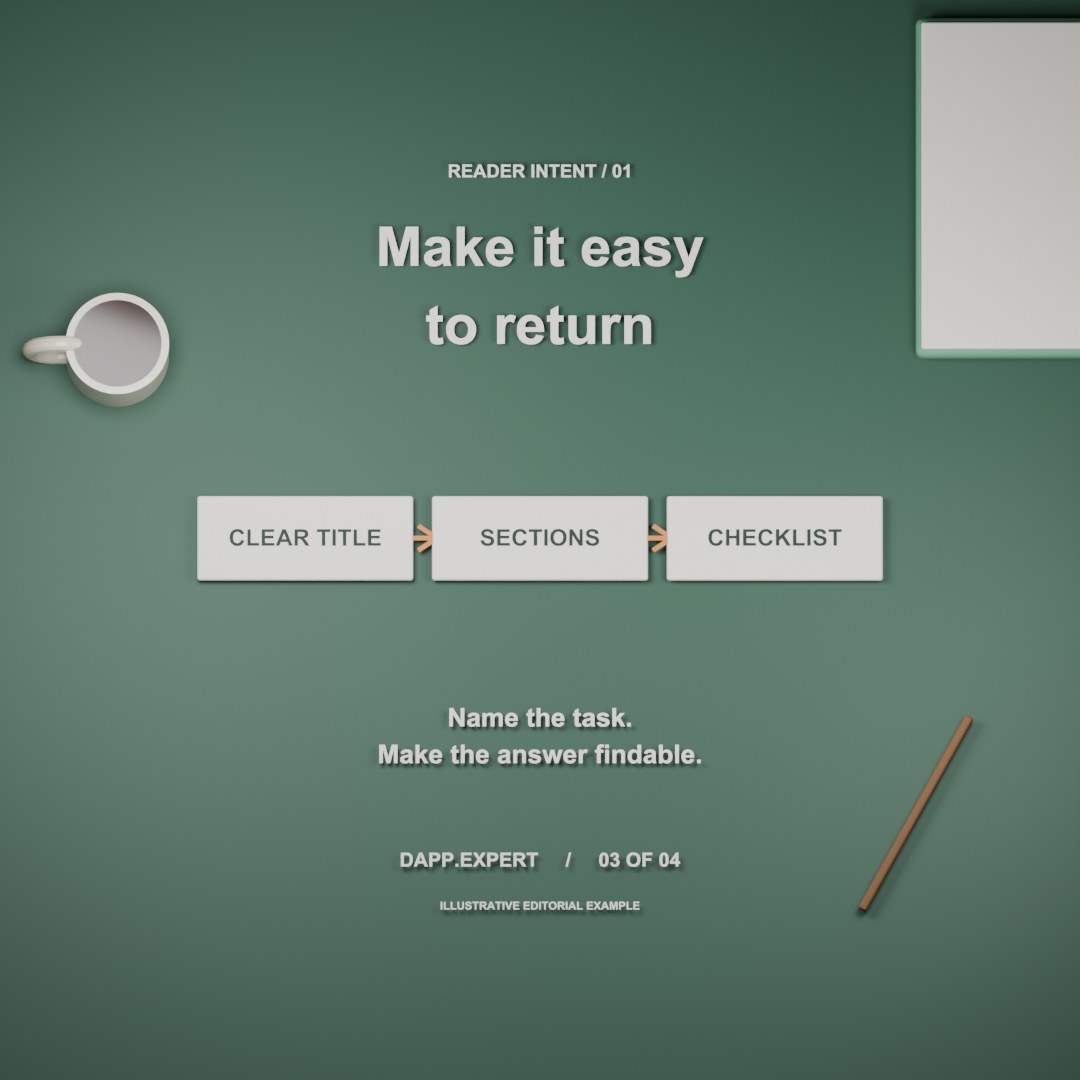
Consider a hypothetical guide to investigating a failed blockchain transaction. A specific title and diagnostic checklist give a returning reader something recognizable. “Everything you need to know” is a weaker description of the task.
My editorial recommendations are:
Name the task the article helps with.
Use headings that identify decisions or questions.
Make checklists understandable on their own.
Show dates and limitations where advice can change.
These are design proposals, not a proven formula for increasing saves.
Check the next event separately
Keep three questions distinct: was the post saved, was the article visited, and did readers return or report using it? Return visits may come from search, messages or typed addresses. Aggregate increases in saves and visits do not prove that the same people performed both actions.
A voluntary question such as “What brought you back to this guide?” can add context, although respondents will not represent every reader. Use only measurements actually available and respect privacy.
My working interpretation: a save means someone kept a route back. The stronger editorial goal is an article that still helps when “later” arrives.
Sources
X: Bookmark counts — definition and privacy.
Bruce, Jones & Dumais (2004) — original methods and findings.
Sources checked November 9, 2026. Editorial examples are proposals, not measured platform outcomes.











