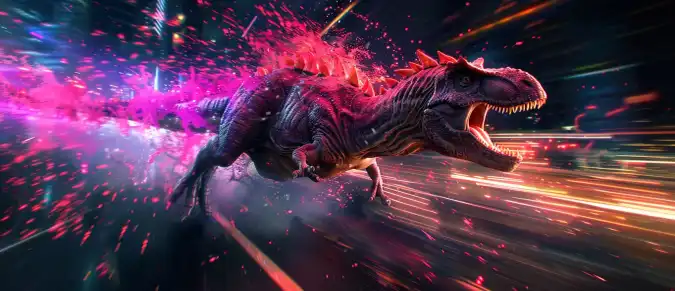

For a long time, the development of blockchain gaming followed a path of increasing complexity: projects focused on tokenomics, NFT-based economies, and multi-layered financial mechanics, often sacrificing accessibility and gameplay quality. For a mass audience, this approach proved excessive. Players value simple rules, a fast start, and enjoyment from gameplay—especially when it is their first interaction with Web3.
DinoRunner emerged as a response to this demand. The project reimagines the classic arcade runner genre by adding elements of blockchain ownership and competition without overwhelming players with technical details. Here, blockchain serves as supporting infrastructure rather than an end in itself, preserving speed, clarity, and engagement.
Contents
- Concept and Positioning of DinoRunner
- Gameplay and Arcade Mechanics
- Web3 Infrastructure and Technical Architecture
- NFT Economy and Reward System
- Community, Development, and Future of DinoRunner
- Conclusion
1. Concept and Positioning of DinoRunner
DinoRunner is designed as a casual Web3 game aimed at the broadest possible audience. The core concept is based on the familiar arcade runner format, which requires no tutorials or complex rules. Players only need basic reflexes and attention to immediately engage with the game.
The project deliberately avoids complex meta-systems and aggressive monetization. This makes the game accessible both to experienced gamers and to users with no prior experience with blockchain technologies. Web3 mechanics are introduced gradually and are not mandatory to start playing.
An additional feature of the concept is its focus on emotional engagement. A fast entry, dynamic pace, and a clear objective create a sense of immediate involvement. This is especially important for mobile and browser games, where the decision to continue playing is often made within the first few minutes.
As a result, DinoRunner occupies a niche among arcade-style Web3 games, acting as an entry point into blockchain gaming without a drastic shift in user experience.
2. Gameplay and Arcade Mechanics
The core gameplay of DinoRunner is based on an endless runner mechanic, where the character automatically moves forward while the player controls jumps, dodges obstacles, and collects bonuses. The goal of each session is to survive as long as possible and achieve the highest score.
Difficulty increases gradually: speed accelerates, new obstacles appear, and the rhythm of gameplay changes. This creates a natural learning curve and keeps the experience engaging even across repeated runs.
Key Gameplay Elements of DinoRunner:
- Dynamic arcade runner with increasing difficulty
- Score system, records, and leaderboards
- Bonuses and power-ups during runs
- Short gameplay sessions in a casual format
The arcade structure allows difficulty to scale smoothly without changing core rules. Players gradually adapt to the faster pace, making progression feel natural. Success depends on skill and reaction time rather than in-game spending, which positively impacts balance.
3. Web3 Infrastructure and Technical Architecture
Web3 integration in DinoRunner is implemented at the infrastructure level and remains almost invisible to the player. Blockchain is used to record ownership of NFT assets, store achievements, and verify game results.
Most technical processes are automated and hidden behind the game interface. Players are not required to manually interact with wallets or smart contracts, significantly lowering the entry barrier and minimizing user errors.
The project’s architecture is designed for stable performance during high-frequency gameplay sessions. This is critical for arcade games, where responsiveness directly affects the user experience. Web3 functions here as a service layer rather than a complex technical add-on.
In the long term, this model simplifies integration with external marketplaces and other Web3 services, expanding the overall ecosystem.
4. NFT Economy and Reward System
The economic model of DinoRunner complements gameplay rather than replacing it. NFTs and in-game rewards are used for progression, collection, and visual customization of characters.
| Element | Role in the Ecosystem |
|---|---|
| NFT Characters | Digital ownership and visual distinction |
| In-game Rewards | Motivation and progression development |
| Bonuses and Power-ups | Additional options without breaking balance |
NFTs do not provide direct advantages during runs, ensuring equal conditions for all players. Digital assets primarily serve a collectible and reputational role.
Limited NFT supply and the absence of aggressive monetization reduce speculative pressure. As a result, a more sustainable economy is formed, driven by player activity rather than financial expectations.
5. Community, Development, and Future of DinoRunner
The DinoRunner community is built around competitive yet friendly gameplay. Leaderboards and events encourage interaction without creating excessive pressure.
Project development follows a phased approach. New mechanics, visual improvements, and modes are introduced gradually, allowing balance to be maintained and user feedback to be incorporated.
Community engagement centers on in-game achievements rather than financial performance. This reduces toxicity and increases long-term loyalty. In the long run, DinoRunner may evolve into a broader arcade-style Web3 ecosystem, expanding its modes and social features.
6. Conclusion
DinoRunner demonstrates how classic arcade genres can be organically adapted to a Web3 environment without losing speed or accessibility. The runner format makes the game intuitive and enjoyable for a wide audience.
Careful blockchain integration, a balanced NFT economy, and a focus on casual gameplay create a sustainable development model. The project shows that blockchain games can primarily be about fun, with Web3 acting as an added layer of value rather than a goal in itself.
An emphasis on simplicity and fast onboarding allows DinoRunner to attract users unfamiliar with blockchain games. This approach lowers barriers to mass adoption of Web3 gaming and makes it more intuitive. In the long term, the project may strengthen its position as a successful combination of arcade gameplay and decentralized technologies.











