

DogeGoal AI is a GameFi project that combines football management, NFT collecting, and a competitive Web3 economy. The platform is built around digital football cards, each representing an NFT player with unique attributes, rarity, and upgrade potential. Users take on the role of a manager: assembling squads, participating in PvP matches and tournaments, trading assets on an integrated marketplace, and progressively strengthening their team. The project is powered by opBNB — an L2 solution within the BNB Chain ecosystem, offering low fees and high throughput, which is especially important for gaming scenarios with frequent on-chain interactions.
- DogeGoal AI: Concept and Positioning in GameFi
- DogeGoal Gameplay: Team Management and Competitive Modes
- DogeGoal AI NFT Economy: Cards, Rarity, and Upgrades
- DogeGoal Marketplace and In-Game Asset Trading
- Technical Architecture: opBNB, AI, and On-Chain Infrastructure
- $DOGEBALL Token, Community, and Growth Outlook
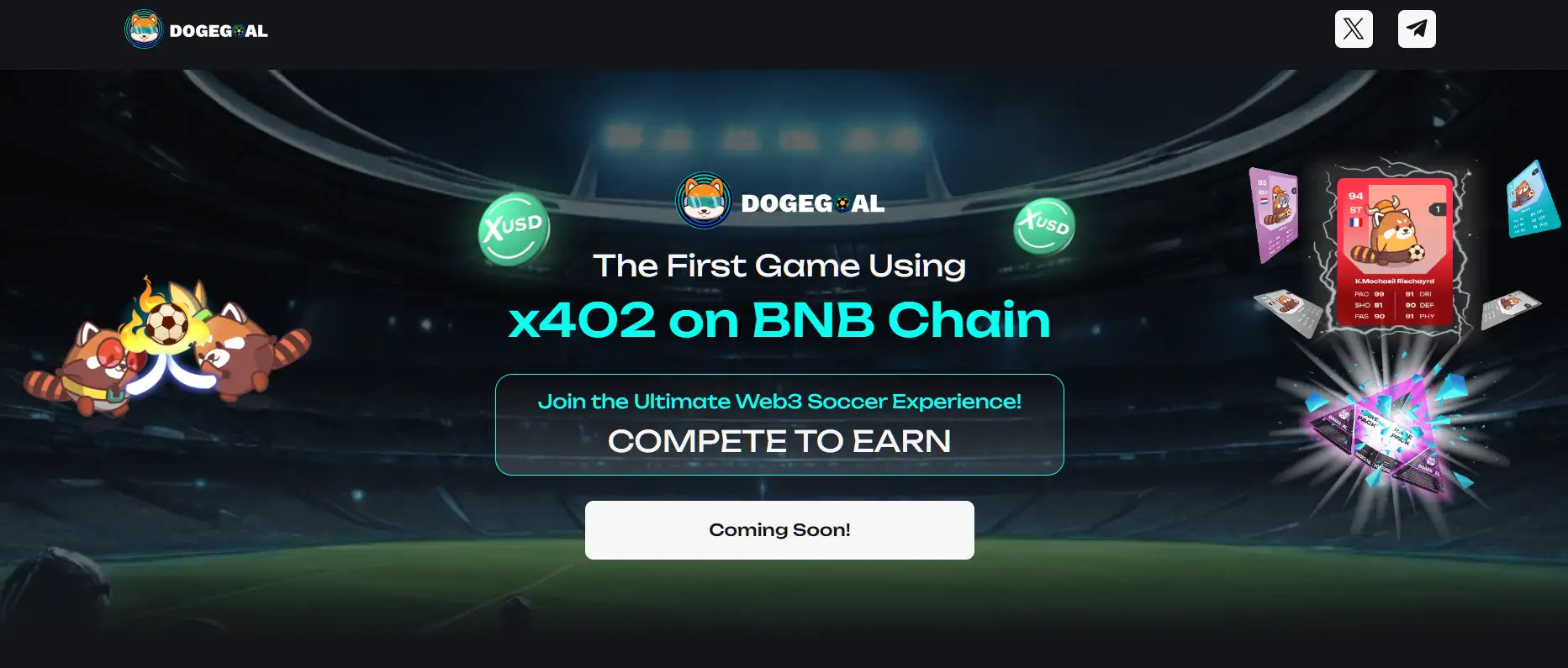
DogeGoal AI: Concept and Positioning in GameFi
DogeGoal AI is positioned as a Web3-powered football manager where classic sports gameplay is enhanced with NFT assets and blockchain-based economics. Each team player is represented by an NFT card owned by the user and usable both in-game and externally for trading or transfers. This model shifts the focus from temporary in-game progression to true digital asset ownership.
The project targets a broad audience familiar with football, without requiring deep prior knowledge of crypto. The use of opBNB lowers the entry barrier through reduced fees and fast transaction finality. An additional layer of recognition comes from Doge-inspired aesthetics adapted to a sports format. At the same time, DogeGoal AI goes beyond meme branding by building a fully featured game economy with long-term progression and incentives for active players.
DogeGoal Gameplay: Team Management and Competitive Modes
The core gameplay loop of DogeGoal AI revolves around the manager role. Players assemble teams from NFT footballers, taking into account attributes, rarity, and upgrade levels. Matches are played in PvP formats, where success depends not only on individual card strength but also on overall squad strategy and balance between offensive and defensive parameters.
Key gameplay mechanics include:
-
ranked PvP matches and seasonal tournaments;
-
league progression and ELO-based ranking systems;
-
knockout-style elimination formats;
-
clan competitions and team-based rewards.
This competitive structure creates long-term motivation and encourages consistent engagement. Seasonal updates and balance changes keep the gameplay dynamic and require players to adjust strategies over time. As a result, the game remains relevant even for experienced users and avoids turning into repetitive grinding.
DogeGoal AI NFT Economy: Cards, Rarity, and Upgrades
NFT cards form the foundation of the DogeGoal AI economy. Each card has a defined set of attributes and a rarity level that directly affects in-match performance. The project employs a limited issuance model combined with controlled upgrade mechanics to preserve asset value and prevent market oversaturation.
Core Elements of the NFT Economy
| Element | Description |
|---|---|
| Superstar NFTs | The main collection of playable football cards |
| Rarity | Determines attributes and market value |
| Power Up | Upgrade mechanism using other NFTs |
| Max Cap | Limit on maximum upgrade level |
| Cooldown | Time restrictions between upgrades |
This system prevents uncontrolled inflation of powerful cards and promotes thoughtful decision-making. Even lower-rarity NFTs retain utility through upgrade participation and strategic team compositions. As a result, the in-game economy remains sustainable, with demand driven by gameplay rather than pure speculation.
DogeGoal Marketplace and In-Game Asset Trading
The integrated DogeGoal AI marketplace enables players to trade NFT cards directly within the game environment. Trading features are embedded into the team management interface, simplifying the user experience and reducing reliance on third-party platforms. This makes economic activity a natural extension of gameplay rather than a separate process.
A key feature is the ability to continue using NFTs in matches while they are listed on the marketplace. This approach improves market liquidity and lowers opportunity costs for sellers. Players can quickly react to meta shifts and market conditions, making trading more dynamic and comparable to real-world football transfers.
Technical Architecture: opBNB, AI, and On-Chain Infrastructure
DogeGoal AI is built on opBNB, providing high transaction throughput and minimal fees. This is essential for GameFi projects that involve frequent operations such as matches, upgrades, and NFT trading. The L2 infrastructure also reduces load on the base layer and improves overall system stability.
AI components are used to generate and stylize visual content for NFT cards, enabling scalable content creation without sacrificing artistic consistency. An EVM-compatible architecture simplifies wallet integration and reuse of existing Web3 tools. Together, these elements form a technical foundation designed for long-term scalability and user growth.
$DOGEBALL Token, Community, and Growth Outlook
The $DOGEBALL token is designed as a core connector within the DogeGoal AI ecosystem. The roadmap outlines an IDO, exchange listings, and multiple in-game use cases — from tournament participation to upgrades and access to special modes. Its purpose goes beyond player rewards, aiming to create sustainable internal demand.
The project’s community grows through clans, competitive events, and loyalty programs. Clans serve both social and economic functions by encouraging coordinated activity and long-term engagement. Ultimately, the sustainability of DogeGoal AI will depend on balancing $DOGEBALL issuance with real in-game utility and maintaining an active, committed player base.











