
Domi Online is a multiplayer online RPG set in a medieval fantasy world that combines traditional MMORPG mechanics with elements of a blockchain-based economy. The project focuses on long-term progression without a fixed maximum level, PvE and PvP, professions, item crafting, and a player-driven economy. Its blockchain component is built around the DOMI token, digital assets, a marketplace, staking, and reward systems. As of 2026, Domi Online is available on Windows PC, while development continues in stages with new gameplay, social, and competitive features.
Contents
- What Is Domi Online and What Makes This MMO Different?
- MMORPG Gameplay: Classes, Progression, PvE and PvP
- Blockchain, NFTs and the Domi Online Economy
- DOMI Token: Utility, Staking and Tokenomics
- Development, Risks and Prospects of Domi Online
1. What Is Domi Online and What Makes This MMO Different?
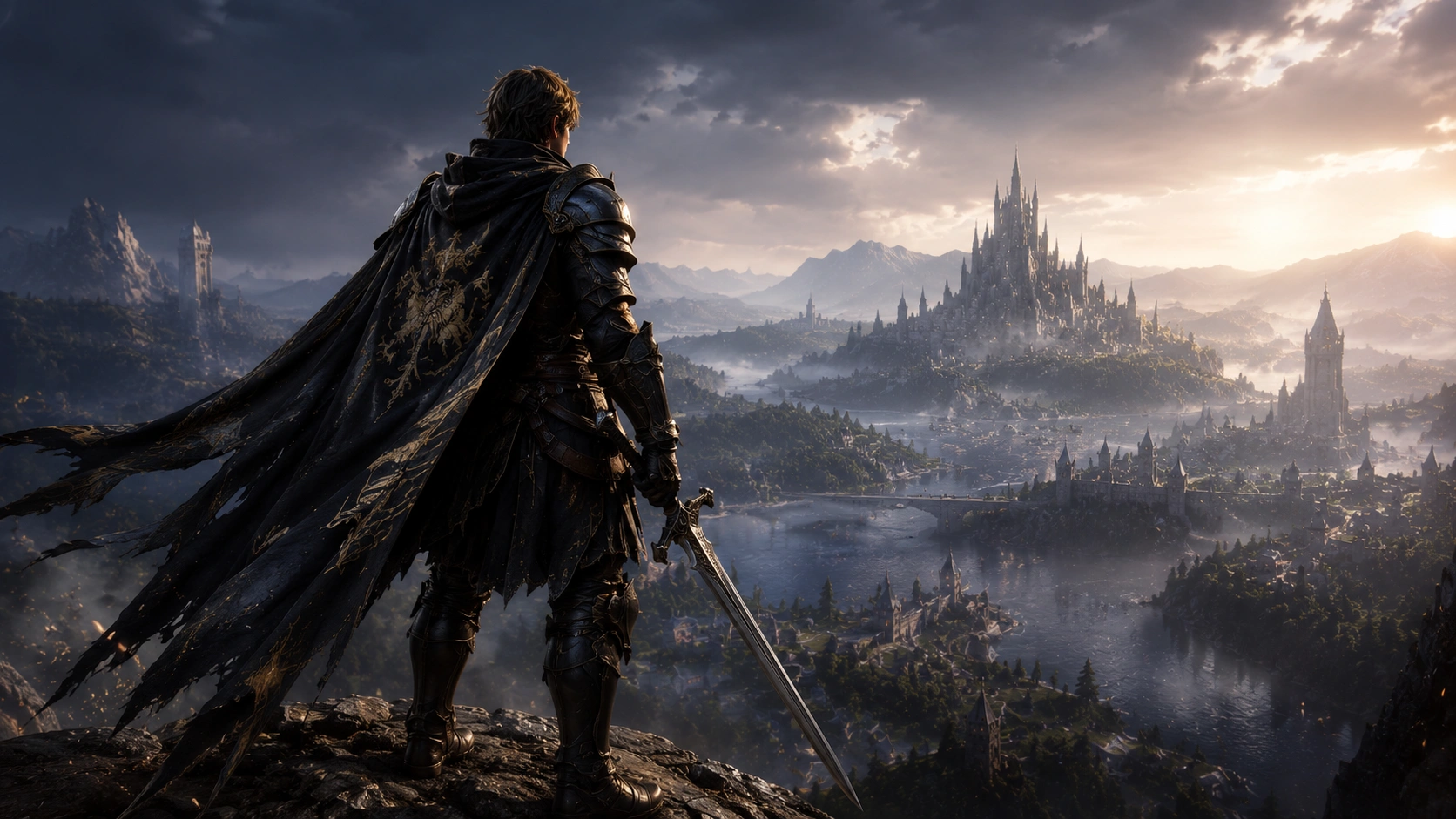
Domi Online is positioned as a hardcore MMORPG featuring an open fantasy world and continuous character progression. Its core concept draws heavily on traditional MMOs, including exploration, combat against creatures, resource gathering, equipment crafting, trading, and interaction with other players. At the same time, the project was designed from the beginning with blockchain components and a digital economy.
One of its central features is the absence of a maximum character level and skill cap. Instead of the standard model where players reach a level cap and then focus primarily on endgame content, Domi Online emphasizes continuous progression. The more time a player invests in a particular skill or activity, the further the character can develop in that area.
The death system also plays an important role. Defeat is designed to have more significant consequences than simply interrupting progress, with the possibility of losing some progress and items. In open PvP, players can attack each other outside safe zones, making equipment selection and risk assessment important parts of gameplay.
The project team includes developers with previous experience working on RuneScape. In particular, Domi Online's lead developer previously worked at Jagex on RuneScape Mobile and the Mining and Smithing update. This background helps explain the game's focus on long-term skill progression and an economy centered around resource gathering and item production, although Domi Online is an independent game.
2. MMORPG Gameplay: Classes, Progression, PvE and PvP
The game world includes forests, caves, desert areas, settlements, and other locations designed for exploration. Players develop combat and non-combat skills, gather resources, fight enemies, and participate in the economy. More challenging areas are intended for stronger characters and are expected to contain more valuable resources and equipment.
Domi Online features four main character classes: Warrior, Sorceress, Amazon, and Priest. Each is designed around different combat roles and playstyles. Group content encourages interaction between classes, while the development roadmap includes guilds and additional social mechanics.
- Warrior. A melee-focused class designed around physical attacks and direct combat.
- Sorceress. A magic-based class using spells and ranged abilities.
- Amazon. A class focused on ranged attacks and a more mobile combat style.
- Priest. A support-oriented character with magical and group-focused abilities.
- PvE. World exploration, battles against NPCs and creatures, and the acquisition of resources and items.
- PvP. Player-versus-player combat outside safe areas, with consequences for defeat.
- Crafting. Item creation is part of the economy and is linked to the progression of relevant skills.
The economic model is closely connected to gameplay. According to the project's current description, items can be crafted by players or obtained from defeated enemies. This makes resource gathering, crafting, and trading part of the overall progression cycle rather than a separate blockchain feature.
The developers also use rankings for combat, magic, and crafting skills. Seasonal leaderboard mechanics are intended to complement permanent progression with competitive objectives and rewards. The roadmap separately includes arenas, rankings, and structured PvP modes.
3. Blockchain, NFTs and the Domi Online Economy
Domi Online was created during the rapid expansion of the play-to-earn concept and was initially presented as a blockchain MMORPG with NFTs. Early project materials described plans to tokenize rare equipment, weapons, and houses that players could own and trade. The current version places greater emphasis on the MMORPG experience itself, although the DOMI token and blockchain economy remain part of the ecosystem.
Historically, the project announced development on Avalanche and the use of its blockchain ecosystem. In the current tokenomics, Beam is identified as the primary network for DOMI, while the official project page also lists token contract addresses on Ethereum and Avalanche. The project's blockchain infrastructure has therefore evolved alongside the broader development of blockchain gaming and gaming-focused networks.
| Component | Role in Domi Online |
|---|---|
| Genre | Hardcore MMORPG |
| Platform | Windows PC |
| Game World | Persistent multiplayer world in a medieval fantasy setting |
| Classes | Warrior, Sorceress, Amazon, Priest |
| Progression | No fixed maximum level or skill cap |
| Economy | Trading, crafting, and a player-driven economy |
| Token | DOMI |
| Primary Token Network | Beam |
| Other Networks | Ethereum and Avalanche |
| Maximum DOMI Supply | 1,000,000,000 tokens |
The blockchain model is designed to allow certain game assets to exist beyond a conventional centralized MMO database. However, not every in-game object is necessarily an NFT: tokenization is used for selected categories of assets and economic functions.
For an MMORPG, this model offers both opportunities and limitations. The ability to transfer digital items between wallets gives players an additional level of control, but it can also create challenges related to game balance, speculation, and the influence of external markets on gameplay. The sustainability of such an economy therefore depends not only on blockchain technology but also on demand for the game itself and its in-game resources.
4. DOMI Token: Utility, Staking and Tokenomics
DOMI is the utility and governance token of the Domi Online ecosystem. Its maximum supply is set at 1 billion tokens. According to the current tokenomics page, DOMI is available on the Beam network, while official token contracts also exist on Ethereum and Avalanche.
One of the token's use cases is connected to the reward system. Holders can lock DOMI to gain access to in-game benefits, including cosmetic items, skins, pets, and titles. This model is designed to separate part of the token's utility from the direct purchase of character power.
The ecosystem also provides DOMI staking in exchange for xDOMI. The multiplier depends on the duration of the lock-up period: according to the current tokenomics model, it can reach 1.25x for a period of up to 54 weeks. xDOMI is used as part of the system designed to encourage long-term participation in the ecosystem.
Other stated functions of DOMI include governance, marketplace activity, leaderboard rewards, and loyalty programs. Token holders can participate in mechanisms related to the project's development, while the in-game marketplace is designed for trading cosmetic assets and weapons. At the same time, the market value of DOMI is determined independently of in-game progression and is exposed to the price risks typical of crypto assets.
5. Development, Risks and Prospects of Domi Online
The current roadmap shows that Domi Online remains under active development. Planned stages include Open Alpha, membership features, cosmetic monetization, improvements to combat and the economy, player housing, and expansion of the game world. Social and PvP mechanics are another major focus, with guilds, group activities, arenas, rankings, competitions, endgame systems, and recurring live content planned for future development.
The main risks are associated with both the MMO model and Web3. The project needs to maintain an active player base, a stable economy, and a sufficient amount of content, while its blockchain component introduces additional factors such as DOMI price volatility, smart contract risks, and digital asset liquidity.
Domi Online combines a traditional MMORPG structure with a Web3 economy. Progression without a level cap, crafting, PvP, and a player-driven economy are complemented by the DOMI token, staking, and digital assets. The game's long-term prospects will depend on the execution of its roadmap and the ability to maintain a balance between engaging gameplay and a tokenized economy.











