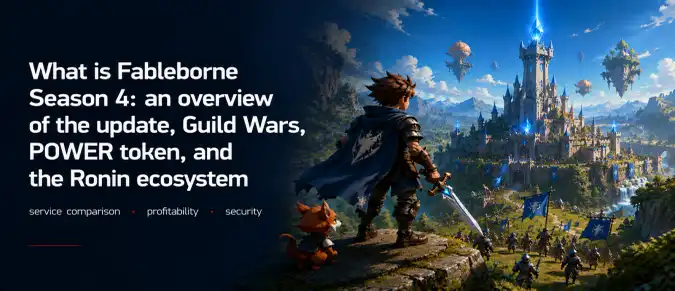

Fableborne Season 4 became one of the most notable updates to Pixion Games’ mobile Web3 title, which combines action RPG combat, strategy, and base-building mechanics. Operating within the Ronin ecosystem, the project continues to develop its seasonal content model by introducing new systems, heroes, and ways to interact with blockchain infrastructure. The fourth season significantly expanded the game’s social features through the introduction of guilds and new progression systems. As interest in mobile Web3 gaming grows, Fableborne remains an example of how blockchain can be integrated into gameplay without making NFTs or cryptocurrencies mandatory.
Contents
- What Is Fableborne Season 4 and How Is the Game Evolving?
- Key New Features of the Platform
- The Game Economy, POWER Token, and the Role of Ronin
- Key Features of Fableborne Gameplay
- The Future of Fableborne and Mobile Web3 Gaming

1. What Is Fableborne Season 4 and How Is the Game Evolving?
Fableborne is a mobile game that combines fast-paced ARPG battles with mechanics for building and defending a personal kingdom. Players can raid other users’ bases, complete PvE missions, and develop their heroes in the world of the Shatterlands.
The project is developed by Pixion Games, a studio that previously raised more than $12 million to support the growth of the game’s ecosystem. Fableborne was initially developed within the Avalanche network but was later moved to Ronin, a blockchain ecosystem focused on Web3 gaming.
Season 4 became one of the game’s largest updates. The developers focused not only on new content but also on social systems that allow players to form groups and participate in cooperative activities.
At the same time, Fableborne retains its free-to-play model. Blockchain features are integrated as an additional layer of interaction and are not required to access the game’s core content.
2. Key New Features of the Platform
The fourth season introduced several systems that have a significant impact on gameplay. One of the central additions was the guild system, designed for communities of up to 50 members.
Guilds received their own progression mechanics, rankings, and a Guild Wars system. Players can earn Guild Glory, complete collective objectives, and receive seasonal rewards.
Another important addition was the Ascendency system, which allows players to continue developing their heroes after reaching previous level limits. Ability Tomes were also introduced, giving users the option to modify their characters’ ability sets.
The season also added new characters. Among the best-known additions is Ember, a melee hero with fire-based attacks, along with the previously announced Sorceress and Transformer, which expand the range of strategic options available to players.
3. The Game Economy, POWER Token, and the Role of Ronin
With the launch of Season 4, the POWER token gained a more prominent role as part of the Power Protocol ecosystem. It is used to participate in events, purchase in-game items, and interact with the project’s NFT-related mechanics.
Fableborne’s economic model is structured to keep the game accessible to regular users while also providing additional options for holders of digital assets.
| Parameter | Description |
|---|---|
| Genre | ARPG + Strategy |
| Developer | Pixion Games |
| Blockchain | Ronin |
| Token | POWER |
| Game Modes | PvP, PvE, Guild Wars |
| NFTs | Kingdom NFTs |
| Model | Free-to-Play |
Kingdom NFTs are used for staking and earning additional rewards. Players can also open POWER Chests and take part in premium events connected to the token ecosystem.
The transition to Ronin gave the project access to one of the largest blockchain gaming ecosystems, known for Axie Infinity and other Web3 titles.

4. Key Features of Fableborne Gameplay
Fableborne combines several genres, which distinguishes it from many mobile RPGs. Players simultaneously control heroes, construct defensive structures, and take part in raids against other users.
Season 4 expanded customization and player interaction, with a stronger emphasis on cooperative content and seasonal activities.
- A combination of ARPG and strategy mechanics.
- Building and defending a personal kingdom.
- PvP raids against other players’ bases.
- More than 140 PvE missions.
- Guild Wars and guild ranking systems.
- New heroes and Ability Tomes.
- Integration of the POWER token and NFTs.
- Support for a seasonal content model.
The project’s mobile-first approach remains another notable feature. The game is available on iOS and Android, allowing it to reach a broader audience than many traditional Web3 projects.
The seasonal model also helps maintain player engagement by regularly introducing new content, temporary events, and balance changes.
5. The Future of Fableborne and Mobile Web3 Gaming
The development of Fableborne illustrates one possible direction for the evolution of blockchain games. Instead of making cryptocurrencies the central element of gameplay, the developers are gradually integrating Web3 mechanics into familiar mobile gaming genres.
In future updates, Pixion Games plans to expand kingdom customization, introduce new heroes, and further develop social features. Continued growth of the POWER ecosystem and the project’s NFT components is also expected.
The competitive side of the game is another important area of development. Guild Wars and seasonal rankings may help form a more sustainable community around Fableborne and increase the importance of cooperative gameplay.
Overall, Fableborne Season 4 demonstrates how modern mobile Web3 games aim to combine a polished gaming experience with blockchain elements and social mechanics. The project continues to evolve within the Ronin ecosystem and remains a notable example of a new generation of blockchain-based games.











