
Farmine Land Expansion is the development of the virtual land system in Farmine Land, a 2D open-world MMORPG featuring farming, mining, crafting, and NFTs. According to the current documentation, the project includes more than 150 lands in the Ronin ecosystem, where players gather resources, grow crops, fish, and use NFT tools. However, the open documentation does not identify a separate release officially titled Land Expansion with a fixed set of new mechanics, so the expansion is more accurately viewed as the continued development of Farmine Land's land system. In this model, NFT land serves as both a playable environment and a source of resources rather than merely a collectible digital asset.
Contents
- Farmine Land Expansion and the Development of the Blockchain Game
- Prospects and Risks of Virtual Land Expansion
- Farming, Mining, and NFT Tools in Land Expansion
- Ronin, LandCoin, and the Game's Web3 Economy
- Prospects and Risks of Farmine Land Expansion
1. Farmine Land Expansion and the Development of the Blockchain Game
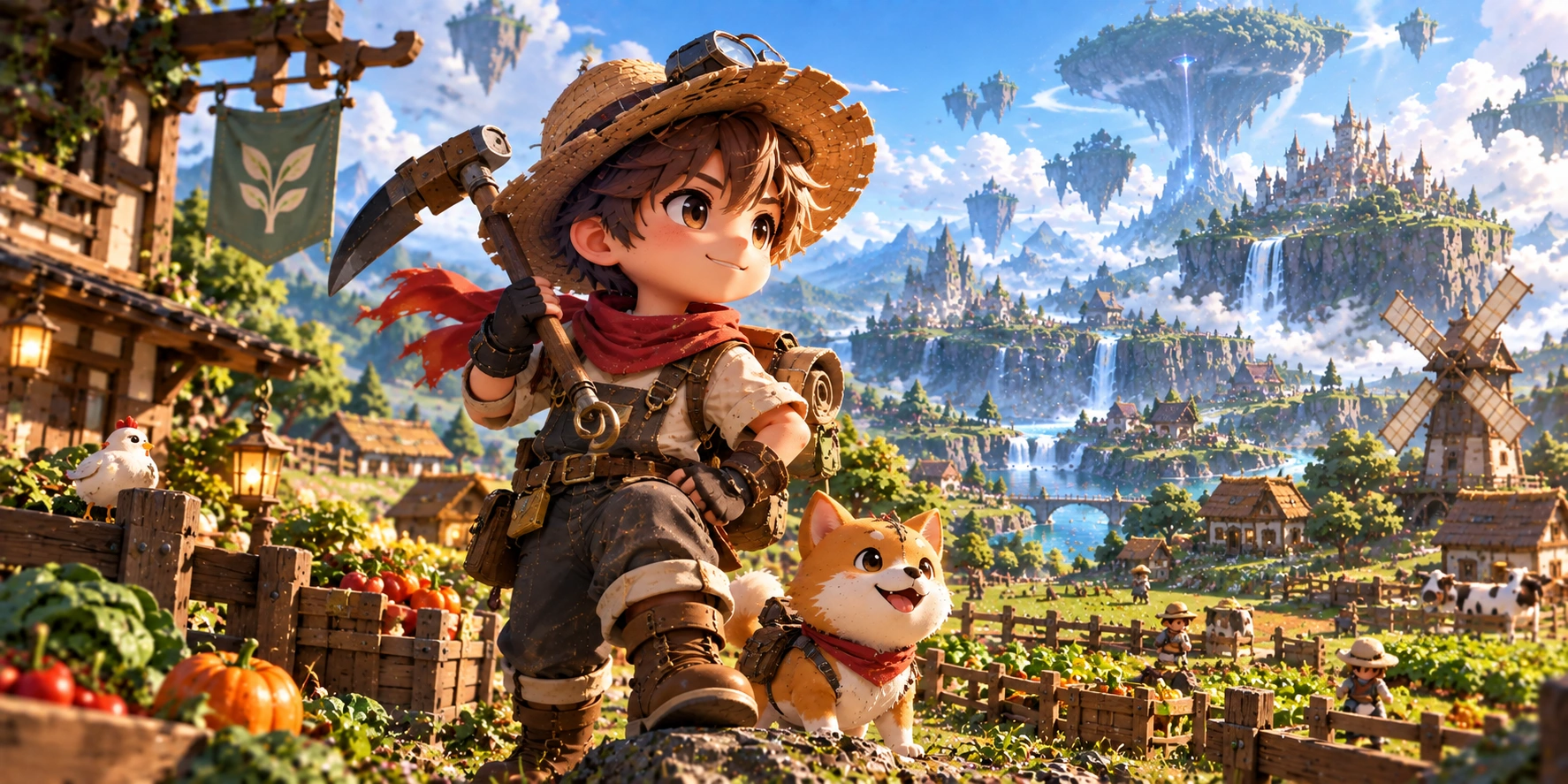
Farmine Land is being developed as a retro-style open-world MMORPG in which the economic system is built around the production and use of resources. The project combines traditional gameplay activities — exploration, quests, combat, and character progression — with farming, mineral extraction, fishing, and item crafting. NFTs are used to represent land and some types of tools.
The project emerged in 2023, while early Farmine Land digital assets were issued across other EVM ecosystems. For example, the Alpha Tester Pass collection was created on Polygon in 2024. In 2025, the project's development shifted toward Ronin: Farmine Land joined the Pixel Incubator, where it was presented as a 2D retro MMORPG built on this gaming-focused blockchain infrastructure.
The concept of Land Expansion is primarily associated with the growing role of land within the gameplay loop. The current Wiki describes a system of more than 150 lands where NFT tools can be used. Lands function as locations for several types of production, meaning that expansion of the game world affects not only the available space but also the number of resource production points.
It is important to distinguish confirmed features from possible future updates. Farmine Land's public materials do not contain a separate specification for a release called Land Expansion with a launch date, dedicated token, or standalone NFT collection. The term is therefore better used to describe the expanded land mechanics of the project rather than a separate game or a confirmed major expansion.
2. Prospects and Risks of Virtual Land Expansion
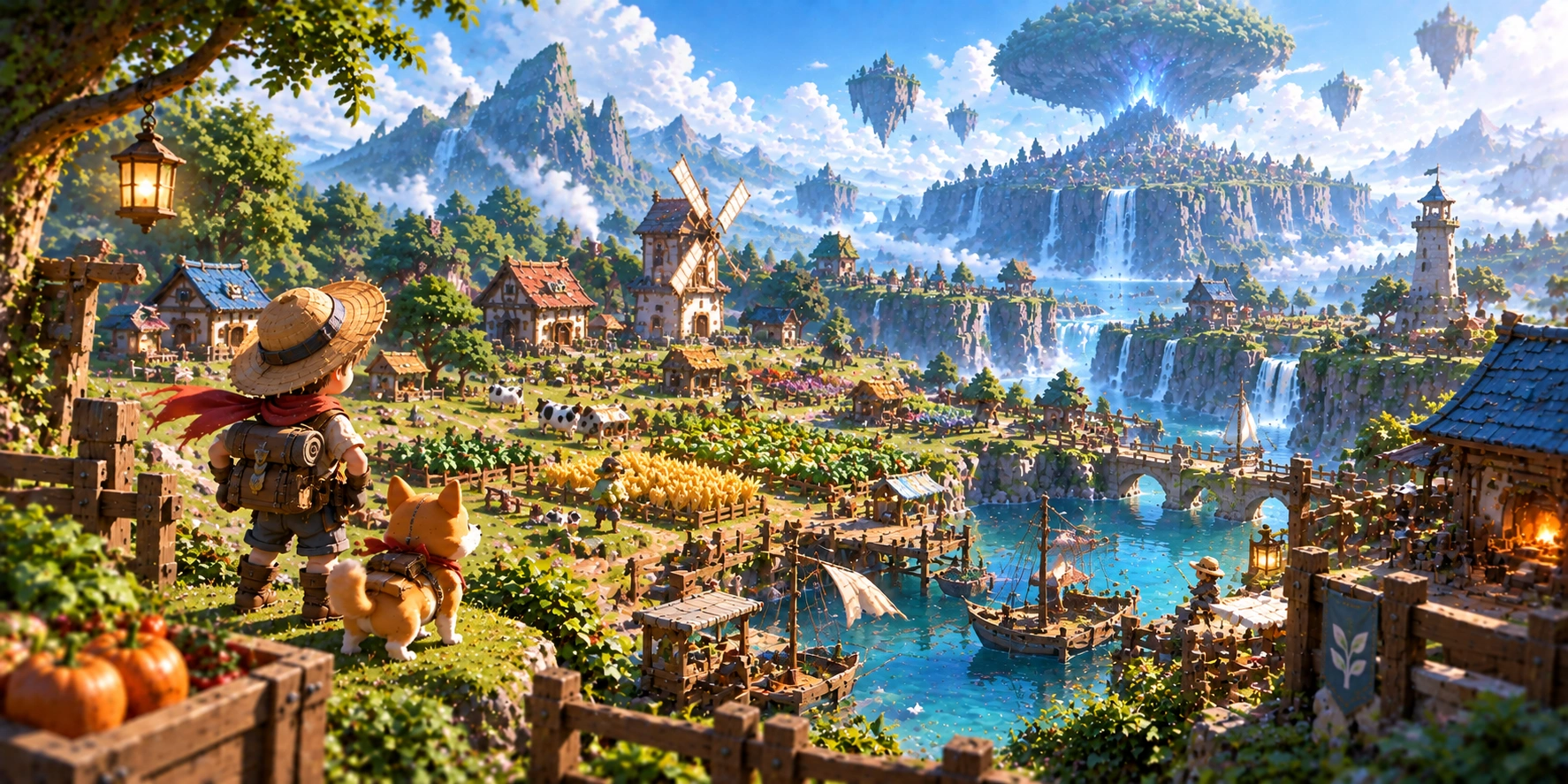
The game world is divided into landzones — island areas containing NFT Lands. The documentation identifies three types of islands: Tropical, Winter, and Desert. Each landzone contains 11 land plots, while the plots themselves vary in size and are classified as Small, Medium, or Large.
Land size is connected to production capabilities. Rarer plots may contain more resources, while their mines differ in size and in the number of available mining slots. As a result, NFT Land has functional characteristics that influence how a player interacts with the in-game economy.
| Land Element | Main Function | Resource Examples |
|---|---|---|
| Farming plots | Growing crops | Wheat, corn, potatoes, tomatoes, carrots |
| Tree plots | Growing and cutting trees | Wood, fruit trees |
| Stable | Managing livestock | Cows, pigs, sheep, llamas, poultry |
| Mine | Extracting minerals | Iron, coal, gold, diamonds, rubies, sapphires |
| Fishing spots | Fishing | Different types of fish |
Despite differences between biomes, the documentation lists the same main categories of extractable resources across lands. This means Tropical, Winter, and Desert primarily define the structure and visual identity of the world, while the core production model is based on a common set of farming, woodcutting, livestock, mining, and fishing activities.
This system makes land expansion part of the broader resource economy. The value of a plot within gameplay is determined not only by NFT ownership but also by its size, available production points, and the ability to use relevant tools.
3. Farming, Mining, and NFT Tools in Land Expansion
Specialized tools are used to work on the lands. The Tools of the Landworker collection includes 15 NFT variants: five categories of tools are available across three rarity levels — Common, Rare, and Legendary. Each tool is designed for specific activities and differs in the number of available uses.
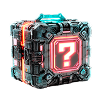
The tool collection was connected to Mystery Boxes: 1,400 boxes and approximately 3,500 NFTs were announced because each box could contain two or three tools. Distribution was structured around three rarity levels, with rarer tools receiving a higher number of daily charges. This limits the number of actions that can be performed with a single NFT and links production efficiency to item characteristics.
Main NFT tools in Farmine Land:
- Fishing Rod and Fishing Net for fishing;
- Saw for collecting wood;
- Pickaxe for extracting minerals;
- Fork for farming activities;
- Watering Can for crop maintenance;
- Common, Rare, and Legendary versions with different usage limits;
- Light Lord Stones for restoring tool charges.
Mining demonstrates how land mechanics connect several gameplay systems. Each land contains a cave where the number of mining slots depends on the plot type. To activate mining, players must defeat 30 cave rats, after which minerals become available. The player then has a limited amount of time to collect them using a Pickaxe NFT.
Early quests introduce these mechanics gradually. The NPC Deruno offers a sequence of tasks involving hunting, fishing, planting corn and trees, fighting cave rats, and mining minerals. As a result, the land system is integrated into character progression rather than existing separately as an NFT marketplace.
4. Ronin, LandCoin, and the Game's Web3 Economy
During the early history of Farmine Land, the project used different blockchain environments, as reflected by previous NFT collections on Polygon and references to Immutable in older directories. However, the current Tools of the Landworker documentation directly connects more than 150 lands and new gaming NFT tools with Ronin Network. External Pixel Incubator materials and publications about the Mystery Box also described Farmine Land as a project on Ronin.
This transition is important for understanding Land Expansion: blockchain is used primarily to establish ownership of selected gaming assets. At the same time, not every element of the economy needs to exist on-chain. Farmine Land combines NFTs with internal resources and currency, allowing frequent gameplay operations to remain separate from blockchain asset transactions.
One element of the economy is LandCoin. In project materials and publications related to Tools of the Landworker, it has been described as an in-game off-chain currency. Resources obtained with tools on the lands can participate in the internal economic cycle and be exchanged for LandCoin. This distinguishes the currency from a separate freely traded governance token.
This architecture reduces the need to record every planted crop, caught fish, or mined mineral directly on the blockchain. NFTs can represent ownership of more significant assets, while high-frequency gameplay economics remain within the server-side system. For an MMORPG, this approach is more practical because ordinary gameplay actions occur far more frequently than operations that genuinely require on-chain ownership.
The game client is also available through a browser. The documentation indicates support for desktop browsers as well as Android and iOS mobile devices. As a result, interaction with land mechanics is not limited to a specialized cryptocurrency interface, although NFT transactions still require users to understand the associated blockchain risks.
5. Prospects and Risks of Farmine Land Expansion
The expansion of the land system develops the Farmine Land economy and increases the importance of virtual plots within gameplay. Farming, mining, fishing, woodcutting, and livestock management create different sources of resources, while Small, Medium, and Large Lands offer different production capabilities. NFT tools with limited numbers of uses also influence the intensity of resource extraction.
At the same time, NFT mechanics alone do not guarantee a sustainable economy. If the volume of produced resources grows faster than player demand, their in-game value may decline. The balance depends on crafting, material consumption, the number of active users, and the introduction of new ways to use resources.
Additional risks are associated with the evolution of the project's blockchain infrastructure. Farmine Land's history includes assets and solutions connected to Polygon and Immutable, while subsequent development has focused on Ronin. Users therefore need to distinguish between older and current NFTs, verify the network being used, check official contracts, and confirm whether a specific asset is supported in the current version of the game.
Liquidity remains another factor. An NFT Land or gaming tool may have practical utility inside Farmine Land, but this does not guarantee stable demand or value on the secondary market. LandCoin also belongs to the in-game economy and should not automatically be treated as an investment asset.
Farmine Land Expansion should primarily be viewed as the continued development of the MMORPG's land and resource system. It combines more than 150 lands, different plot types, farming, mining, fishing, and NFT tools on Ronin. The future development of this model will depend on player activity, the balance between resource production and consumption, expansion of the game world, and the introduction of new content.