
Henesys Social Hub is the functional role of the Henesys town in the blockchain MMORPG MapleStory N, the first game in the MapleStory Universe ecosystem developed by NEXPACE and Nexon. It is not a separate Web3 game or standalone social platform: the location familiar from the classic MapleStory serves as a meeting point where NPCs, events, quests, and temporary activities are concentrated. At the same time, the Henesys name is also used for MapleStory Universe's primary blockchain network — Henesys L1, built on Avalanche technology. Therefore, the in-game social hub and the blockchain of the same name should be distinguished, although both are part of the broader MapleStory N ecosystem.
Contents:
- What Is Henesys Social Hub in MapleStory N
- Social Features and In-Game Activities
- Henesys L1, NFTs, NXPC, and NESO
- How the Project Differs from Traditional Gaming Social Hubs
- Economy, Development, and Risks of the Henesys Ecosystem
1. What Is Henesys Social Hub in MapleStory N
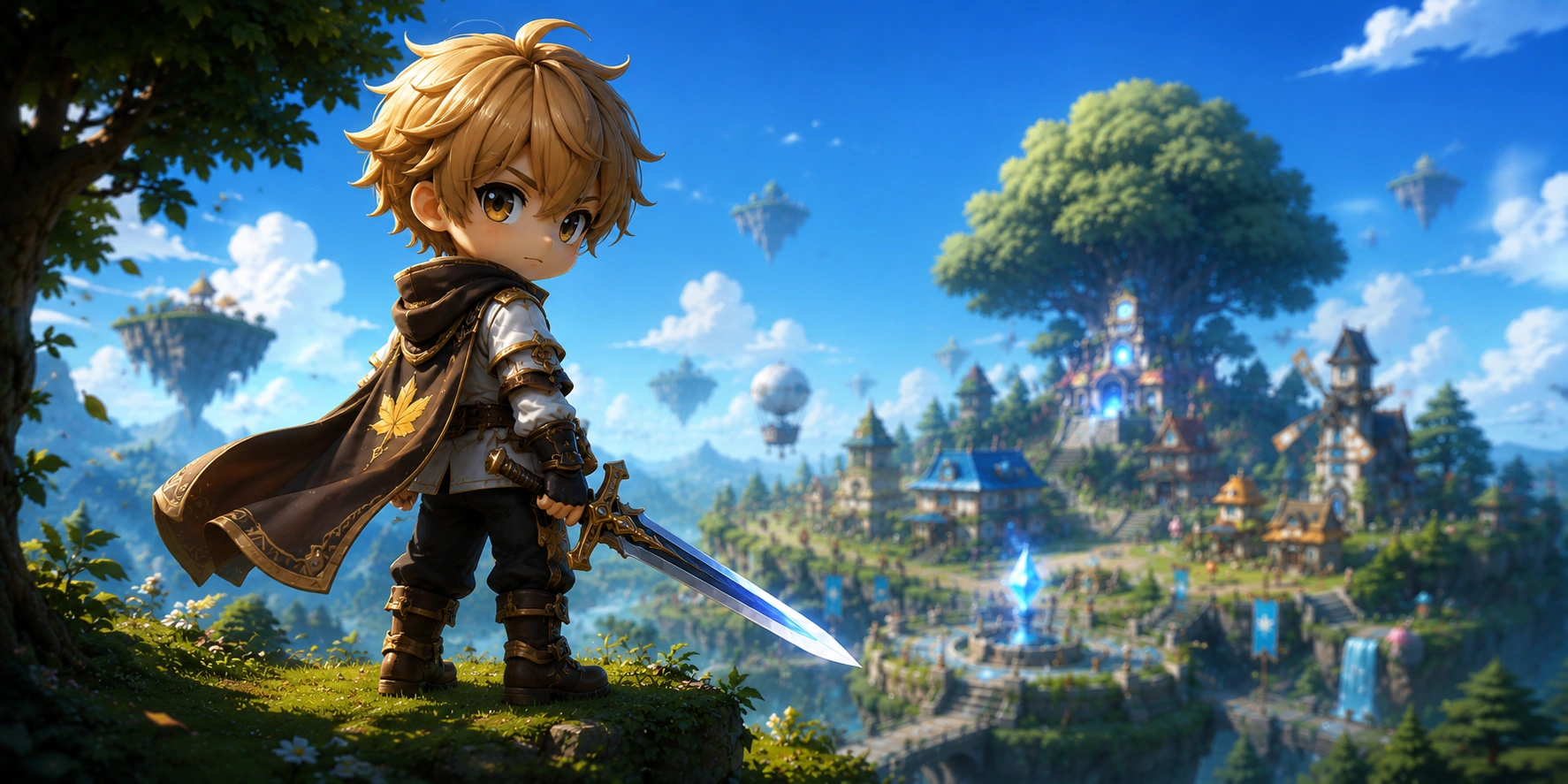
Henesys existed long before the blockchain version of MapleStory. In the original MMORPG, it is one of the most recognizable towns on Victoria Island, historically associated with archers and the early stages of character progression. Its convenient location, NPCs, and high concentration of players gradually turned the town into a natural meeting point for the community.
MapleStory N partially preserves this role. The game was released on May 15, 2025, as the first product in the MapleStory Universe ecosystem and combines the franchise's classic 2D graphics and RPG mechanics with NFTs, on-chain items, and an open marketplace. The publisher is NEXPACE Limited, a Web3 initiative backed by Nexon.
Henesys remains part of the game world rather than a separate application. It hosts NPCs associated with shops, quests, mini-games, and limited-time events. The term Social Hub therefore primarily describes the practical function of the location: players regularly return to the same town to access different types of content.
This approach differs from creating a dedicated Web3 social network. Users do not need to leave the MMORPG to access a separate interaction space. The social layer remains integrated into the gameplay, while blockchain mechanics operate at the level of items, tokens, ownership, and economic transactions.
2. Social Features and In-Game Activities
Henesys functions as an activity hub primarily because of its concentration of content. In MapleStory N updates, the town is used to host characters through which players can access temporary events and mini-games. In 2026, these activities included Tangyoon Restaurant, One Card, and other limited-time events.
This supports the traditional MMORPG model of a shared social space. Instead of providing a separate "social network" feature, interaction develops around gameplay objectives such as preparing for events, trading, character progression, finding other participants, and visiting NPCs. The more useful functions concentrated in one area, the more likely players are to meet there regularly.
- NPCs and quests — characters through which quests and special activities are launched.
- Limited-time events — content available for a specific period.
- Mini-games — additional game modes beyond standard monster hunting and character progression.
- Social interaction — meetings and communication between users within a shared in-game location.
- Access to the economy — Henesys exists within MapleStory N, where items can be connected to NFTs and on-chain systems.
It is important to distinguish the town's social function from the blockchain economy. Simply having a character in Henesys does not require an on-chain transaction. MapleStory N uses a hybrid architecture: high-frequency gameplay actions remain within traditional infrastructure, while ownership of certain assets and related operations can be recorded on the blockchain.
This design reduces the need to turn every player action into a blockchain transaction. For an MMORPG, this is particularly important because movement, combat, and interactions with the game world occur far more frequently than operations involving digital ownership.
3. Henesys L1, NFTs, NXPC, and NESO
The Henesys name is used for more than the in-game town. Henesys L1 is the primary blockchain of MapleStory Universe, built as a specialized network on Avalanche infrastructure. According to AvaCloud, the architecture is hybrid: asset ownership, item history, and certain blockchain functions are recorded on-chain, while high-speed gameplay continues to operate through Nexon's traditional systems.
The ecosystem uses two interconnected fungible tokens — NXPC and NESO. NXPC is the native token of MapleStory Universe and is used within its asset creation and exchange system. NESO functions as an in-game token that can be used in the Marketplace, for item upgrades, and within other mechanics of ecosystem applications.
In MapleStory N, players can initially earn NESOLET by hunting monsters, defeating bosses, and participating in other gameplay content, after which it can be converted into on-chain NESO. According to MapleStory Universe documentation, NESO and NXPC can be converted at a fixed ratio of 100,000 NESO to 1 NXPC.
NFTs are another component of the model. Certain characters, equipment, and other in-game items can exist as blockchain assets and be traded through the MSU Marketplace. Unlike a traditional cash shop, MapleStory N was designed around obtaining items through gameplay and maintaining a limited supply of certain assets.
Henesys L1 data is accessible through MSU Explorer. Users can view blocks, transactions, wallet addresses, smart contracts, NXPC, NESO, and ERC-721 and ERC-1155 NFTs. This adds a public verification layer for transactions that is typically absent from the closed databases of traditional MMORPGs.
4. How the Project Differs from Traditional Gaming Social Hubs
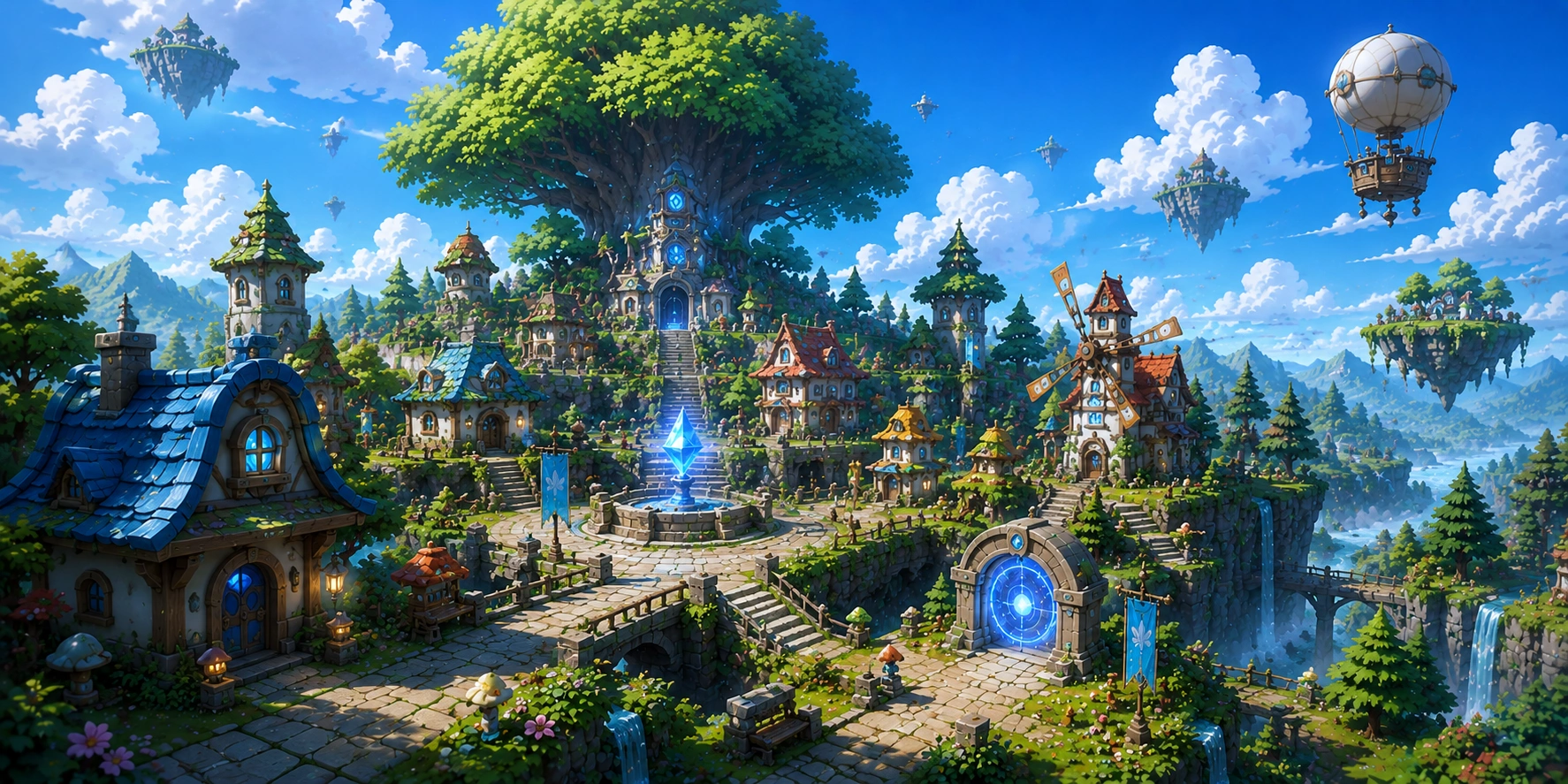
From a game design perspective, Henesys retains the familiar hub-town model: players gather in one location, interact with NPCs, and access content. The main difference appears at the level of the broader MapleStory N economy, where some in-game assets can be owned by users as NFTs and transferred through blockchain infrastructure.
| Parameter | Henesys in MapleStory N | Traditional MMORPG Hub | Standalone Web3 Social Platform |
|---|---|---|---|
| Primary Function | Gaming and social hub | Gaming hub | Social interaction |
| Game World | MapleStory N | Specific MMORPG | May be absent |
| Digital Assets | NFTs, NXPC, NESO | In-game items | Tokens and NFTs |
| Blockchain | Henesys L1 | Usually absent | Depends on the project |
| Economy | In-game and on-chain | Closed in-game economy | On-chain economy |
| Key Risks | Gaming, market, and blockchain risks | Game balance and player retention | Smart contracts and tokenomics |
A key feature of the model is the combination of a familiar gaming environment with transferable digital ownership. Players interact with Henesys as they would with a traditional MapleStory town, while some of the assets they accumulate exist within the broader MapleStory Universe infrastructure. The MSU Marketplace is available for trading such items.
The ecosystem also supports Synergy Apps — third-party applications that can use MapleStory IP, NFTs, and tokens through MapleStory Universe SDK tools. As a result, the potential utility of assets is not necessarily limited to a single in-game location or even one game, although actual interoperability depends on specific developer integrations.
5. Economy, Development, and Risks of the Henesys Ecosystem
MapleStory N's economic model differs from the classic GameFi structure centered primarily on a reward token. The ecosystem uses a limited supply of certain NFTs, NXPC, and the related NESO token. NXPC is also involved in mechanisms for exchanging NFT collections, while contribution rewards are designed to reward participants who expand the utility of the ecosystem.
Blockchain does not eliminate the traditional risks associated with MMORPGs. The relevance of Henesys depends on player activity, the quality of updates, and the regular release of new content. A decline in the player base could reduce both social activity and demand for in-game NFTs and Marketplace transactions.
Bots and automation represent another challenge. Following the launch of MapleStory N, the project blocked accounts for using prohibited software and macros. Automated farming is particularly significant in an economy with tradable assets because it can affect resource supply and the distribution of in-game rewards.
Technical blockchain risks must also be considered. NXPC on Henesys L1 cannot be sent directly to most centralized exchanges that support the token through Avalanche C-Chain; the official Warp mechanism is used for transfers between the networks. Selecting an unsupported network can result in a loss of funds. Additional risks involve wallets, smart contracts, NFTs, and NXPC price volatility.
Overall, Henesys Social Hub is best understood as the social and gaming component of MapleStory N rather than a standalone blockchain game. Henesys L1 provides the infrastructure for NFTs, NXPC, NESO, and MapleStory Universe applications. The ecosystem's future development will depend on community activity, MapleStory N updates, and the emergence of new Synergy Apps.











