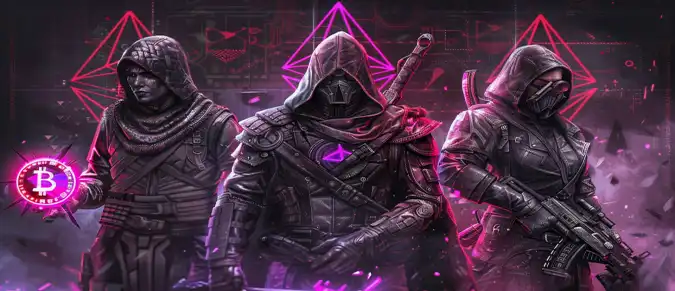

Hero Lane Wars is a rare example of a Web3 project that aims to engage players not through promises of earnings, but through gameplay itself. At its core is a hybrid system combining elements of MOBA, tower defense, and real-time strategy. Instead of a traditional single-focus approach, players must simultaneously attack and defend, controlling not only their hero but also waves of units. This creates a deeper gameplay experience where each session depends on decision-making rather than simple progression. In an oversaturated GameFi market, the project stands out by prioritizing gameplay as a product, not just its economic model.
Contents
- Concept and Features of Hero Lane Wars
- Gameplay and Match Structure
- Heroes and Role System
- Economy and Tokens in Hero Lane Wars
- Advantages and Project Prospects
1. Concept and Features of Hero Lane Wars
Hero Lane Wars is built around lane control as the central element of gameplay. Unlike traditional MOBA games, where lanes are just part of the map, here they become the core of strategy. Players are not simply holding positions but constantly balancing between offense and defense while making real-time decisions.
The project draws inspiration from classic custom maps but adapts them to modern standards. As a result, matches become dynamic, requiring not only quick reactions but also a strong understanding of pacing. This approach makes the game accessible for newcomers while still offering depth for experienced players.
Cross-platform support also plays an important role. Hero Lane Wars is designed for both mobile devices and PC, allowing it to reach a broader audience. This is crucial for a PvP-focused game, as an active player base directly impacts matchmaking quality and long-term sustainability.
Another key aspect is the attempt to combine multiple gameplay systems without overwhelming the interface. Developers aim to keep controls intuitive despite layered mechanics. This balance between accessibility and complexity could become a major advantage. If executed well, it will help retain both casual and competitive players. In the long run, this balance will define the project's viability.
2. Gameplay and Match Structure
The gameplay is built on a combination of mechanics. Players control a hero, use abilities, and simultaneously send waves of units toward the opponent’s lane. This creates a unique rhythm where success depends not only on execution but also on predicting the opponent’s moves. Every match requires constant analysis, from evaluating enemy strength to choosing the right moment to apply pressure.
Timing plays a crucial role. A mistake in judgment can quickly shift the balance, even if the hero choice is optimal. Unlike traditional games in the genre, there is no strict division of roles within a team. Each player acts as a self-contained unit responsible for both offense and defense.
This structure increases personal responsibility and makes outcomes more dependent on individual decisions. Each match feels like a separate strategic challenge, with minimal repetition. Variability comes from different hero combinations, wave management, and player styles.
The ability to adapt strategies mid-match adds further depth. Players can shift between aggressive and defensive playstyles depending on the situation. This keeps gameplay dynamic and less predictable. Short match durations also make the game suitable for mobile play. The balance between session length and intensity enhances overall engagement.
3. Heroes and Role System
Hero Lane Wars features a flexible role system that guides strategy without strictly limiting players. At launch, there are three core archetypes: Tank, DPS, and Healer. Each role influences gameplay style and lane control approach.
- Tank — durable heroes capable of absorbing damage and holding the lane.
- DPS — high-damage characters focused on aggressive play and quick breakthroughs.
- Healer — support heroes that enhance survivability and sustain prolonged fights.
Heroes also differ in attack type and damage mechanics, enabling counter-strategies. The same match can unfold differently depending on hero selection and interaction with waves. This adds strategic diversity and encourages experimentation.
The system increases overall depth. Victory depends not only on reflexes but also on understanding strengths and weaknesses. This creates a meta where analysis and adaptation are key.
Future expansion of the hero roster could significantly enhance strategic diversity. New abilities and mechanics will reshape gameplay patterns. This helps maintain long-term player interest. Balance between heroes will be critical for competitive viability. Regular updates will likely play a major role in retaining the player base.
4. Economy and Tokens in Hero Lane Wars
Despite being a Web3 project, Hero Lane Wars has not yet fully disclosed its economic model. The project uses the HLW designation and mentions NFT integration, but detailed tokenomics are still under development. This indicates a focus on gameplay rather than immediate monetization.
However, some economic elements are already visible. These include ecosystem growth strategies such as early access and referral systems designed to attract players.
| Element | Type | Function | Status |
|---|---|---|---|
| HLW | Ticker | Core ecosystem identifier | Mentioned, details not disclosed |
| Referral Rewards | Reward Mechanism | User acquisition | Active |
| NFT Assets | Digital Items | Potential in-game value | Support announced |
The lack of full transparency in tokenomics can be viewed in different ways. On one hand, it reduces investor interest. On the other, it lowers speculative risks and keeps the focus on gameplay.
It is also important to consider that the final economic model may evolve after testing. Developers often adjust tokenomics based on player behavior. This helps prevent imbalance between earning and gameplay. Such an approach can strengthen ecosystem sustainability. Ultimately, it increases the chances for long-term project success.
5. Advantages and Project Prospects
Hero Lane Wars demonstrates an approach where gameplay takes priority over financial incentives. This helps build a more stable audience interested in the experience itself rather than just rewards. A clear concept and hybrid gameplay are among the project's main strengths.
The combination of familiar genre elements creates a fresh experience. Cross-platform availability further enhances accessibility and broadens the player base.
However, the project also faces challenges. The main one is player retention after release. Achieving this requires strong balance, consistent updates, and a transparent economy. Without these, even a solid concept can lose relevance.
Competition in the Web3 gaming space is another factor. Many projects are targeting PvP formats with their own approaches. In this environment, both quality and development speed are critical. The ability to respond quickly to community feedback will strengthen the project's position. Ultimately, flexibility and community focus will determine its future.
Hero Lane Wars is an example of a Web3 game evolving from gameplay to economy, rather than the other way around. If the developers maintain this direction and fully realize the project’s potential, it could secure a strong position in the industry. For now, it is a project worth following primarily as a game, and only secondarily as part of the blockchain ecosystem.











